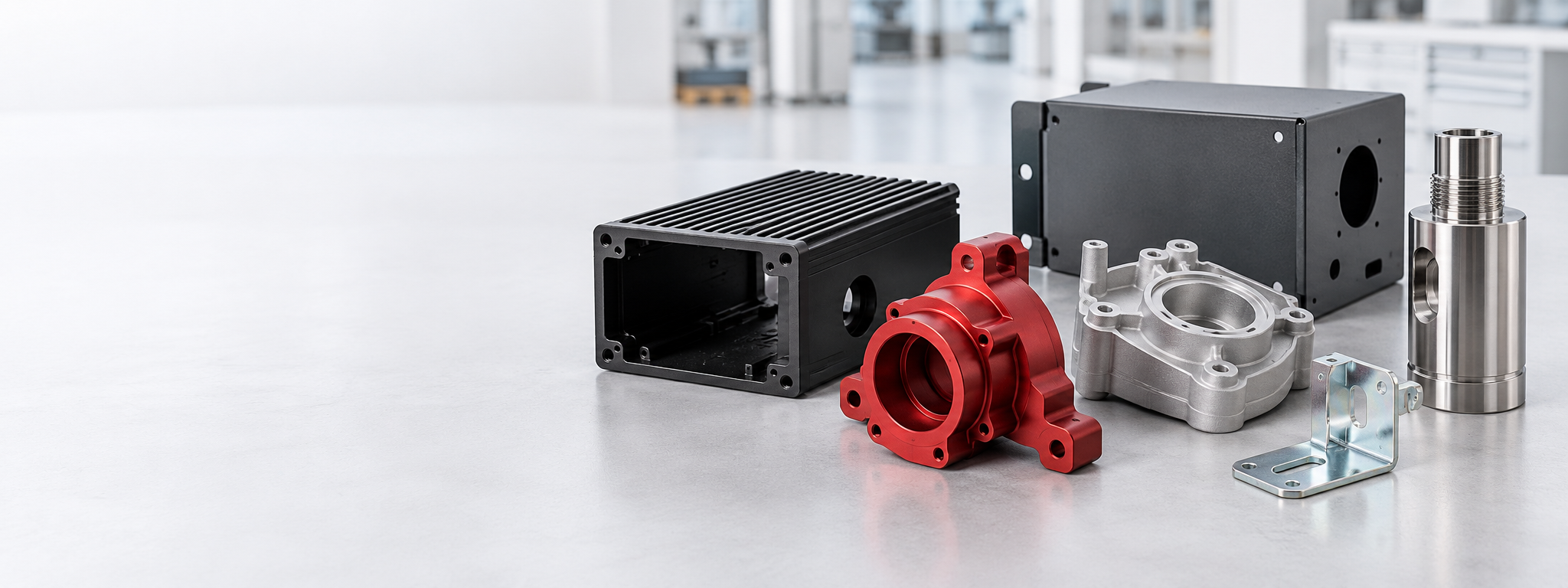
Anodizing
POPULARCreates a controlled oxide layer that improves corrosion resistance, surface durability and color consistency.
CUSTOM SURFACE FINISHING
Improve the appearance, durability and functional performance of your custom parts with surface finishing solutions matched to your material and application.
Finishing recommendations based on material, geometry and application.
WHAT IS SURFACE FINISHING?
Surface finishing changes how a manufactured part looks, feels and performs in its final application.
The right finish protects the part while helping it meet functional, environmental and visual requirements.
HordRT provides surface finishing for CNC-machined, die-cast, sheet-metal and molded components. Each process is reviewed against the base material, part geometry, tolerance requirements, production volume and intended use.
Improve corrosion, chemical and environmental resistance.
Support wear, friction, conductivity and functional needs.
Create the required color, texture and visual consistency.
FINISH SAMPLE COLLECTION
METAL SURFACESCoating thickness and material removal can affect critical dimensions, threaded features, fits and edge definition. These requirements should be identified before manufacturing begins.
SURFACE FINISHING OPTIONS
From appearance and corrosion protection to wear performance and identification, we provide finishing options for custom metal and plastic components.
Creates a controlled oxide layer that improves corrosion resistance, surface durability and color consistency.
Produces a clean, uniform matte texture and reduces the visibility of machining marks.
Applies a durable colored coating with good resistance to corrosion, impact and normal surface wear.
Provides flexible color, gloss and protective options for metal parts and selected plastic components.
Reduces surface roughness to achieve a smoother, brighter or more reflective appearance.
Deposits a metallic layer to improve corrosion resistance, conductivity, hardness or surface appearance.
Removes free iron from the surface to improve the natural corrosion resistance of stainless steel.
Creates a controlled directional grain for a clean and consistent satin metal appearance.
ADDITIONAL OPTIONS
FINISHING BY MATERIAL
Select a base material to explore compatible finishing options and typical surface results.
FEATURED MATERIAL
A versatile material supporting a broad range of protective and decorative finishes.
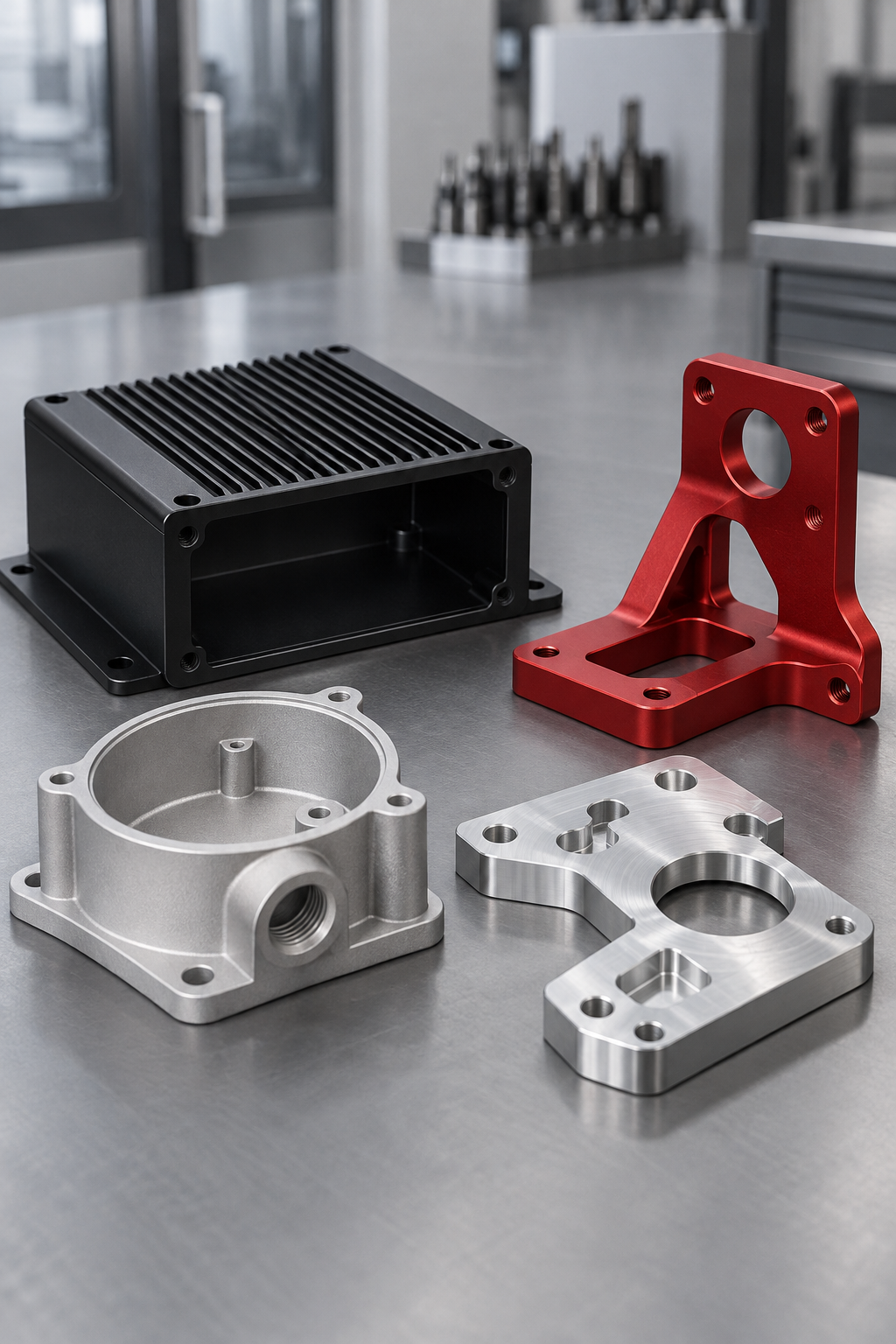
BASE MATERIAL
Protective finishing helps steel components resist corrosion, wear and demanding operating conditions.
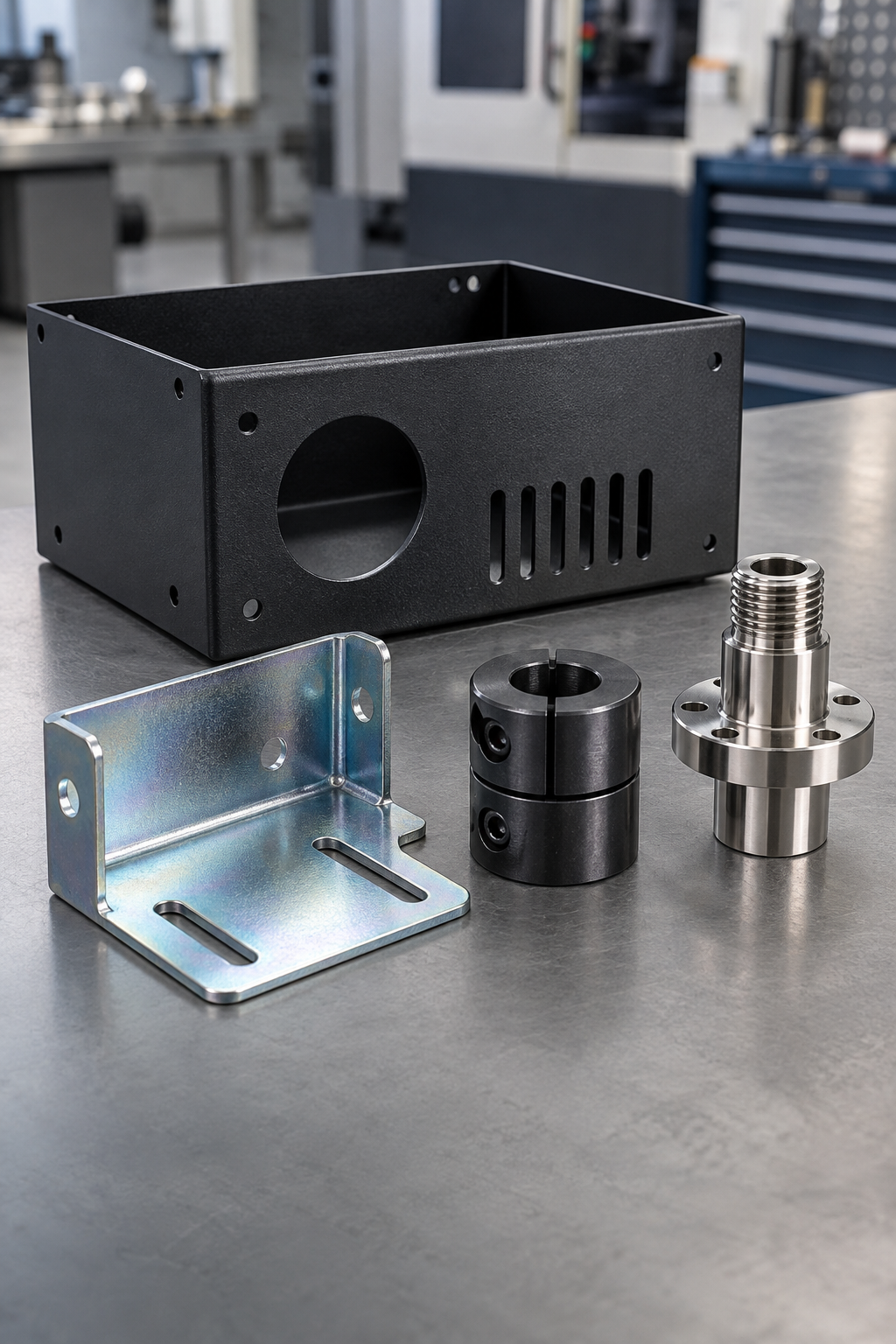
BASE MATERIAL
Stainless steel can be finished for improved cleanliness, smoothness and visual consistency.
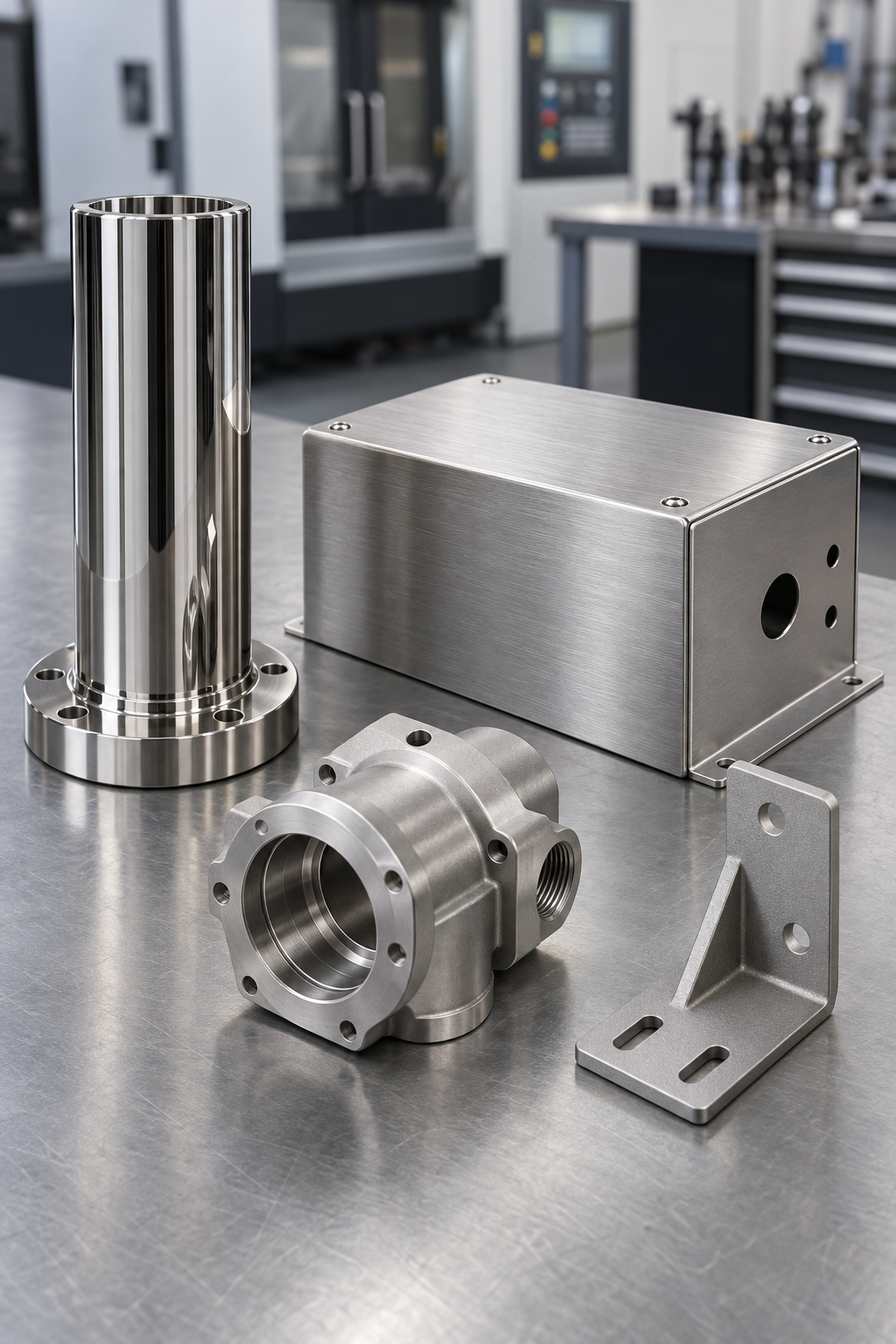
BASE MATERIAL
Plastic finishing can add color, graphics, texture and selected protective properties.
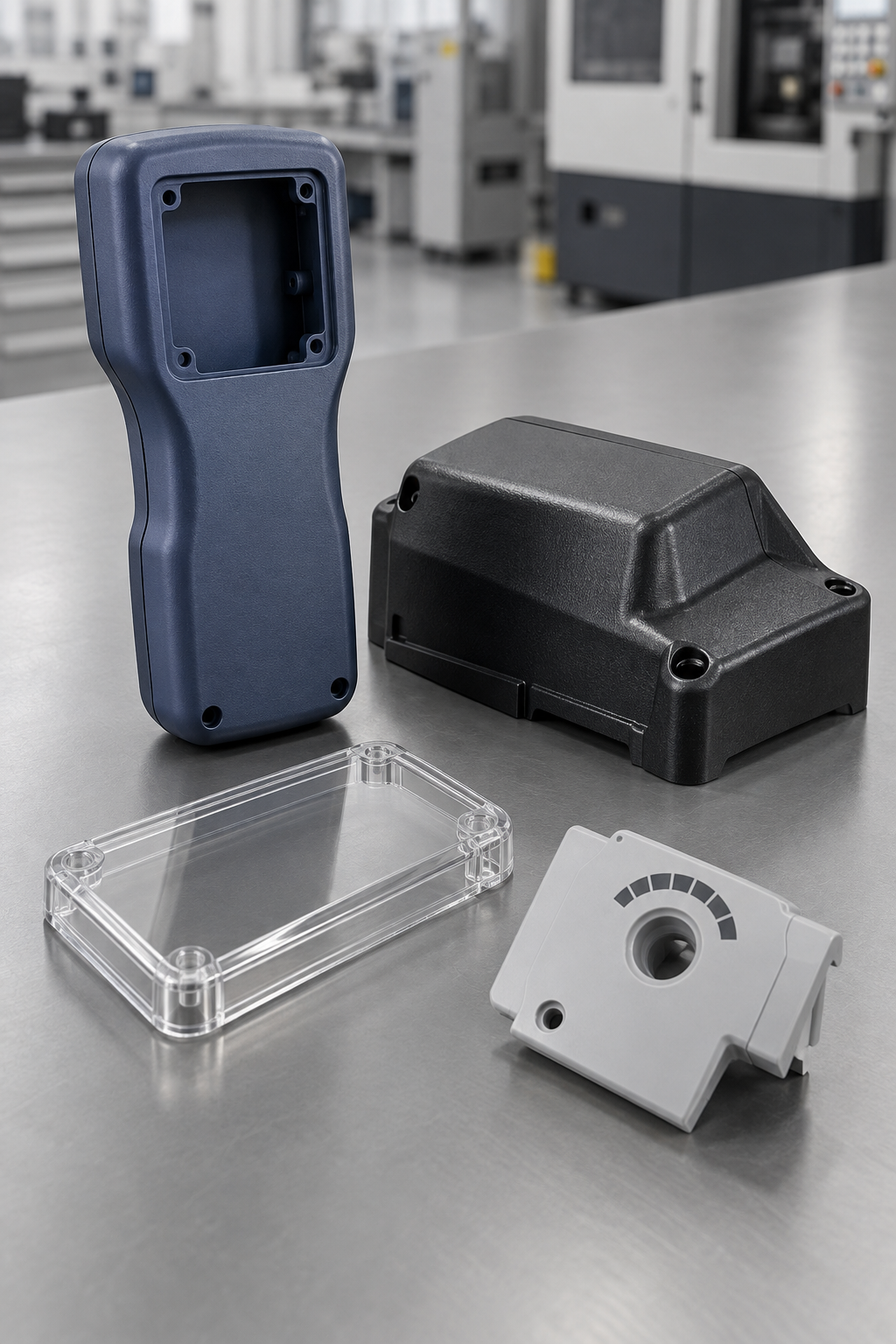
Final compatibility depends on the exact material grade, geometry, tolerance and application.
Discuss Material & Finish ↗HOW IT WORKS
A structured workflow helps maintain surface consistency, protect critical features and confirm the finished part meets project requirements.
REVIEW
Confirm the material, color, texture, protection and functional needs.
PREPARE
Clean and prepare the part to support uniform adhesion and appearance.
PROTECT
Protect threads, fits, contact areas and other critical features.
FINISH
Apply the specified treatment under controlled process conditions.
VERIFY
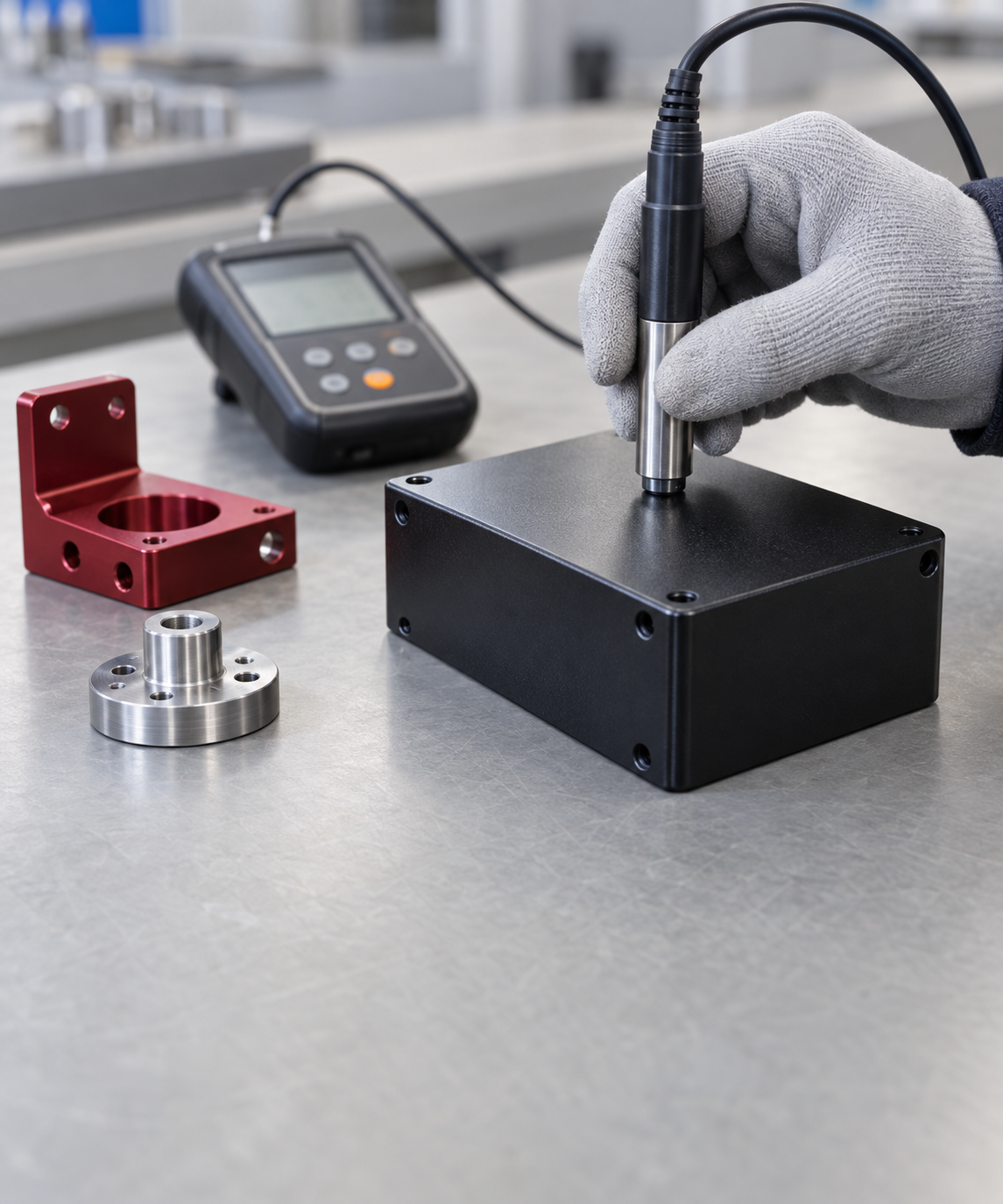
Check appearance, coverage, dimensions and specified finish requirements.
FINISH QUALITY CONTROL
Finished parts are reviewed against the approved requirements, reference samples and critical drawing specifications.
Check coverage, surface uniformity and visible cosmetic defects.
Compare color, texture and gloss with the confirmed finish standard.
Verify coating or treatment requirements when specified.
Recheck important fits, threads and dimensions affected by finishing.
FINISHING REQUIREMENTS
A clear finishing brief helps us review suitable processes, protect critical features and prepare your quotation.
Material grade, finishing method and applicable specification.
DEFINE THE BASEColor reference, gloss level, texture or approved sample.
SET THE APPEARANCERequired thickness, service conditions and acceptance criteria.
CONFIRM PERFORMANCEUntreated areas, threads, contact points and critical dimensions.
PROTECT KEY FEATURESOrder volume, delivery schedule and inspection documentation.
PLAN THE DELIVERYNot all requirements need to be finalized. Share your application if you need help selecting a finish.
Discuss Your Finish ↗
COMPLETE YOUR CUSTOM PARTS
Send your drawings, material and finishing requirements. Our team will review suitable options and provide a project-specific quotation.
FREQUENTLY ASKED QUESTIONS
Practical answers about finish selection, appearance, tolerances and project requirements.
Ask Our Team ↗Start with the base material, operating environment and required appearance. Corrosion resistance, wear, conductivity, surface texture and dimensional requirements also influence the choice. Share your application and drawings so our team can review suitable options.
Yes. Coatings can add thickness, while polishing and other preparation processes can remove material. Critical fits, threads and tolerances should be identified before production so allowances or masking can be considered.
Selected areas can often be masked, depending on the treatment and part geometry. Mark untreated surfaces clearly on your drawing, including threads, precision fits and electrical contact areas.
Color matching can be reviewed using a physical sample or an agreed color reference. Material, preparation, texture and gloss influence the final appearance. For appearance-critical parts, an approved sample and acceptance criteria should be established before batch production.
Compatible processes can be combined, such as bead blasting followed by anodizing or painting followed by printing. The sequence is reviewed to confirm compatibility and its effect on appearance, dimensions and performance.
Options may include painting, polishing, printing and selected marking processes. Suitability depends on the plastic grade, surface condition and adhesion requirements. Some molded textures are created in the tool rather than applied after molding.
Provide your CAD files or drawings, material grade, quantity and requested finish. Include color, gloss, coating thickness, masking areas, applicable specifications and inspection requirements where relevant.
Cost and lead time depend on the treatment, part size, quantity, preparation, masking and inspection needs. Custom colors, multiple treatments and sample approval may require additional time. These details are reviewed with your quotation.