Precise Bend Geometry
Controlled bend angles, radii and flange dimensions based on your part requirements.
SHEET METAL BENDING
Accurate press brake bending for prototypes and production parts, with controlled angles, consistent dimensions and reliable repeatability.
SHEET METAL BENDING SERVICE
Sheet metal bending forms flat metal sheets into precise angles and three-dimensional shapes without removing material.
At HordRT , we use precision press brake equipment and controlled forming processes to produce brackets, panels, enclosures, frames and other custom components from your drawings.
Bend allowance, material thickness, bend radius and tooling selection are reviewed before production to help maintain dimensional accuracy and repeatable part geometry.
Controlled bend angles, radii and flange dimensions based on your part requirements.
Tooling and process parameters are selected for the material, thickness and required bend radius.
Repeatable forming for prototypes, low-volume orders and ongoing production requirements.
BENDING CAPABILITIES
From simple brackets to multi-bend enclosures, our bending processes are selected according to part geometry, material behavior and production requirements.
Discuss Your Bending Project →A versatile forming method for producing accurate angles in a wide range of sheet metal materials and thicknesses.
Controlled right-angle forming for brackets, panels, frames, mounting components and structural sheet metal parts.
Sequential bending for complex components that require several flanges, offsets or formed sections in one part.
Forming with a specified internal radius to support part performance, appearance and material requirements.
BENDING MATERIALS
We form common sheet metals for brackets, panels, enclosures and structural components, with tooling and bend parameters selected according to each material.
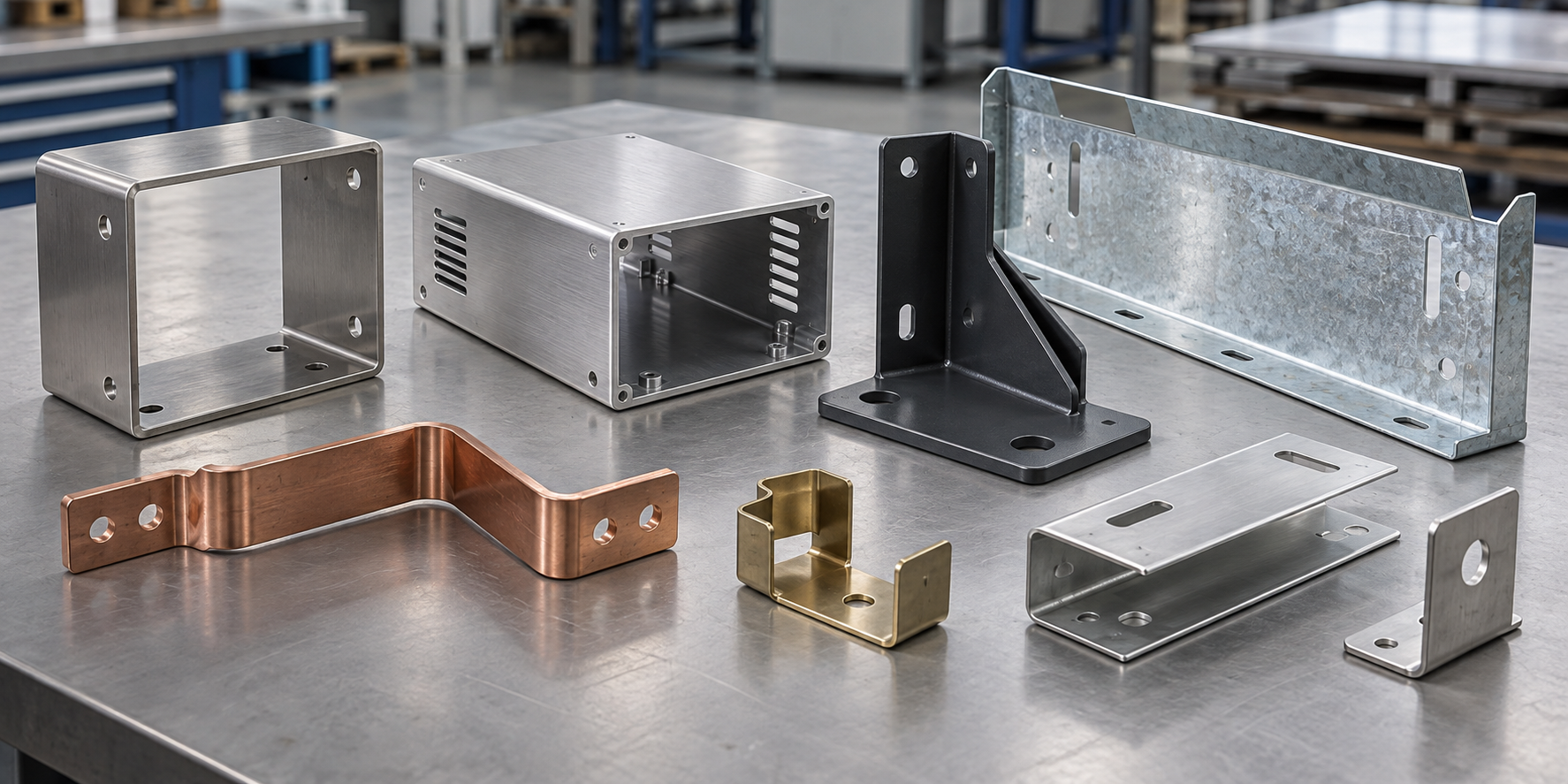
5052 · 6061 · 1060
304 · 316 · 430
SPCC · Q235
SGCC · SECC
C110 · H62
HOW IT WORKS
A controlled workflow helps maintain bend angles, flange dimensions and part-to-part consistency.
We review geometry, material, thickness and critical dimensions.
Bend radius, allowance and springback are evaluated before forming.
Suitable punches, dies and machine parameters are prepared.
Parts are formed in a controlled sequence using press brake equipment.
Bend angles and key dimensions are checked against the drawing.
Ready for welding, hardware installation, finishing or final assembly.
DESIGN GUIDELINES
Reviewing bend geometry before production helps reduce distortion, cracking and dimensional variation.
Match the internal radius to the material and thickness.
Allow enough flange length for stable tooling contact.
Keep holes and slots away from the bend deformation zone.
Add relief near edges where tearing or distortion may occur.
QUALITY CONTROL
Bent parts are checked against the drawing to confirm that forming has not affected critical dimensions, hole locations or final assembly fit.
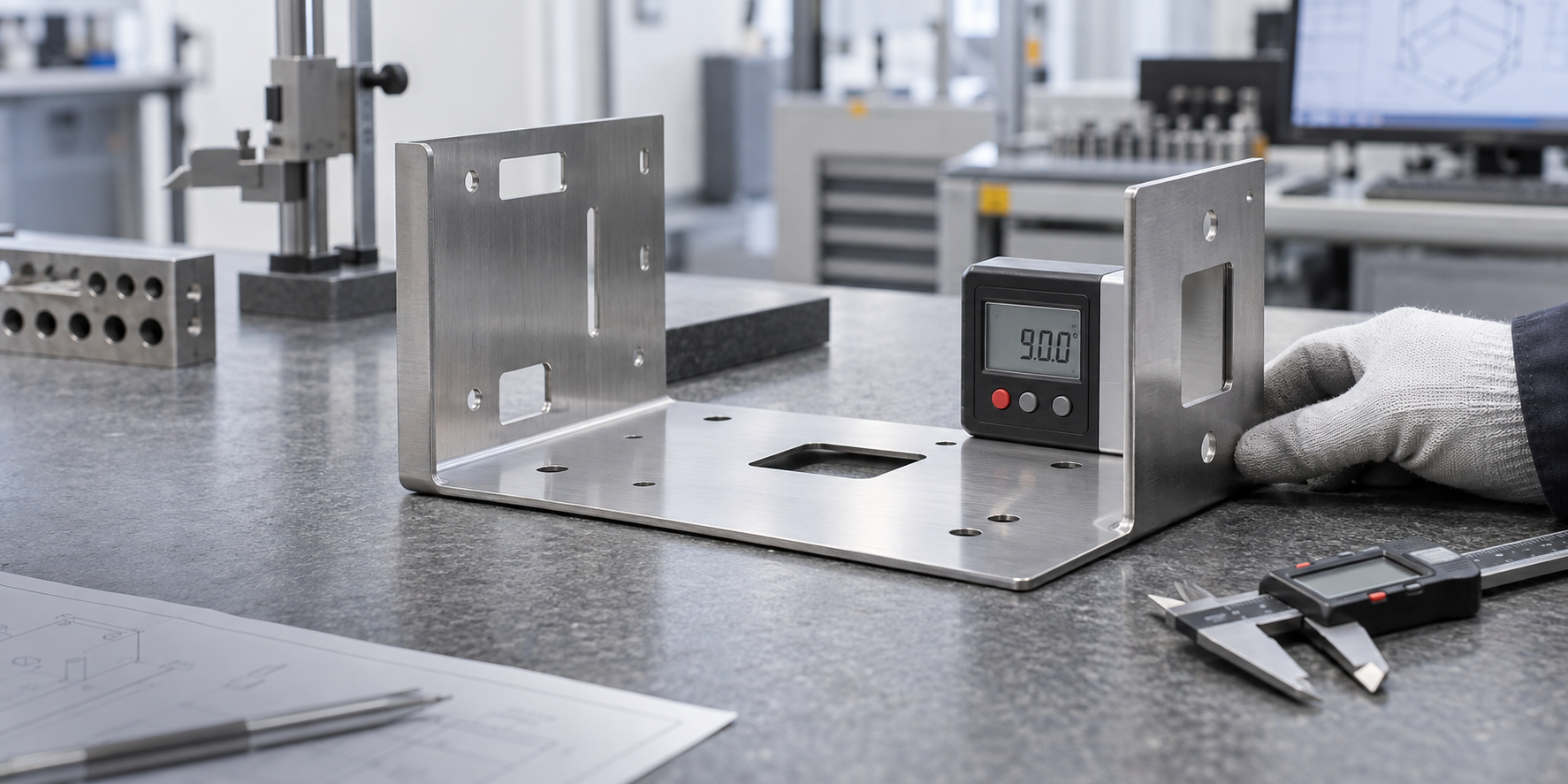
Verify the formed angle and consistency across repeated parts.
Check flange length, overall height and formed part dimensions.
Confirm that holes, slots and cut features remain correctly located.
Inspect for distortion, scratches, cracking and unwanted deformation.
Inspection scope is defined according to the drawing and project needs.
BENDING APPLICATIONS
Precision bending supports functional components across industrial, electronic and medical applications.
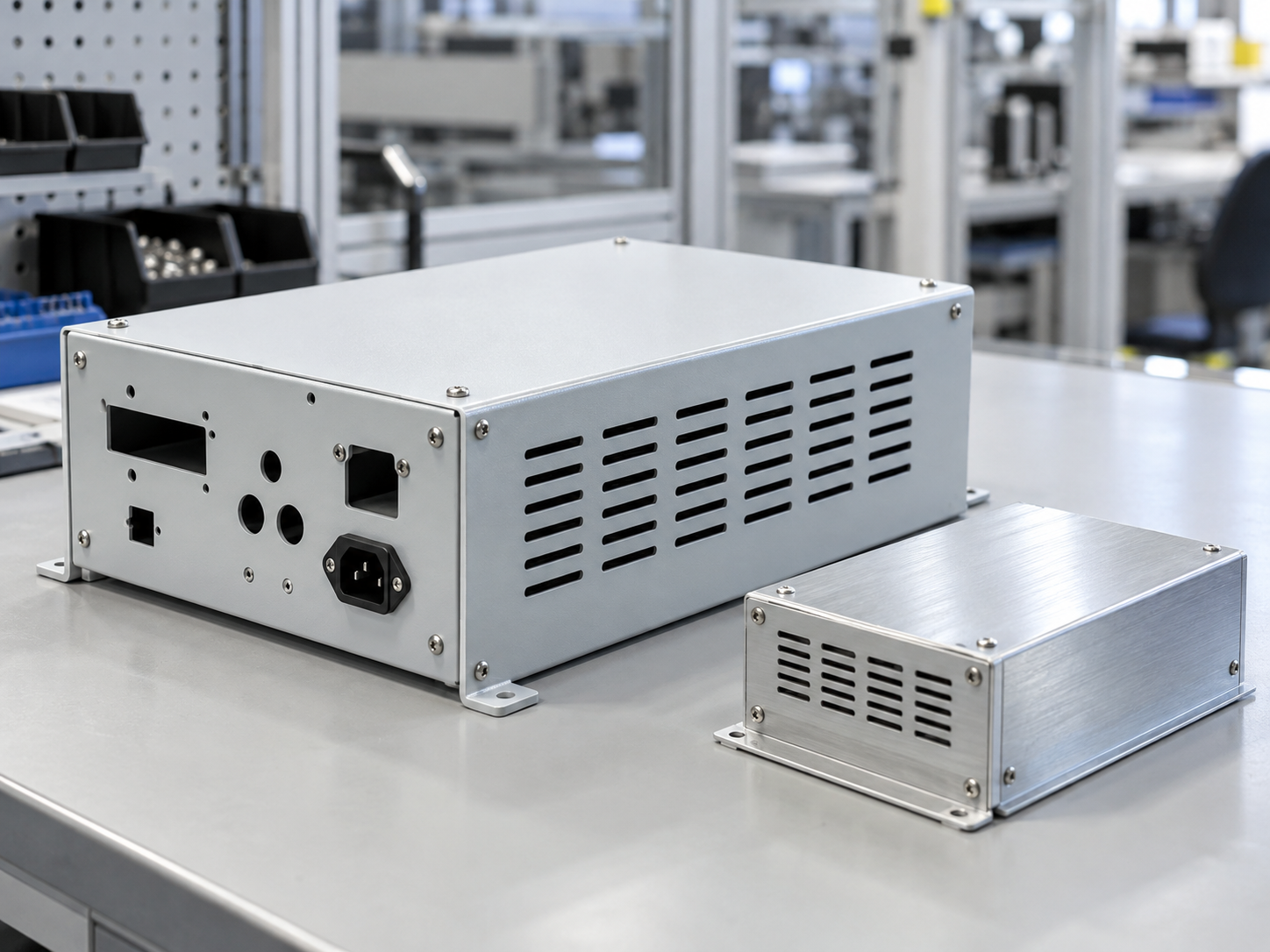
Electronics
Formed housings, control boxes and equipment covers with aligned openings and assembly features.
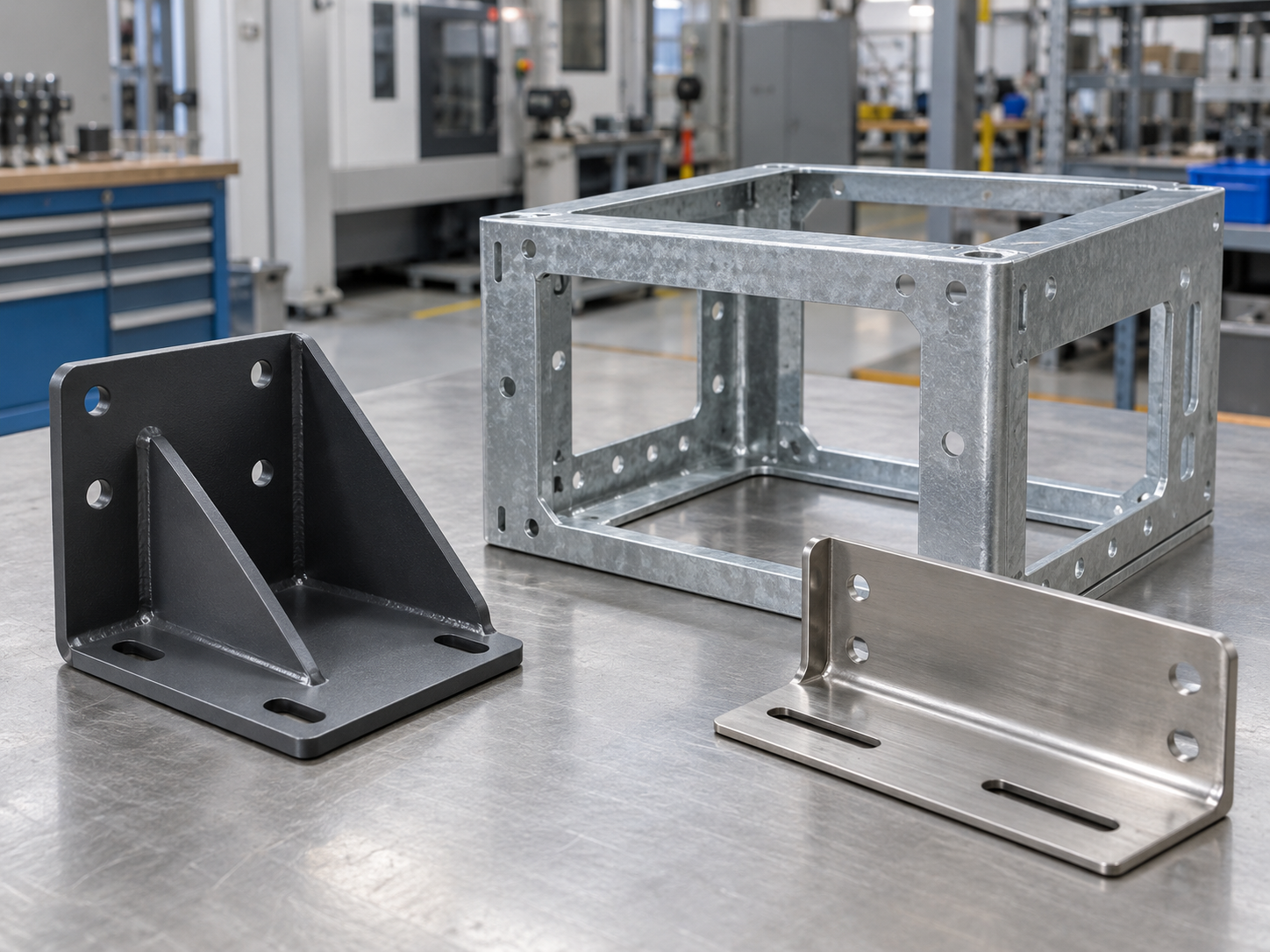
Industrial Equipment
Load-bearing brackets, mounting structures and formed frames for industrial assemblies.
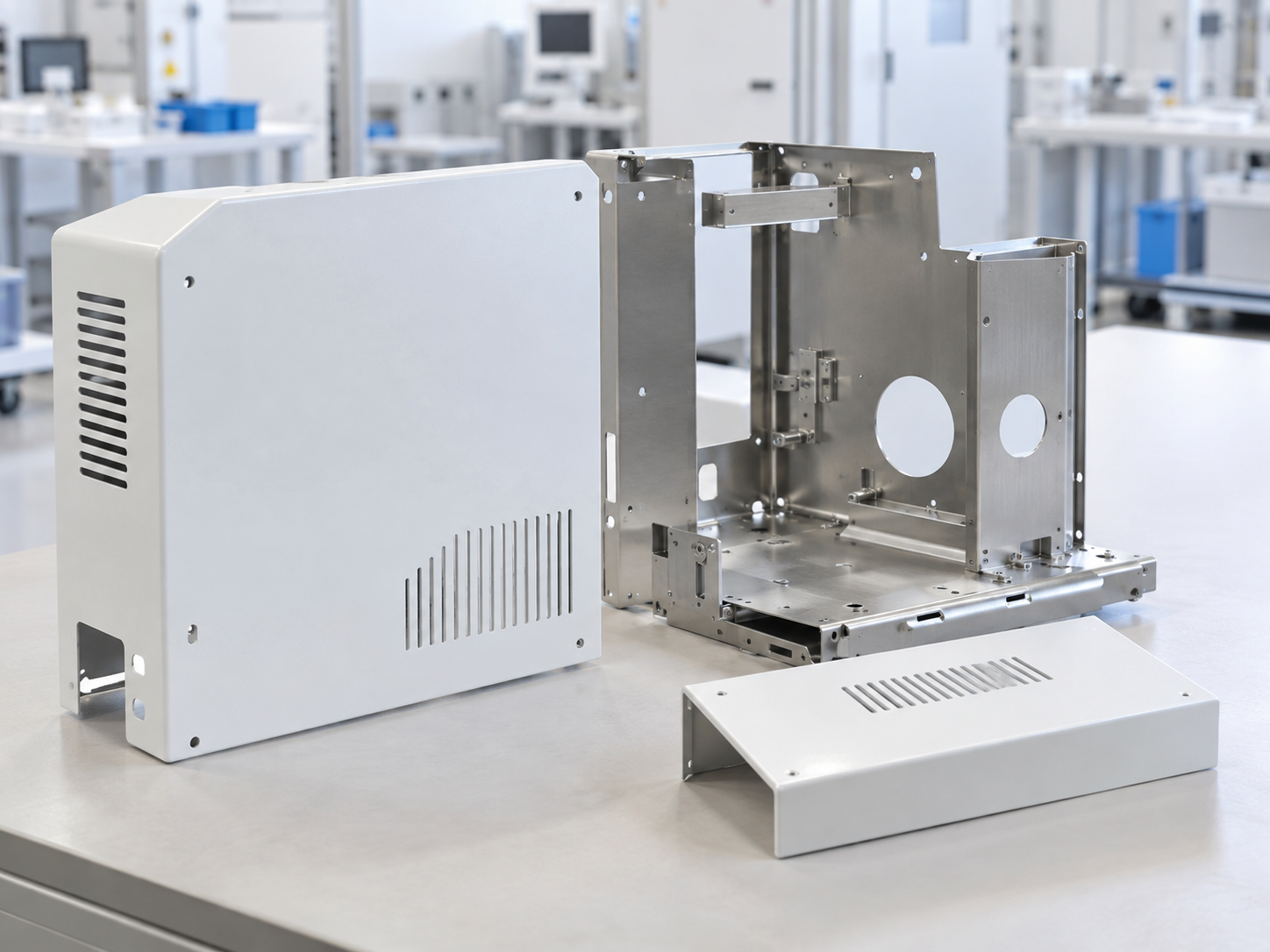
Medical Equipment
Cleanly formed covers, panels and internal supports for medical and laboratory equipment.
START YOUR BENDING PROJECT
Send us your drawings, material requirements and order quantity. Our team will review your project and provide a manufacturing solution.
PROJECT QUESTIONS
Clear answers to the questions buyers ask before starting a sheet metal bending project.
Please send your 3D CAD file or 2D drawing, material grade, sheet thickness, quantity, tolerance requirements and any required surface finishes or secondary operations.
Common materials include aluminum, stainless steel, carbon steel, galvanized steel, copper and brass. The material grade, temper and thickness affect bend radius and tooling selection.
The appropriate bend radius depends on material type, thickness, temper, bend direction, required part geometry and available press brake tooling.
Achievable tolerances depend on material, thickness, bend length, flange size, number of bends and part geometry. Critical requirements are reviewed against the drawing before production.
Holes and slots should remain outside the main deformation zone whenever possible. The recommended distance depends on material thickness, bend radius and feature geometry.
Yes. We produce brackets, panels, housings and frames with multiple bends. Tool access and bending sequence are reviewed to prevent interference between previously formed features.
Yes. HordRT supports prototypes, low-volume orders and repeat production, with laser cutting, welding, hardware installation, surface finishing and assembly also available.
Phone: +86 760 8612 9998
Tue–Sat, 8:30 AM–5:30 PM, CST
Mobile:+86 198 0680 9560
8:30 AM–11:00 PM, CST
Zhuhai Factory:No. 9, Huangyang 4th Road, Jing’an Town,
Doumen District, Zhuhai, Guangdong, China
Zhongshan Factory:No. 222, Yixian Road, 6th Industrial Zone,
Nanlang Subdistrict, Zhongshan, Guangdong, China