Launch Before Final Tooling
Begin supplying production-quality parts while permanent high-volume tooling is still being built or validated.
Faster market entryBRIDGE TOOLING SERVICES
Cost-effective bridge tooling for functional validation, market launch and low-volume production before full-scale tooling.
WHAT IS BRIDGE TOOLING?
Bridge tooling is a cost-effective manufacturing solution used after prototype validation but before high-volume production tooling.
It enables manufacturers to produce functional, production-quality parts in real materials while final production tooling is being prepared or market demand is still being confirmed.
At HordRT , we design bridge tools around your expected quantities, material, part geometry and future production plan—helping you move forward without committing too early to a high-cost production mold.
Discuss Your Tooling RequirementsConfirm design, fit and function.
Produce reliable parts in controlled volumes.
Scale with validated tooling and processes.
WHEN BRIDGE TOOLING MAKES SENSE
Bridge tooling provides a practical route to production-quality parts when a full production mold is not yet the right investment.
Begin supplying production-quality parts while permanent high-volume tooling is still being built or validated.
Faster market entryProduce an initial batch to evaluate customer response before committing to a higher-cost production mold.
Lower investment riskTest performance, appearance and assembly using the intended material and a repeatable injection molding process.
More reliable validationKeep parts moving when permanent tooling is delayed, repaired, modified or transferred between production facilities.
Reduced supply disruptionNot sure whether bridge tooling fits your required volume?
Review Your ProjectBRIDGE TOOLING OPTIONS
Bridge tooling is not a single fixed mold specification. The tool should be designed around the required quantity, production material, part geometry and expected next stage.
HordRT evaluates these factors before recommending the appropriate mold material and tooling structure.
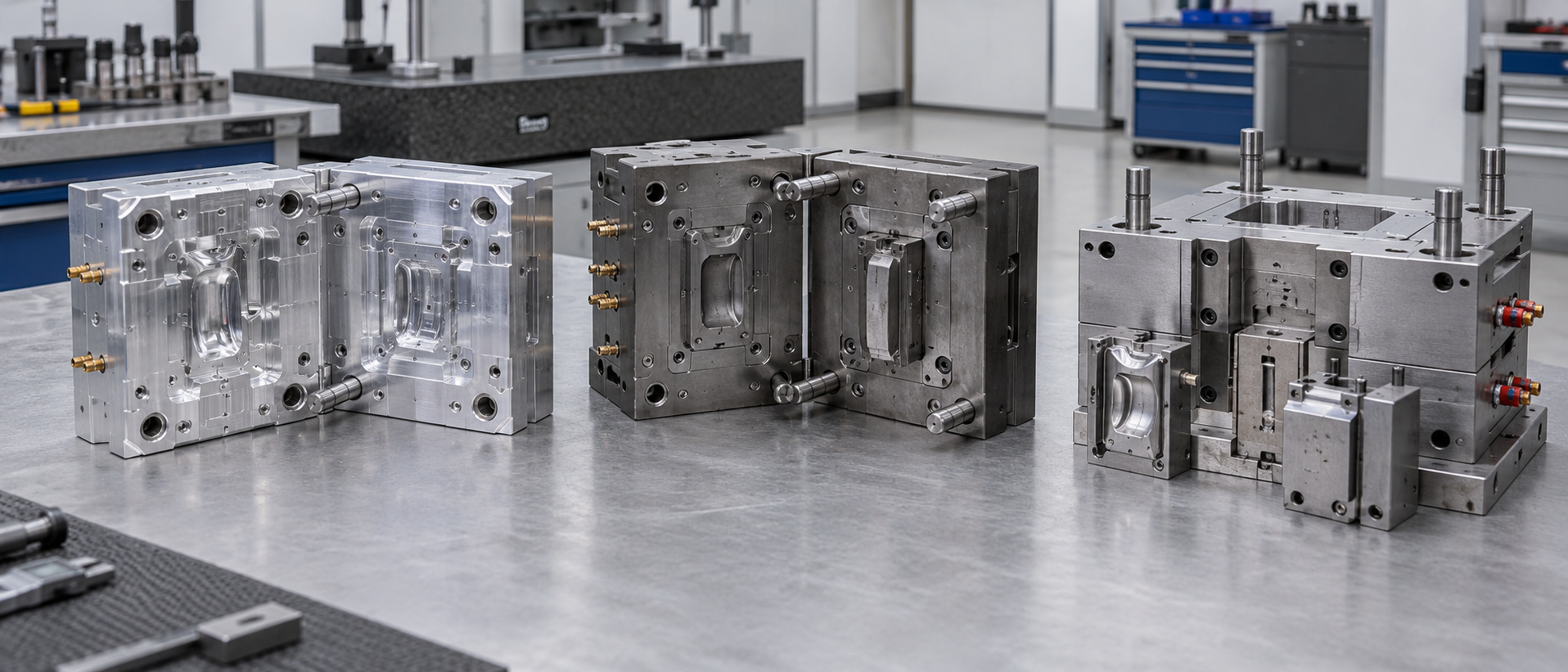
TOOLING SELECTION
Faster to machine and suitable for controlled low-volume runs, design validation and early market supply.
Increased durability for higher quantities, demanding materials or programs that may continue beyond the initial production stage.
Interchangeable cavity and core inserts matched to a shared mold base to reduce tooling cost and simplify future modifications.
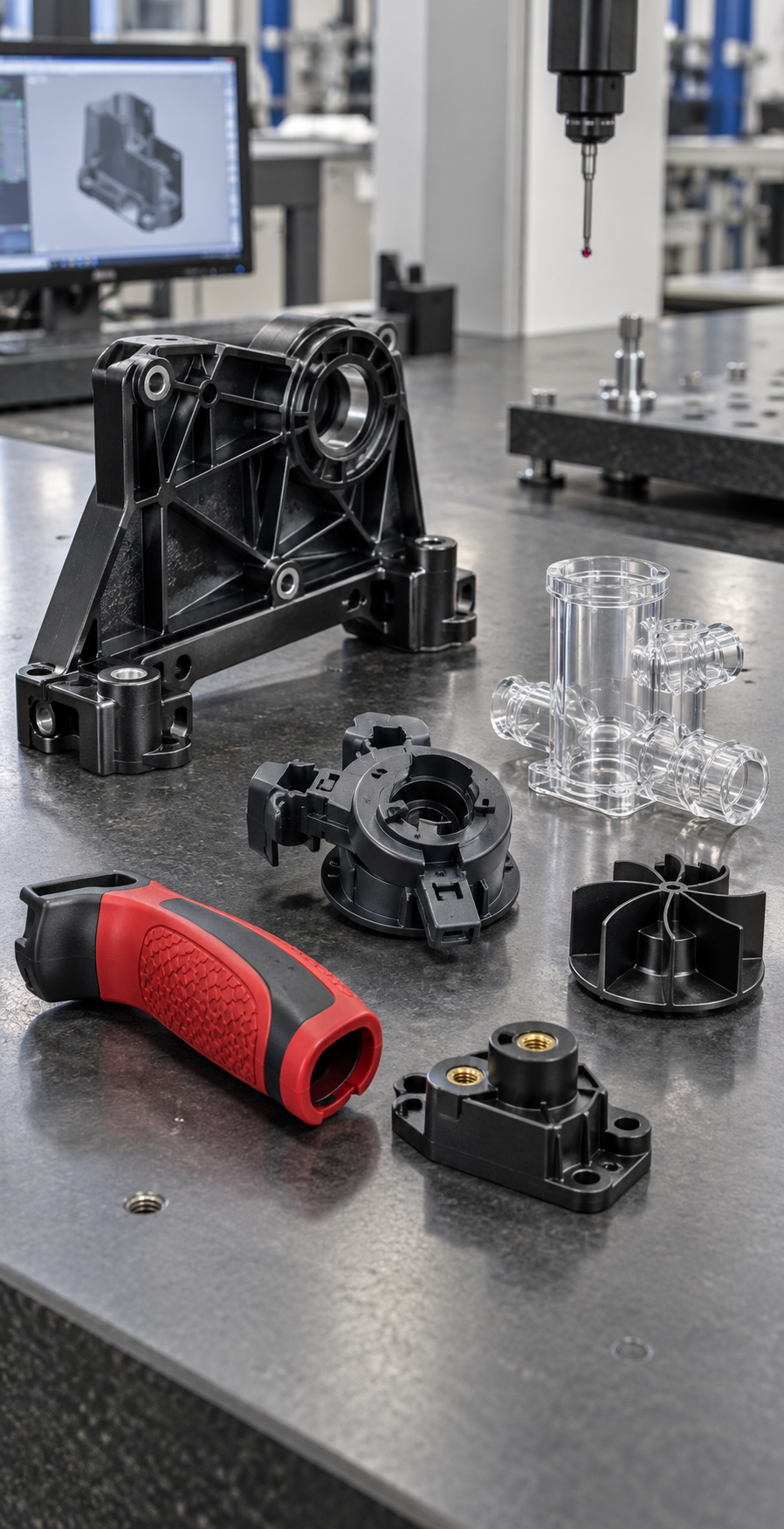
OUR BRIDGE TOOLING PROCESS
Each bridge tool is developed around the required quantity, production material and performance expectations of the final part.
We review CAD files, material, target quantity and required production schedule.
The mold material and tooling structure are selected around the program requirements.
Part geometry, draft, gating, cooling and ejection are evaluated before manufacturing.
Cavity and core components are machined, finished and fitted to the selected mold base.
Trial parts are molded and checked for dimensions, appearance and functional performance.
Approved tooling moves into controlled production with ongoing process and quality monitoring.
PRODUCTION-READY VALIDATION
Bridge tooling allows you to evaluate the product, material and manufacturing process under conditions closer to final production.
The results can support design approval, customer testing and preparation for full-scale manufacturing.
Confirm molded geometry, wall sections, ribs, bosses and other production-level design details.
Check how molded components interface with mating parts, fasteners, inserts and final assemblies.
Test real performance using the intended production resin, molded features and representative part properties.
Establish a repeatable molding window and identify potential production risks before higher-volume manufacturing begins.
Better information before scale. Bridge tooling helps engineering and sourcing teams make production decisions based on real molded parts—not assumptions.
Evaluate performance and appearance using the materials and molded features intended for production.
MATERIALS & PART CAPABILITIES
Bridge tooling supports production-grade thermoplastics, functional molded features and controlled cosmetic requirements.
Engineering and commodity thermoplastics
Representative appearance for evaluation
Production-level geometry and assembly details
Final material and tooling recommendations depend on part geometry, resin behavior, expected quantity and required tool life.
TOOLING COMPARISON
Compare each tooling route based on investment, lead time, production volume and long-term program requirements.
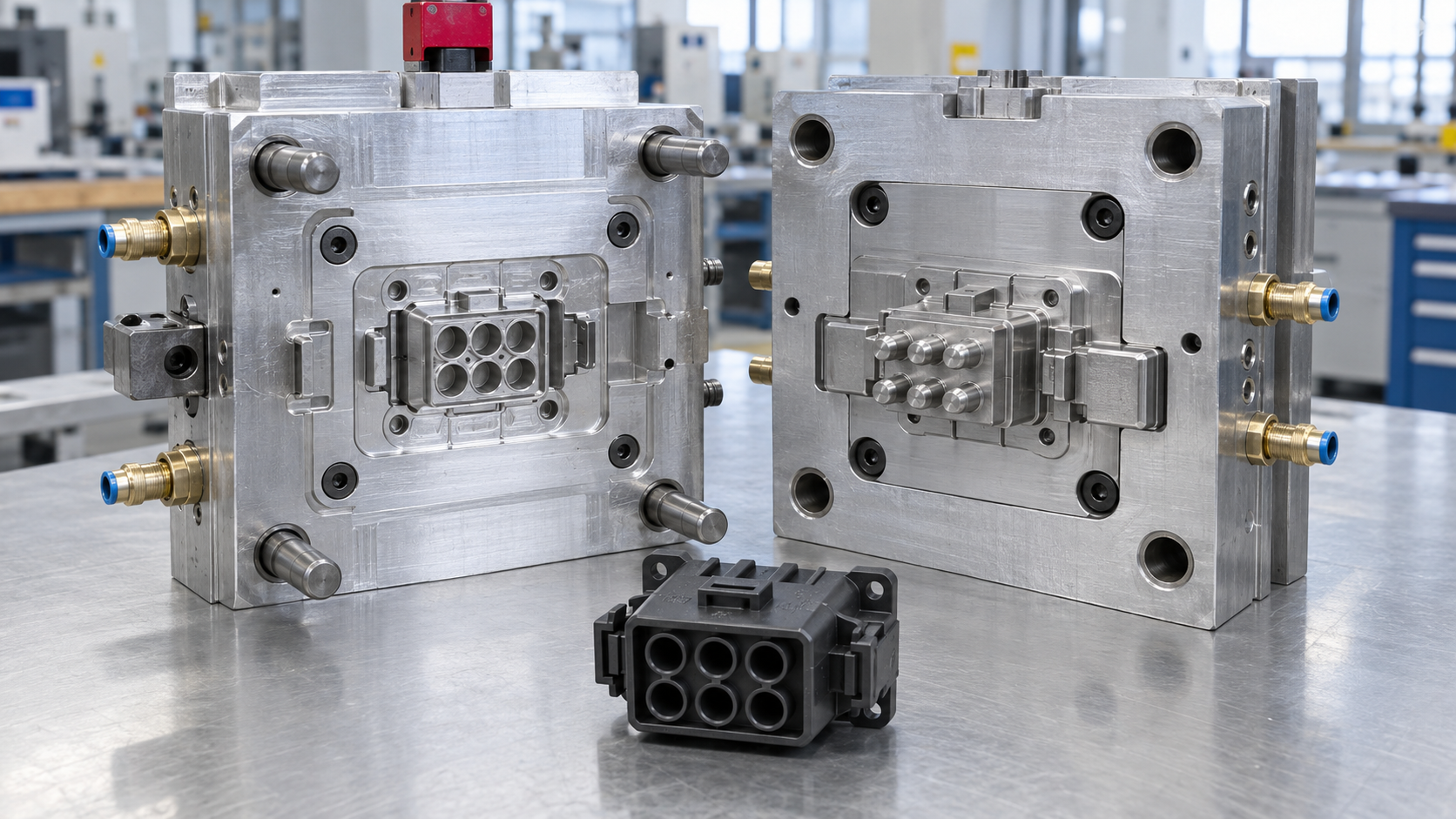
FLEXIBLE ENTRY
RECOMMENDED FOR EARLY PRODUCTION
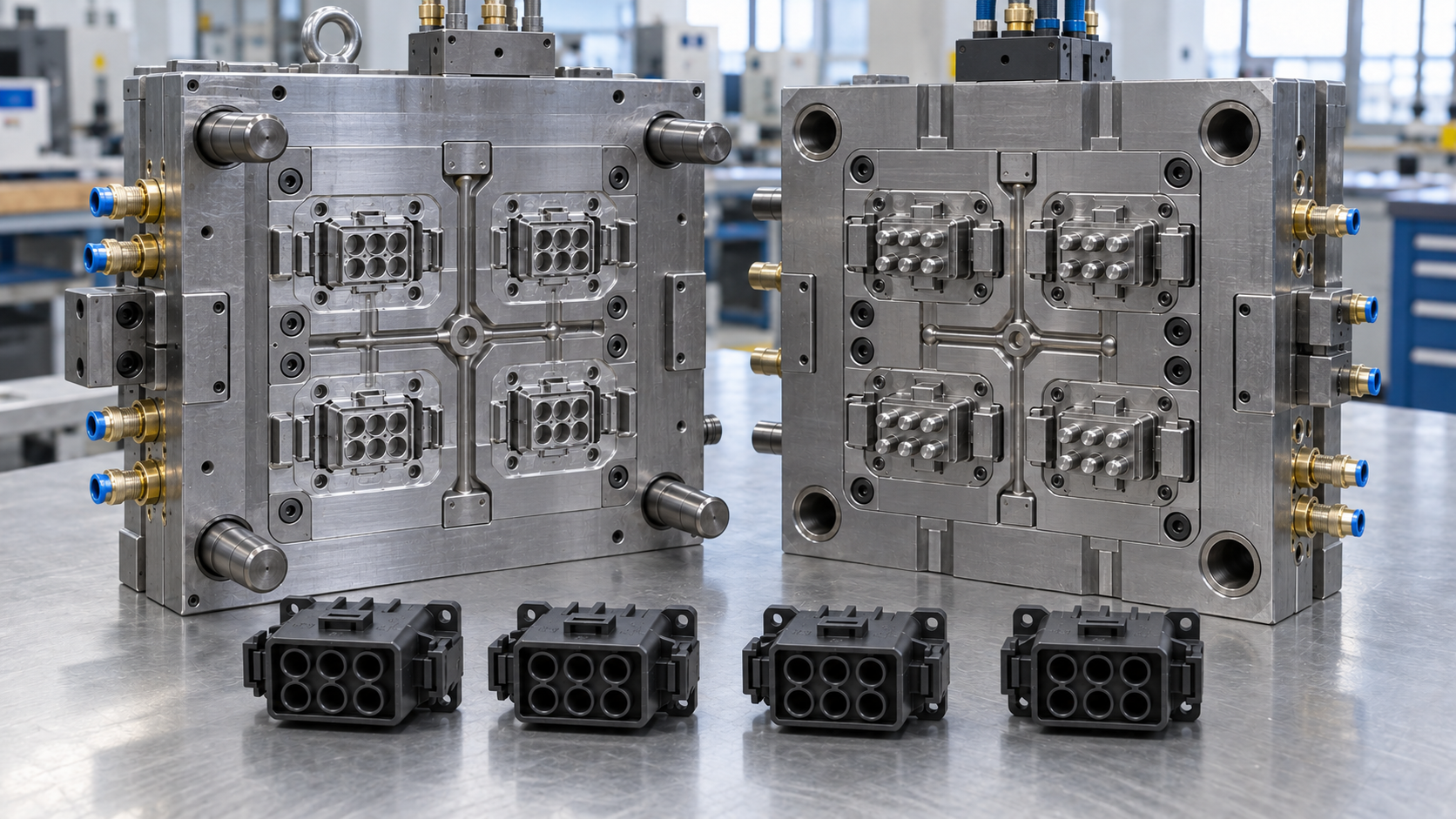
LONG-TERM SCALE
RECOMMENDED FOR ESTABLISHED DEMAND
FROM VALIDATION TO PRODUCTION
Send us your CAD files, production material and estimated quantities. Our engineering team will review your project and recommend an appropriate bridge tooling solution.
CAD, material and quantity evaluation
Material, structure and tool-life planning
Tooling, parts and lead-time breakdown
PROJECT QUESTIONS
Find answers about bridge tooling materials, production quantities, lead times and the transition to full-scale manufacturing.
ENGINEERING SUPPORT
Send us your CAD files, production material and estimated quantities for a tooling review.
Get a Quote ↗Bridge tooling is an intermediate tooling solution used after prototype validation but before long-term production tooling. It enables production-quality molded parts for pilot builds, market launch and initial customer demand.
Bridge tooling is suitable when you need production-quality parts quickly, but the final design, long-term demand or required production volume has not yet been fully confirmed.
Prototype tooling primarily supports design and functional validation in smaller quantities. Bridge tooling is designed for more repeatable production and can support early market supply before permanent production tooling is ready.
Aluminum tooling generally offers faster manufacturing and a lower initial investment. Pre-hardened steel provides greater durability for higher quantities, abrasive materials or programs that may continue longer than initially expected.
Bridge tooling can support many production-grade thermoplastics, including ABS, PC, PC/ABS, PP, POM, PA and TPE. Material suitability depends on part geometry, resin behavior, expected quantity and required tool life.
A typical bridge tool can be completed in approximately 5–10 days after the design and tooling strategy are approved. Complex geometry, side actions and detailed surface requirements may require additional time.
Please provide your 3D CAD file, 2D drawing when available, production material, estimated quantities, surface requirements and required delivery schedule. This allows us to recommend an appropriate tooling structure and mold material.
Phone: +86 760 8612 9998
Tue–Sat, 8:30 AM–5:30 PM, CST
Mobile:+86 198 0680 9560
8:30 AM–11:00 PM, CST
Zhuhai Factory:No. 9, Huangyang 4th Road, Jing’an Town,
Doumen District, Zhuhai, Guangdong, China
Zhongshan Factory:No. 222, Yixian Road, 6th Industrial Zone,
Nanlang Subdistrict, Zhongshan, Guangdong, China