Skip to content

CUSTOM MULTI-MATERIAL MOLDING

Custom Overmolding Services

Combine rigid substrates with soft-touch or functional materials to create durable, integrated parts with improved grip, protection and product performance.

  • Plastic & Elastomer Combinations
  • Insert and Two-Step Overmolding
  • Prototype to Production Support

WHAT IS OVERMOLDING?

Two Materials. One Integrated Part.

Overmolding is a multi-step injection molding process that bonds a second material over or around a previously molded substrate. The result is a single integrated component without separate assembly or adhesive.

A rigid plastic substrate provides structural strength, while materials such as TPE or TPU add grip, sealing, impact protection or a soft-touch surface. Material compatibility, part geometry and mold design are carefully evaluated to achieve reliable bonding.

Integrated Construction

Multiple materials are permanently combined in one component.

Improved Protection

Soft materials provide sealing, cushioning and impact resistance.

Better User Experience

Textured elastomers improve grip, comfort and product handling.
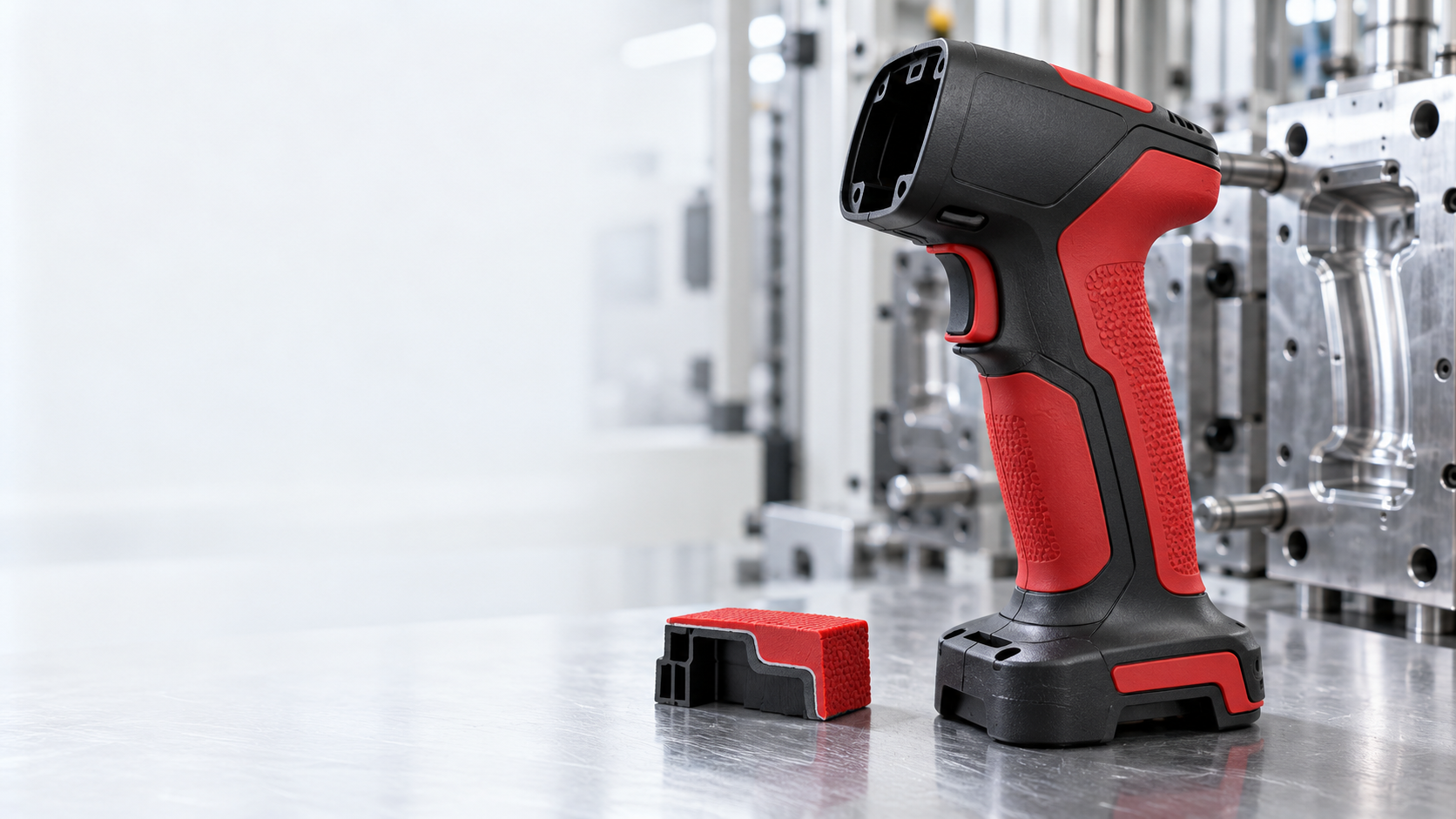
Overmolding substrate, material cross-section and completed overmolded component
FIRST SHOT Rigid Substrate

Structural plastic base

SECOND SHOT Soft Overmold

TPE or TPU outer layer

Mechanical interlocks and material compatibility help create a secure bond between the two materials.

HOW OVERMOLDING WORKS

From Material Selection to Finished Overmolded Parts

Successful overmolding depends on more than adding a soft material to a rigid component. Material compatibility, substrate geometry, mold design and process control must work together.

ENGINEERING REVIEW

Part & Material Evaluation

We review the part geometry, application environment and performance requirements before recommending compatible substrate and overmold materials.

  • Bonding compatibility
  • Wall thickness and draft
  • Mechanical interlocks
FIRST MOLDING STAGE

Rigid Substrate Molding

The structural substrate is injection molded with the required dimensions, surface condition and locating features for the following overmolding operation.

  • Stable base geometry
  • Controlled shrinkage
  • Accurate locating features
SECOND MOLDING STAGE

Overmold Material Injection

The substrate is accurately positioned in the overmolding tool, where TPE, TPU or another selected material is molded over the required surfaces.

  • Accurate substrate positioning
  • Controlled material flow
  • Consistent soft-touch coverage
QUALITY VALIDATION

Bonding & Part Inspection

Completed parts are inspected for material coverage, adhesion, dimensions and appearance to confirm consistent performance before production release.

  • Bond strength inspection
  • Dimensional verification
  • Surface and edge review

OVERMOLDING MATERIALS

Compatible Materials for Reliable Bonding

Material selection affects adhesion, durability, flexibility and long-term part performance. We evaluate each substrate and overmold combination according to the product’s operating requirements.
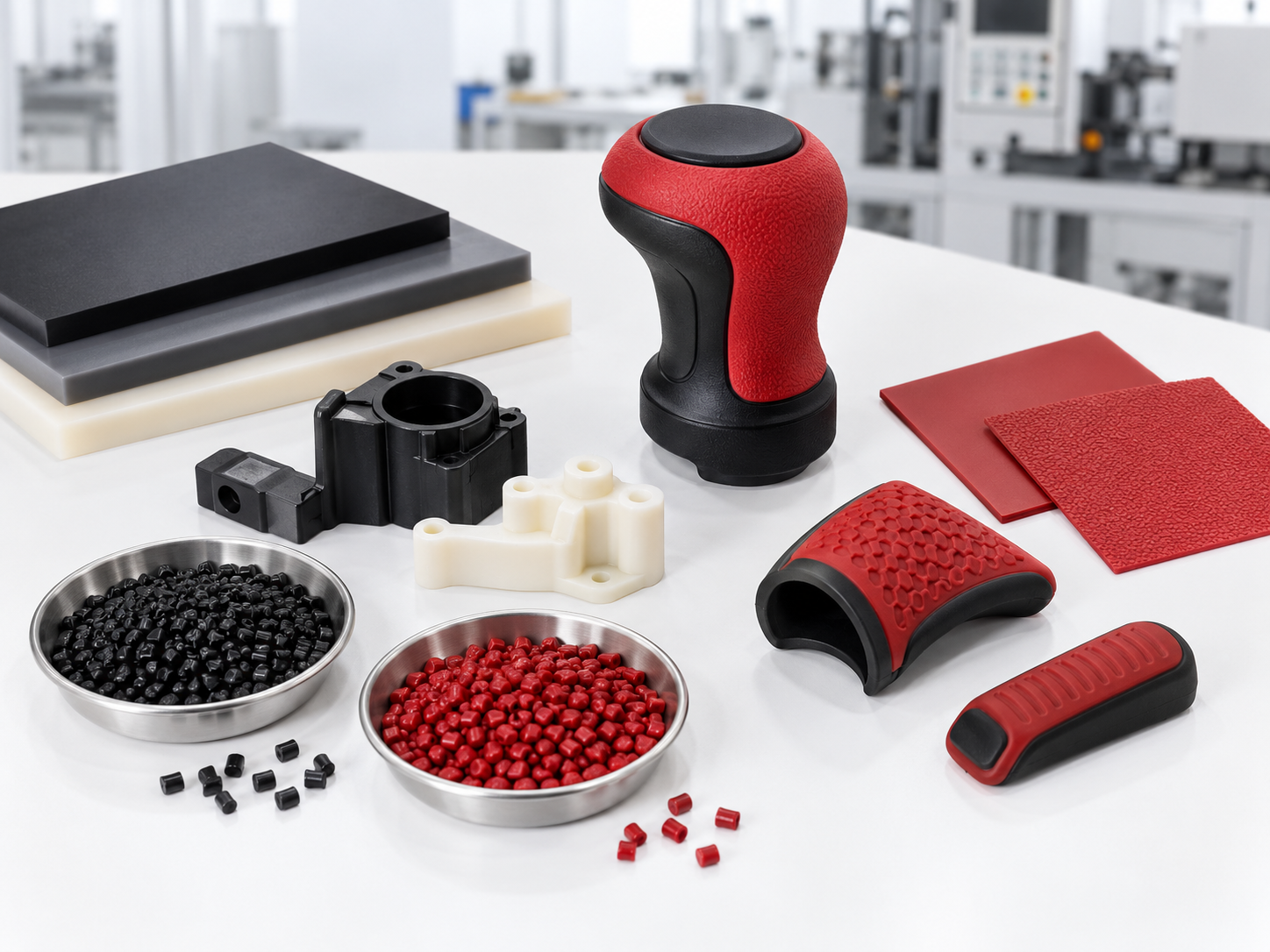
Rigid plastic substrates and soft elastomer materials used for overmolding
MATERIAL PAIRING Selected for the Application
STRUCTURAL BASE

Common Rigid Substrates

The substrate provides the primary shape, dimensional stability and structural strength of the finished component.

  • ABS
  • PC
  • PC/ABS
  • PA
  • PBT
  • PP
FUNCTIONAL OUTER LAYER

Soft Overmold Materials

The second material adds grip, flexibility, sealing, cushioning or impact protection to selected part surfaces.

  • TPE
  • TPU
  • TPR
  • Silicone
Compatibility Matters

Not every elastomer bonds naturally to every rigid plastic. Chemical compatibility, processing temperature and mechanical interlocks must all be considered during design.

Ask About Your Material Combination
Bond Strength

Chemical adhesion and mechanical retention

Temperature Resistance

Performance in processing and end-use conditions

Hardness & Flexibility

Selected according to grip and cushioning needs

Shrinkage Behavior

Controlled to maintain dimensions and edge quality

DESIGN FOR OVERMOLDING

Design Details That Support Reliable Overmolding

A strong overmolded part starts with the substrate geometry. Draft, wall thickness, material flow and retention features must be considered before tooling begins.

ENGINEERING SUPPORT Design Review Before Tooling

Share your 3D model and application requirements for material and manufacturability review.

Request a Design Review

Maintain Consistent Wall Thickness

Balanced wall sections support consistent filling, cooling and shrinkage in both the substrate and overmold material.

Reduce thick transitions and isolated material masses

Include Sufficient Draft

Draft angles help the substrate and finished part release cleanly from the mold without damaging soft overmold surfaces.

Draft requirements depend on material and texture

Add Mechanical Interlocks

Holes, grooves and undercut retention features can strengthen the connection when chemical adhesion alone is insufficient.

Particularly important for challenging material combinations

Control Overmold Edge Conditions

Defined shutoff surfaces help control flash and create clean, consistent transitions between rigid and soft materials.

Avoid feathered edges that are difficult to mold consistently

Plan Gates and Material Flow

Gate position should allow the elastomer to fill evenly without shifting the substrate or trapping air around details.

Flow analysis may be recommended for complex geometry

Secure the Substrate in the Mold

Positive locating features help hold the first-shot component accurately during the second injection molding stage.

Stable positioning supports consistent overmold coverage

OVERMOLDING APPLICATIONS

Where Overmolding Adds Product Value

Overmolding is used when a product requires improved grip, protection, sealing, comfort or visual differentiation without adding separate assembly steps.

Industrial Equipment

GRIP & DURABILITY

Soft-touch grips, control handles and protective housings designed for frequent handling and demanding environments.

  • Equipment handles
  • Control grips
  • Protective covers

Medical Devices

COMFORT & SEALING

Ergonomic device housings, sealed control areas and non-slip surfaces for handheld medical equipment.

  • Handheld housings
  • Sealing features
  • Soft-touch controls

Consumer Products

APPEARANCE & COMFORT

Multi-material enclosures and ergonomic surfaces that improve handling while creating a distinctive product appearance.

  • Electronic enclosures
  • Personal care products
  • Household devices

Automotive Components

PROTECTION & CONTROL

Functional seals, dampening surfaces and grip areas for interior controls and under-hood plastic components.

  • Interior controls
  • Connector seals
  • Vibration protection
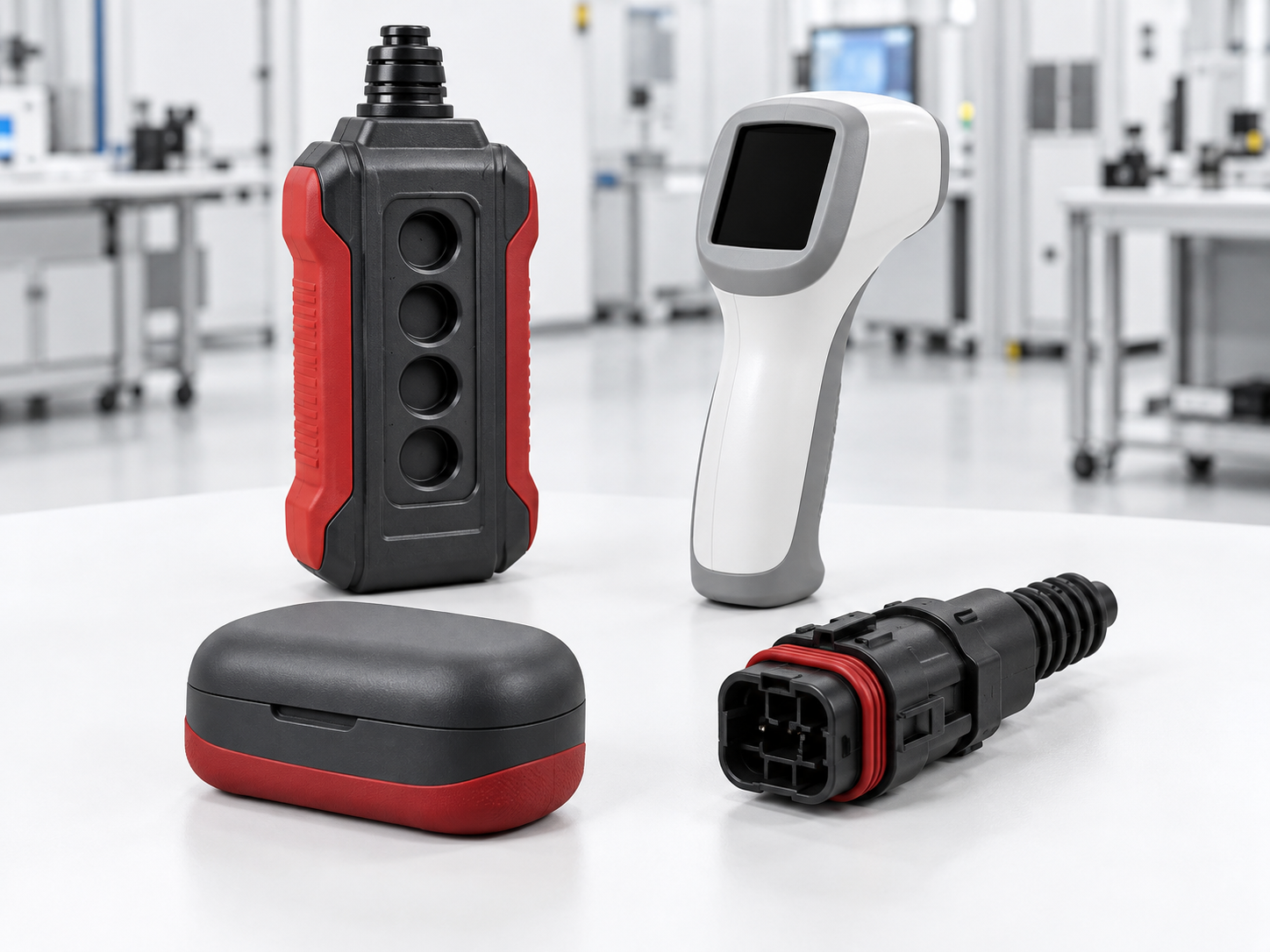
Overmolded industrial, medical, consumer and automotive products
FUNCTION-DRIVEN DESIGN One Process, Multiple Product Benefits

Soft-Touch Grip

Impact Protection

Sealing Performance

Reduced Assembly
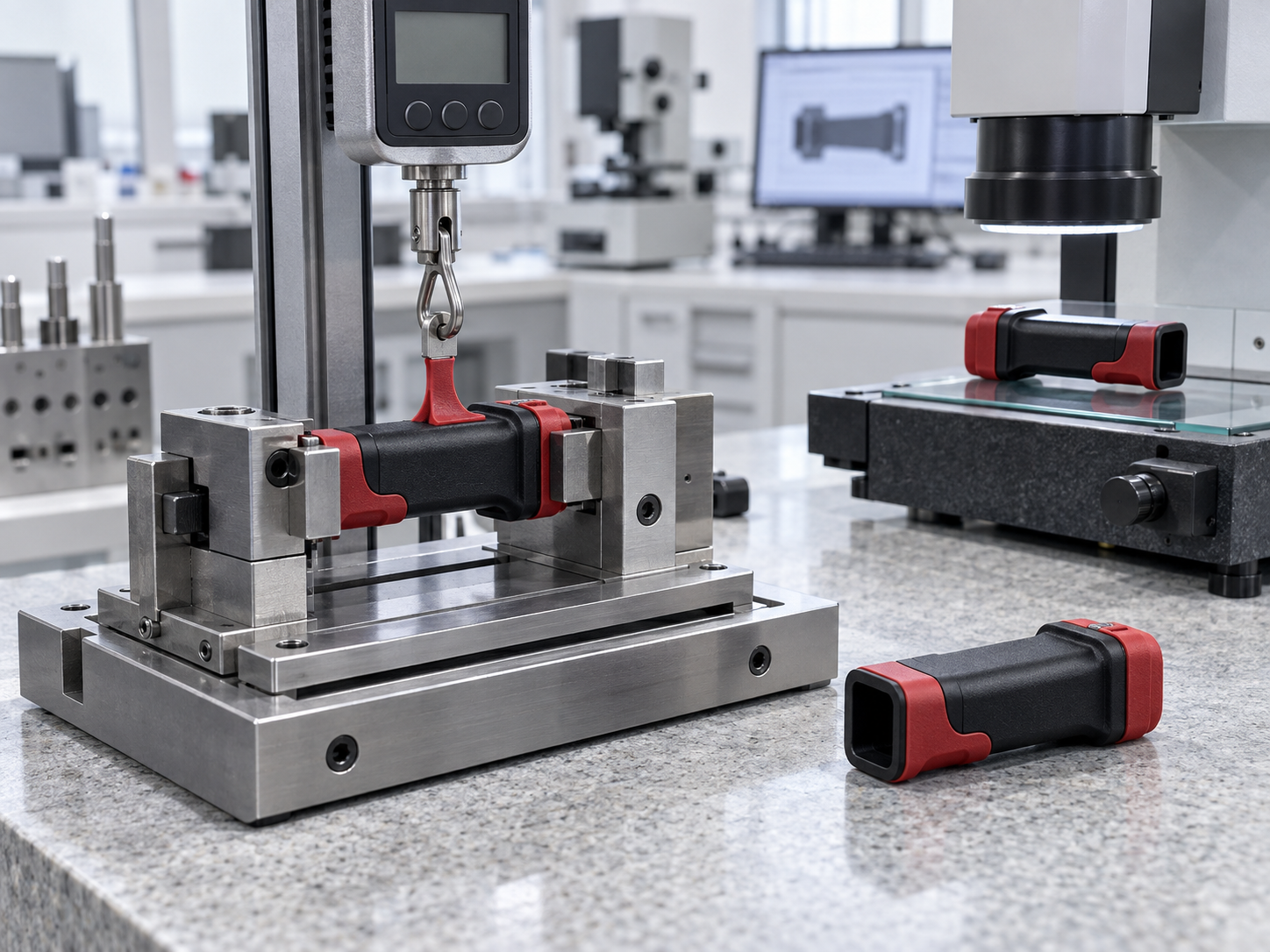
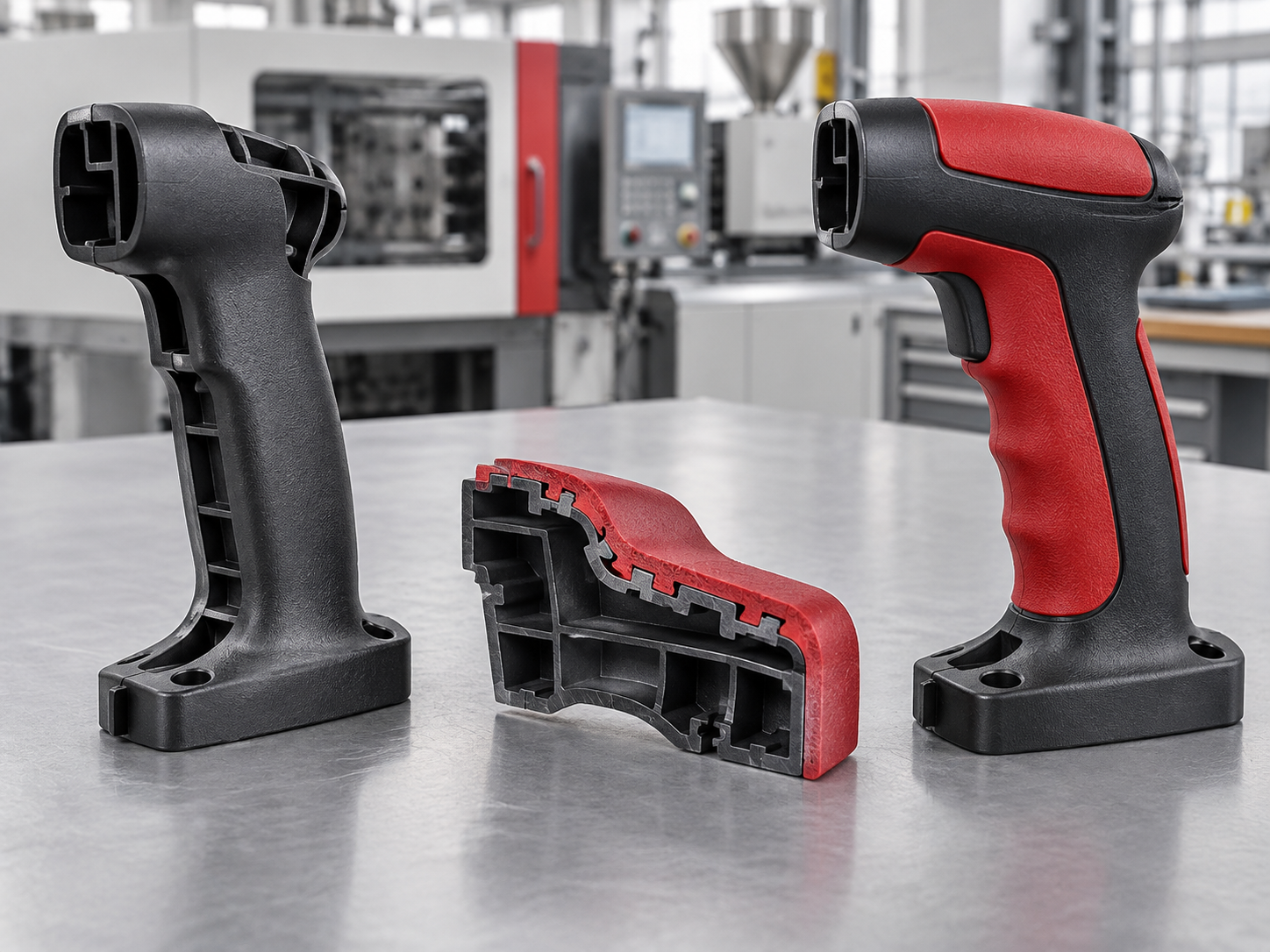
Quality inspection of an overmolded plastic component
QUALITY VALIDATION Checked Before Production Release

Inspection plans can be adapted to your drawing, product function and production requirements.

QUALITY CONTROL

Quality Built Into Every Overmolded Part

Overmolded components require control of both the rigid substrate and the second molded material. We verify critical dimensions, bonding, material coverage and appearance throughout the process.

Bonding & Adhesion

Verify that the overmold remains securely attached to the substrate under expected handling conditions.

Dimensional Inspection

Measure critical dimensions, overmold thickness and interface locations against the approved drawing.

Material Coverage

Check that the second-shot material fills the intended areas consistently without short shots or exposed gaps.

Surface & Edge Quality

Inspect parting lines, color consistency, texture, flash and transitions between the two materials.

Documented Inspection Support
  • First Article Inspection
  • Dimensional Reports
  • Visual Acceptance Standards
  • Production Traceability

WHY HORDRT

One Manufacturing Partner for Tooling and Overmolding

From design review and mold manufacturing to material validation, injection molding and inspection, HordRT supports the complete overmolding process under one coordinated workflow.

COMPLETE PROJECT SUPPORT

Move from Design to Production with Fewer Handoffs

Our engineering, tooling, molding and quality teams work together to identify material, geometry and process risks before they affect production.

5–10 Days Tooling Lead Time
No MOQ Flexible Order Volumes
350+ Manufacturing Employees
4 Quality Certifications
Start Your Overmolding Project

In-House Mold Manufacturing

Overmolding tools and substrate molds are manufactured and validated within our tooling operation, improving communication between mold design and molding teams.

Material Selection Support

We review substrate and elastomer compatibility, hardness, processing temperatures and application requirements before confirming the material combination.

Design for Manufacturability Review

Engineers review wall thickness, draft, shutoff surfaces, mechanical interlocks and substrate positioning before tooling begins.

Prototype to Production Support

Flexible tooling and production options support design validation, bridge quantities and repeat production without requiring a fixed minimum order quantity.

Controlled Quality Validation

Inspection can include dimensional reports, adhesion checks, material coverage review and documented visual acceptance standards.

Certified Quality Systems

Manufacturing is supported by ISO 9001, IATF 16949, ISO 13485 and ISO 14001 certified management systems.

OVERMOLDING CASE STUDIES

Overmolding Solutions for Real Product Requirements

Each overmolding project requires a different balance of material compatibility, product function, appearance and manufacturing control. Here are several representative applications.
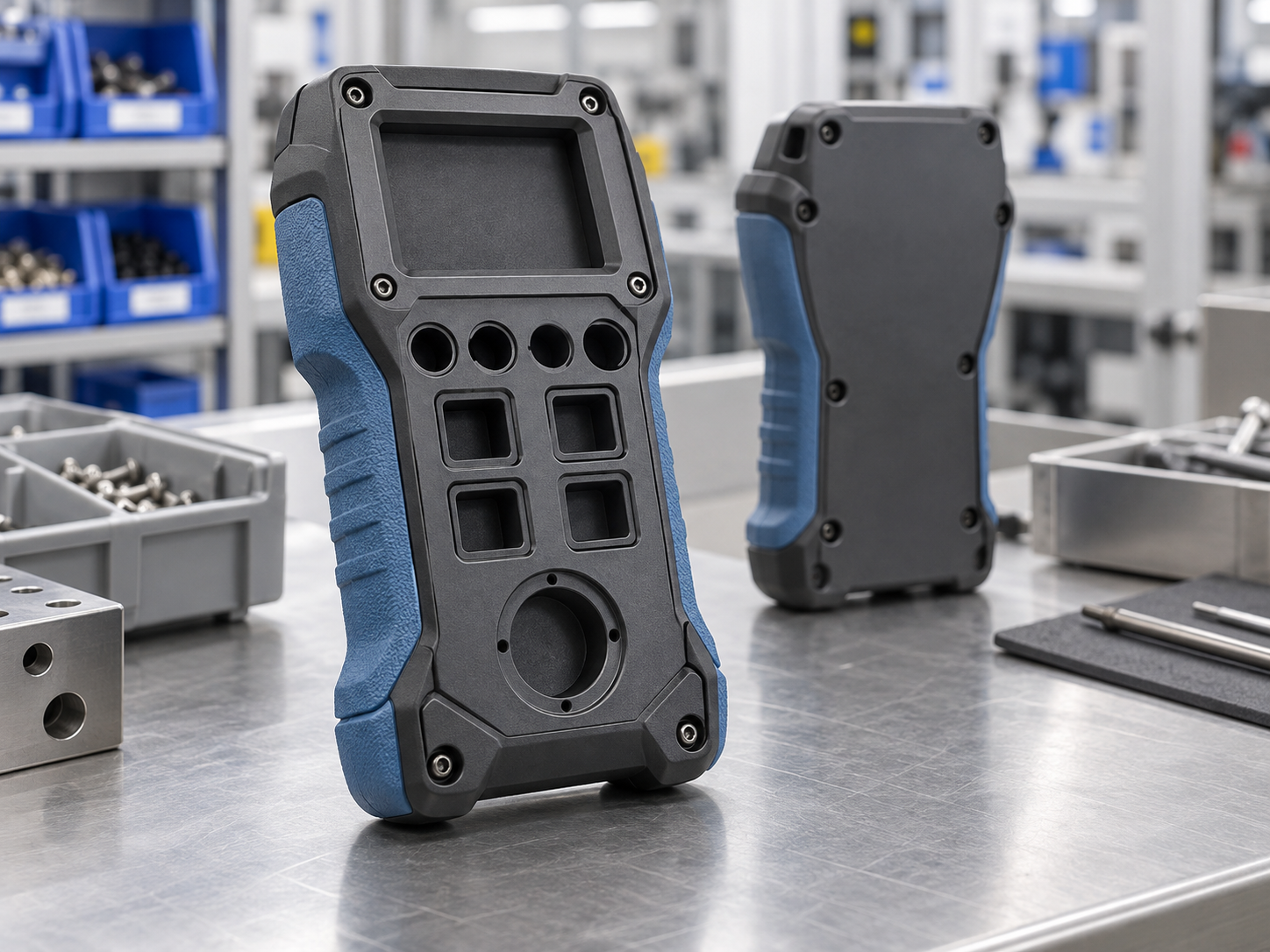
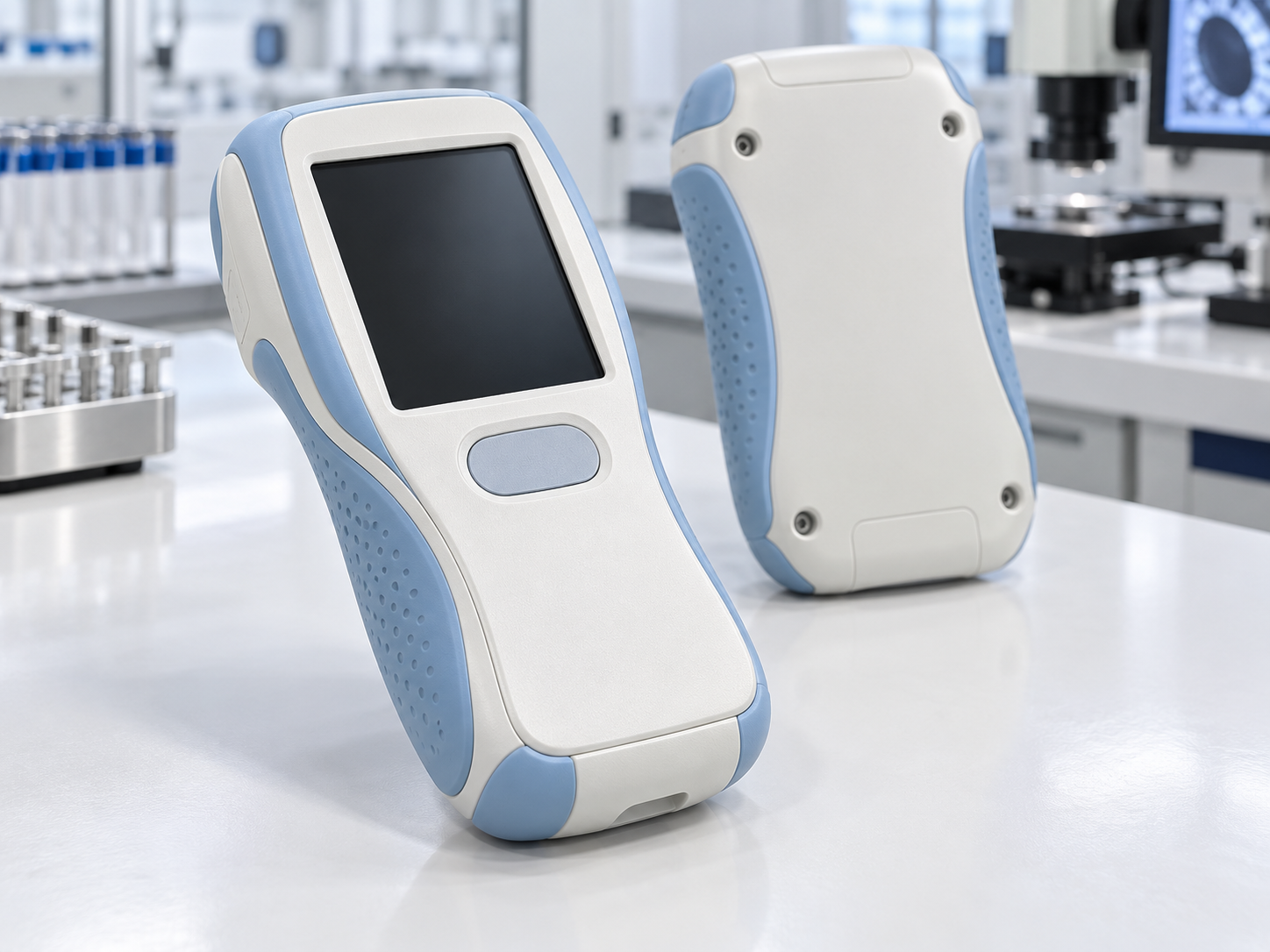
Medical device housing with soft-touch TPE overmold MEDICAL DEVICE
HANDHELD HOUSING

Soft-Touch Medical Device Enclosure

A rigid medical housing combined with a soft perimeter to improve handling and protect frequently contacted edges.
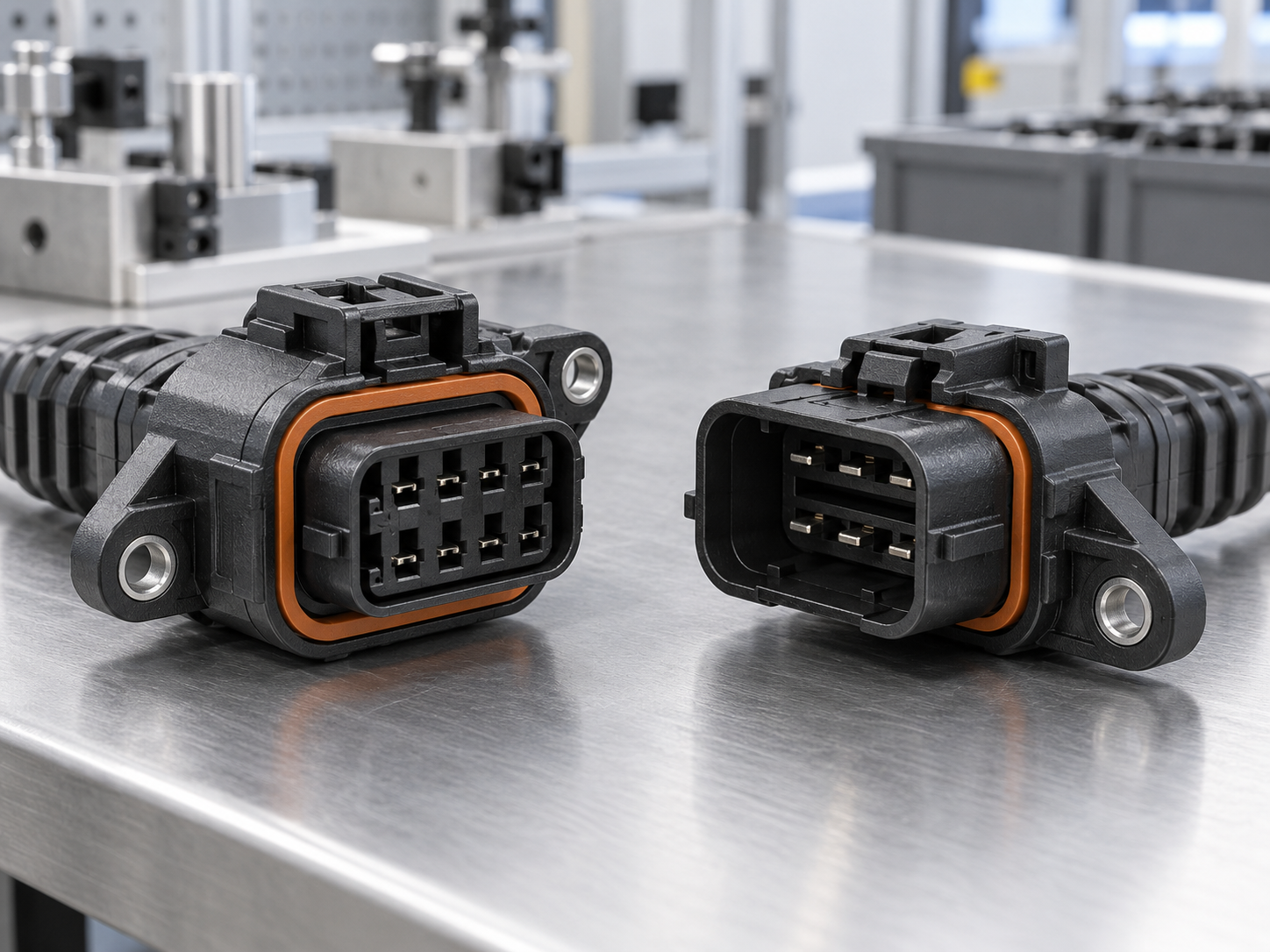
SOLUTION PC/ABS substrate with compatible TPE
Automotive connector with an integrated elastomer seal AUTOMOTIVE
SEALED COMPONENT

Sealed Automotive Connector Housing

An integrated elastomer sealing feature reduced separate components while protecting the connector interface.
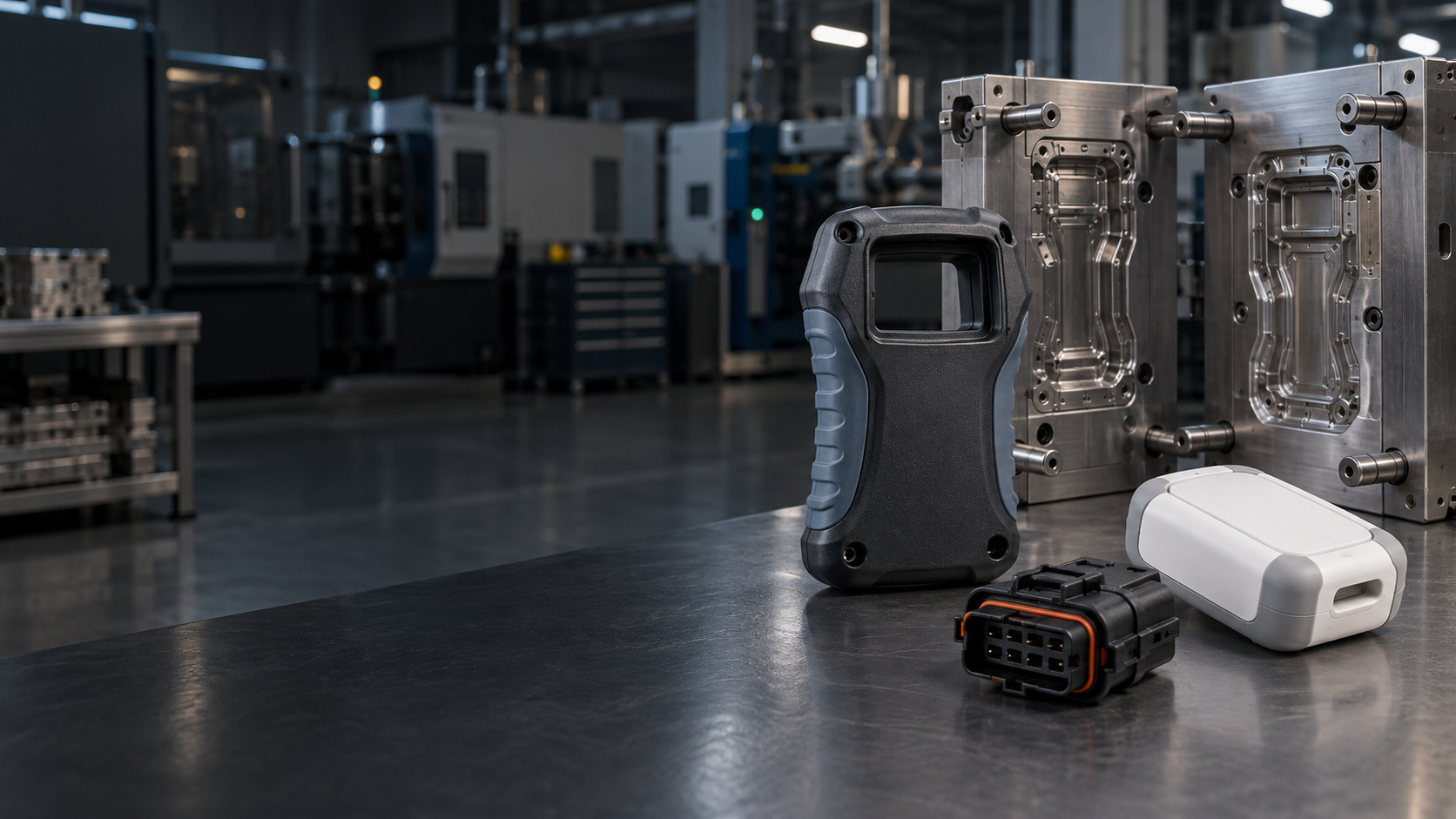
SOLUTION Rigid housing with functional sealing overmold

Rules of Overmolding Design and Production

Applications of Overmolding

START YOUR OVERMOLDING PROJECT

Have a Multi-Material Part Ready for Review?

Send us your 3D models, drawings, material requirements and expected production volumes. Our engineering team will review the design and recommend a suitable overmolding solution.

  • Design and Material Review
  • Tooling and Molding Support
  • No Minimum Order Quantity

Get the Perfect Parts with HordRT Overmolding Services

Work with a professional overmolding manufacturer like HordRT.

FREQUENTLY ASKED QUESTIONS

Overmolding FAQs

Find answers to common questions about overmolding materials, tooling, bonding, production quantities and part design.

STILL HAVE QUESTIONS?

Talk to Our Engineering Team

Send us your drawings, material requirements and expected production volume. We will review your project and recommend a suitable overmolding solution.

Ask an Engineer
01 What is overmolding?

Overmolding is a manufacturing process in which one material is molded over an existing substrate or previously molded component. It is commonly used to add soft-touch grips, sealing features, impact protection, insulation or functional surfaces to rigid plastic or metal parts.

02 What materials can be used for overmolding?

Common overmolding materials include TPE, TPU, TPV and silicone, combined with rigid substrates such as ABS, PC, PC/ABS, nylon and polypropylene. Material selection depends on bonding compatibility, hardness, chemical resistance, operating temperature and end-use requirements.

03 How do you ensure adhesion between the two materials?

Reliable adhesion begins with selecting chemically compatible materials. Mechanical locking features such as holes, undercuts, grooves and wraparound geometry can also improve retention. Mold temperature, surface condition and processing parameters must be carefully controlled during production.

04 What is the difference between overmolding and insert molding?

Overmolding typically combines two polymer materials to create one finished component. Insert molding places a preformed component—often a metal insert, threaded fitting or electrical contact—inside the mold before plastic is molded around it.

05 Can you support low-volume overmolding production?

Yes. HordRT supports prototype, bridge and production overmolding projects with no fixed minimum order quantity. The tooling and production approach can be selected according to part geometry, material requirements and expected volume.

06 What design features are important for overmolded parts?

Important considerations include uniform overmold thickness, suitable draft angles, smooth material transitions, secure shutoff surfaces and adequate mechanical retention. The design should also account for material shrinkage and prevent thin edges that may fill inconsistently.

07 What information is needed for an overmolding quote?

Please provide your 3D CAD files, 2D drawings, preferred substrate and overmold materials, color and hardness requirements, estimated quantities and any functional or testing requirements. Our engineering team will review the information before preparing a quotation.

Get Quote
Get instant pricing, project lead times, and DFM feedback.
doc|docx|ppt|pptx|pdf|jpg|png|STEP|STP|STL|ZIP|RAR
IGES|IGS|SLDPRT|3DM|SAT or X_T files