
CUSTOM SILICONE MOLDING
Custom Silicone Compression Molding.
Manufacture durable, flexible silicone components with custom tooling and production support—from prototypes to repeat orders.
- Custom Silicone Parts
- Tooling & DFM Support
- Prototype to Production
- No Minimum Order Quantity
PROCESS OVERVIEW
What Is Silicone
Compression Molding?
Silicone compression molding uses heat and pressure to shape pre-measured silicone material inside a precision-machined mold.
The process is well suited to flexible components with demanding sealing, temperature-resistance and electrical-insulation requirements. HordRT supports customers from part review and mold development through molding, inspection and repeat production.
Sealing Components
Gaskets, O-rings, diaphragms and custom seals.
Functional Silicone Parts
Keypads, boots, covers and flexible technical parts.
HOW THE PROCESS WORKS
Material, Heat
and Controlled Pressure
A controlled amount of silicone material is prepared and positioned inside the mold cavity.
The mold closes under pressure while heat cures the silicone into the required geometry.
Parts are removed, trimmed and inspected according to the drawing and project requirements.
Suitable for prototypes, bridge quantities and repeat production.
MOLDING CAPABILITIES
Silicone Components for Real-World Applications.
We manufacture custom silicone parts according to your drawings, samples and functional requirements—from initial tooling through repeat production.
Seals & Gaskets
Custom silicone sealing components designed for dimensional fit, compression performance and operating conditions.
O-rings · Profile seals · Molded gasketsDiaphragms & Membranes
Thin flexible components developed for controlled movement, pressure response and reliable sealing.
Valve diaphragms · Membranes · Pressure sealsKeypads & Buttons
Molded silicone controls with flexible structures, tactile response and application-specific surface details.
Rubber keypads · Control buttons · Switch coversBoots & Protective Parts
Flexible molded covers used to protect components from moisture, dust, impact and repeated movement.
Connector boots · Covers · Flexible sleevesNeed a Different Silicone Component?
Share your drawing or 3D model for a review of geometry, material, tooling and production requirements.
MATERIAL OPTIONS
Silicone Materials Selected for Part Performance.
Material selection is based on how the component needs to seal, flex, withstand temperature and perform in its operating environment.
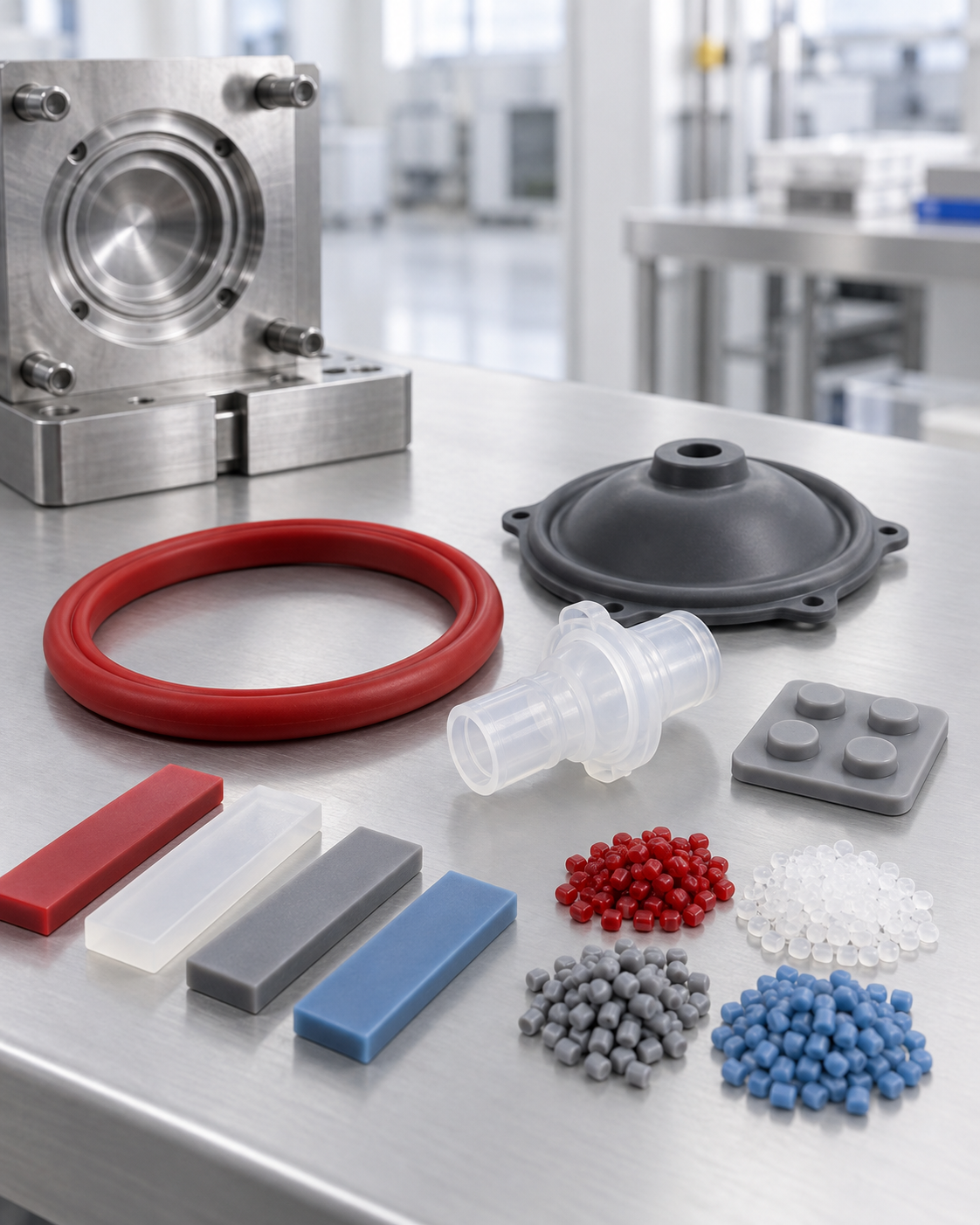
Matched to your part geometry, function and operating conditions.
AVAILABLE MATERIAL DIRECTIONS
Choose the Compound Around the Application
We review the part requirements before recommending a suitable silicone material and molding approach.General-Purpose Silicone
A versatile choice for seals, covers and flexible components used in general industrial applications.
High-Temperature Silicone
Selected for components exposed to elevated temperatures or repeated thermal cycles.
Application-Specific Grades
Food-contact, medical or other regulated requirements can be reviewed for qualified projects.
Material grade, compliance documentation and testing requirements should be confirmed during project review.
HOW IT WORKS
From Part Requirements to Finished Silicone Components.
A controlled workflow connects part review, tooling, material preparation, molding and inspection before production parts are delivered.
PROJECT REVIEW
Drawing & Requirement Review
We review geometry, sealing requirements, operating conditions, quantities and applicable documentation.MATERIAL PLANNING
Compound Selection
Silicone material is selected according to hardness, flexibility, temperature and application requirements.TOOL DEVELOPMENT
Compression Mold Manufacturing
The mold is designed and machined around the part geometry, material behavior and planned production process.PROCESS PREPARATION
Material Measuring & Placement
A controlled amount of silicone material is prepared and positioned inside the mold cavity.MOLDING & CURING
Heat and Controlled Pressure
The mold closes under controlled pressure while heat cures the silicone into the required shape.FINISHING & QUALITY
Trimming and Inspection
Molded parts are removed, trimmed and inspected according to the drawing and agreed project requirements.DESIGN CONSIDERATIONS
Design the Part for Reliable Molding.
Silicone behaves differently from rigid plastics during molding, release and assembly. Reviewing these factors early can simplify tooling and improve production consistency.
DFM Review Before Tooling
Send us your 3D model and drawing so we can review the geometry, material, parting line and production requirements.
Wall Thickness & Transitions
Balanced wall sections and gradual transitions help the silicone fill, compress and cure more consistently.
Parting Line & Flash Control
Parting-line location should consider appearance, sealing surfaces, trimming access and functional contact areas.
Undercuts & Part Release
Silicone flexibility can allow some undercuts, but geometry must still support reliable release without part damage.
Sealing & Compression Features
Sealing beads, lips and contact surfaces should be designed around the intended compression and assembly conditions.
QUALITY CONTROL
Quality Checked Throughout Silicone Production.
Flexible silicone components require more than a final visual check. Material preparation, molding conditions, dimensions and finishing all contribute to part performance.
Inspection requirements are defined according to the drawing, application and agreed quality plan. This helps maintain consistency from initial samples through repeat production.
Dimensional Inspection
Key dimensions are checked according to the drawing and approved inspection requirements.
Visual & Surface Review
Parts are checked for flash, contamination, incomplete filling and visible surface defects.
Material & Hardness Checks
Material information and applicable hardness requirements can be verified against the project specification.
Inspection Documentation
Inspection records and material documentation can be provided according to agreed project requirements.
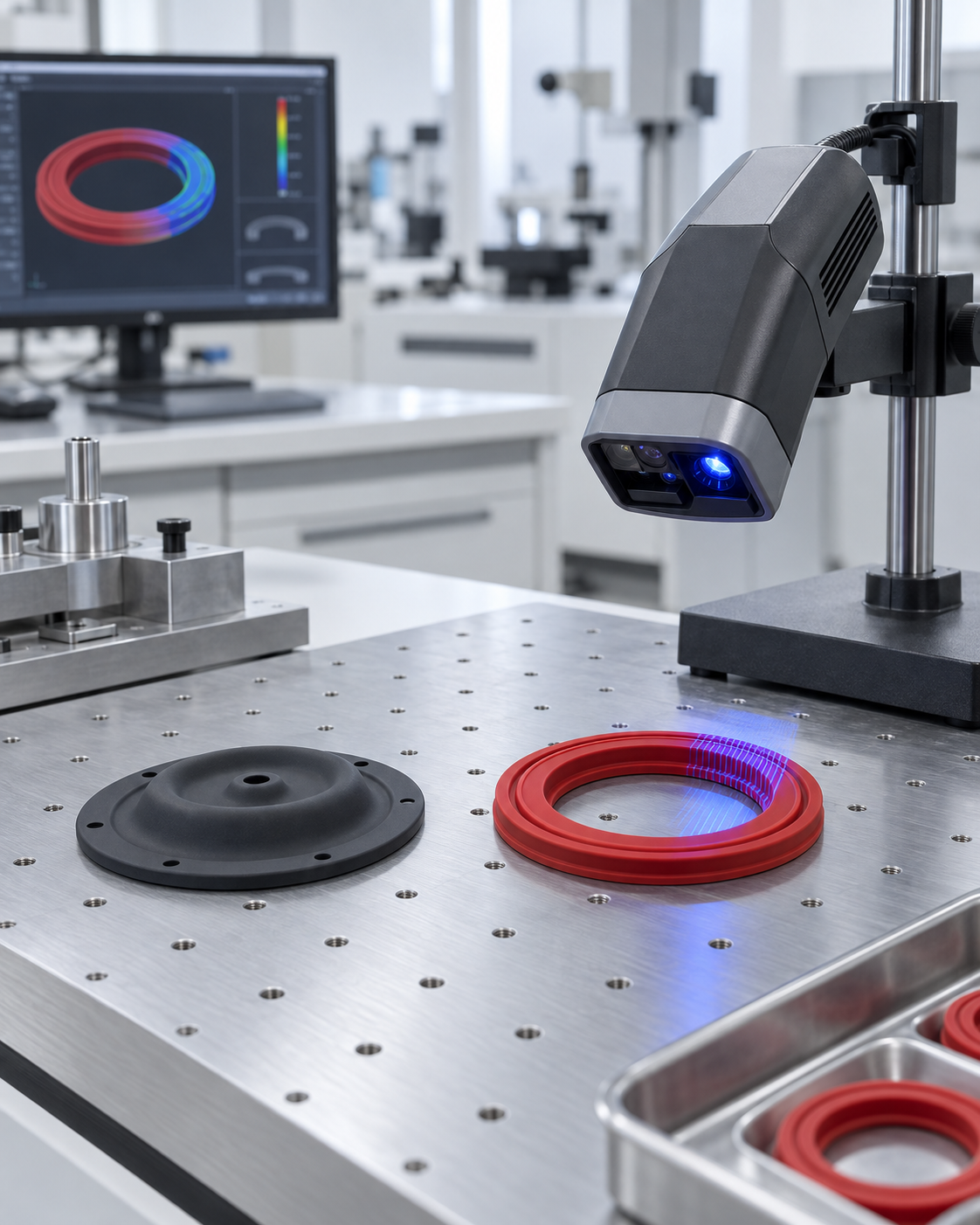
Inspection planning is matched to the component and its functional requirements.
APPLICATIONS & INDUSTRIES
Silicone Components for Demanding Applications.
Compression-molded silicone parts are used where sealing, flexibility, protection and resistance to operating conditions matter.
Automotive Components
Flexible seals, protective covers and vibration-resistant components for vehicle systems and assemblies.
Medical & Healthcare
Silicone components for healthcare products where cleanliness, flexibility and material documentation may be required.
Electronics & Controls
Insulating, sealing and tactile silicone components for electronic equipment and control interfaces.
Industrial Equipment
Durable flexible components for machinery, automation systems and production equipment.
Fluid Handling
Sealing and flow-control components developed around pressure, movement and media-contact requirements.
Consumer Products
Flexible, protective and tactile parts for everyday products, handheld equipment and assembled devices.
Don’t see your industry? We manufacture according to your part drawing and project requirements.
WHY HORDRT
One Partner from Tooling to Silicone Production.
Part review, tooling, molding and inspection are coordinated through one team to support a clear and consistent project workflow.
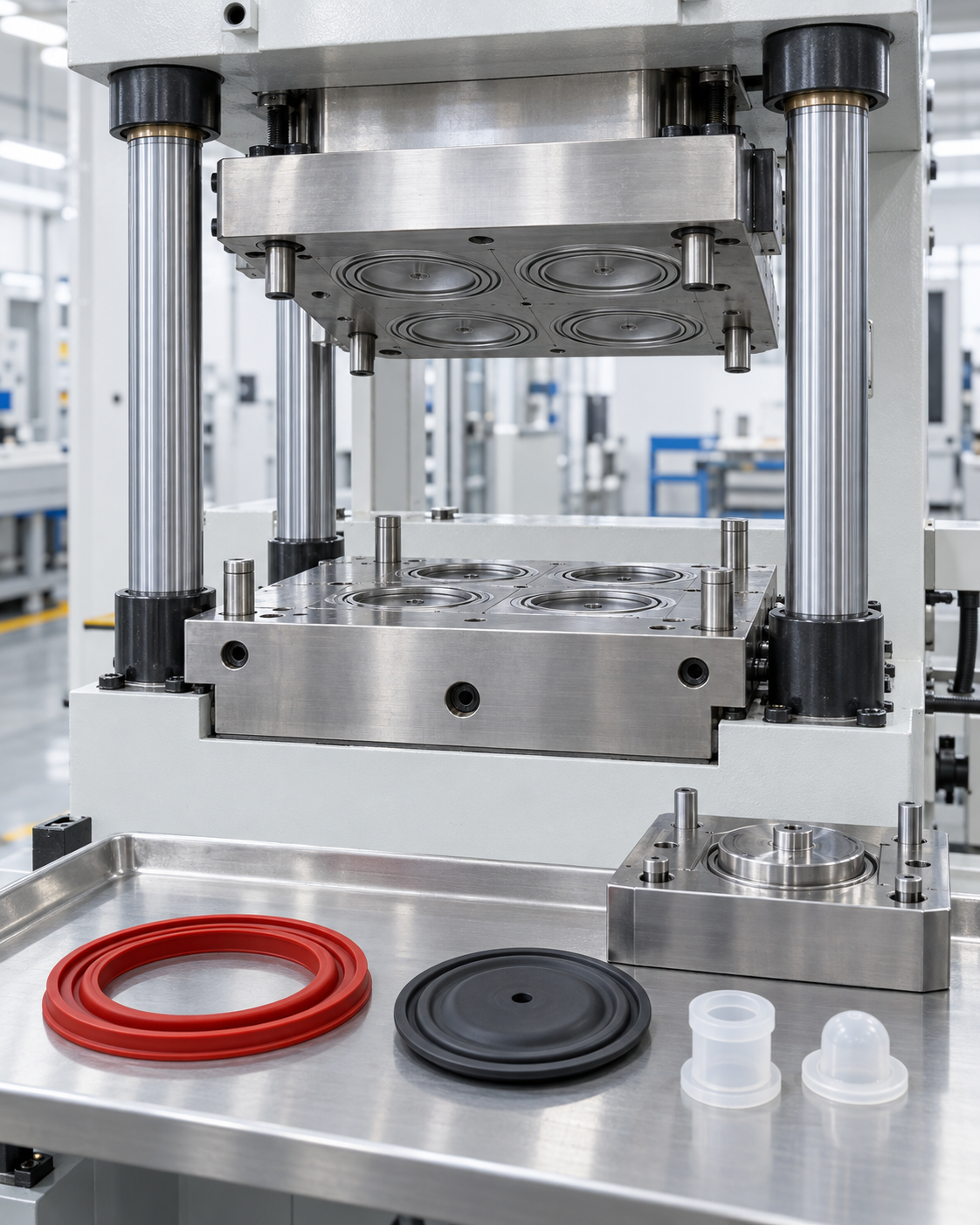
From initial part review to repeat production.
WHAT YOU CAN EXPECT
Manufacturing Support Built Around Your Project
Tooling & Molding Coordination
Mold development and production requirements are reviewed as part of the same project.
DFM Before Tooling
Geometry, material behavior, parting lines and demolding considerations are reviewed early.
Prototype to Production
Support can continue from initial samples into bridge quantities and repeat manufacturing.
Defined Quality Requirements
Inspection planning is matched to the drawing, application and agreed project requirements.
Send us your drawing, model or sample requirements.

START YOUR SILICONE PROJECT
Have a Silicone Part Ready for Review?
Send us your 3D model, drawing or sample requirements. Our team will review the part geometry, material, tooling and production needs before preparing a manufacturing solution.
- DFM and Part Review
- Material Selection Support
- Custom Compression Tooling
- Prototype to Production
01 What information do you need to quote my silicone project?
Please send your 3D model, 2D drawing, required quantity, preferred silicone material or hardness, color requirements and any applicable performance or documentation requirements. If some details are not confirmed, our engineers can recommend practical options.
02 What parts are suitable for silicone compression molding?
Common applications include seals, gaskets, diaphragms, membranes, keypads, buttons, protective boots, flexible covers and other custom technical silicone components.
03 What silicone materials and hardness options are available?
Material selection depends on the required flexibility, sealing performance, temperature exposure and operating environment. Standard and custom hardness and color options can be reviewed for each project.
04 What tolerances can silicone compression molding achieve?
Achievable tolerances depend on part size, geometry, wall thickness, material hardness, shrinkage and the feature being measured. Critical dimensions should be identified on the drawing for engineering review before tooling.
05 What is the typical lead time for a silicone molding project?
Lead time depends on part complexity, mold structure, material requirements, quantity and inspection needs. A project-specific schedule will be provided after the drawing and requirements have been reviewed.
06 Can you support prototypes and low-volume production?
Yes. With no minimum order quantity, we can support initial samples, design validation, bridge quantities and repeat production according to your project requirements.
07 How do you inspect compression-molded silicone parts?
Inspection can include dimensional verification, visual and surface review, material or hardness checks and inspection documentation according to the drawing and agreed project requirements.
WHY CHOOSE US

INSTANT QUOTING
Timely reply and provide the quote within 24 hours

NO MOQ REQUIRED
Hord does not have minimum order quantity

HIGH QUALITY
ISO 9001 & IATF 16949 certificated and inspect every step

COST-EFFICIENT
+30% cost lower than western competitors

QUICK TUAROUND
Parts make in 7 days and delivery on time

DFM ANALYSIS
Once receiving the inquiry, we will provide you with a preliminary DFM report

PROFESSIONAL SERVICES
More than 20 years of rapid tooling making

GOOD RAPUTATION FROM CUSTOMERS
Customers are satisfied with our services, products quality and delivery time.