Skip to content

CUSTOM METAL STAMPING

Precision Metal Stamping From Tooling to Production

Custom stamped metal parts with integrated tooling, forming, secondary processing and quality inspection.

  • Prototype & Production Tooling
  • Progressive & Compound Dies
  • Low- to High-Volume Production
  • Secondary Operations Available

METAL STAMPING SERVICES

What Is
Metal Stamping?

Metal stamping transforms flat sheet metal into precisely shaped components using dedicated tooling and controlled press operations.

Depending on the part geometry and production requirements, the process may include blanking, punching, bending, drawing, embossing and other forming operations. It is particularly suitable for producing repeatable metal parts efficiently across medium- and high-volume production runs.

HordRT supports projects from manufacturability review and stamping-die development through production, secondary processing and inspection.

Tooling Development

Stamping-die design and manufacturing based on part geometry, material and production volume.

Precision Forming

Controlled blanking, punching, bending and forming for consistent part geometry.

Flexible Production

Manufacturing support from initial validation batches to stable volume production.

Quality Inspection

Dimensional and visual inspection throughout tooling validation and production.

Need help evaluating whether stamping is suitable for your component?

Discuss Your Project

STAMPING CAPABILITIES

Metal Forming for
Different Part Requirements

We select the stamping method and tooling structure according to the part geometry, material, tolerance requirements and expected production volume.
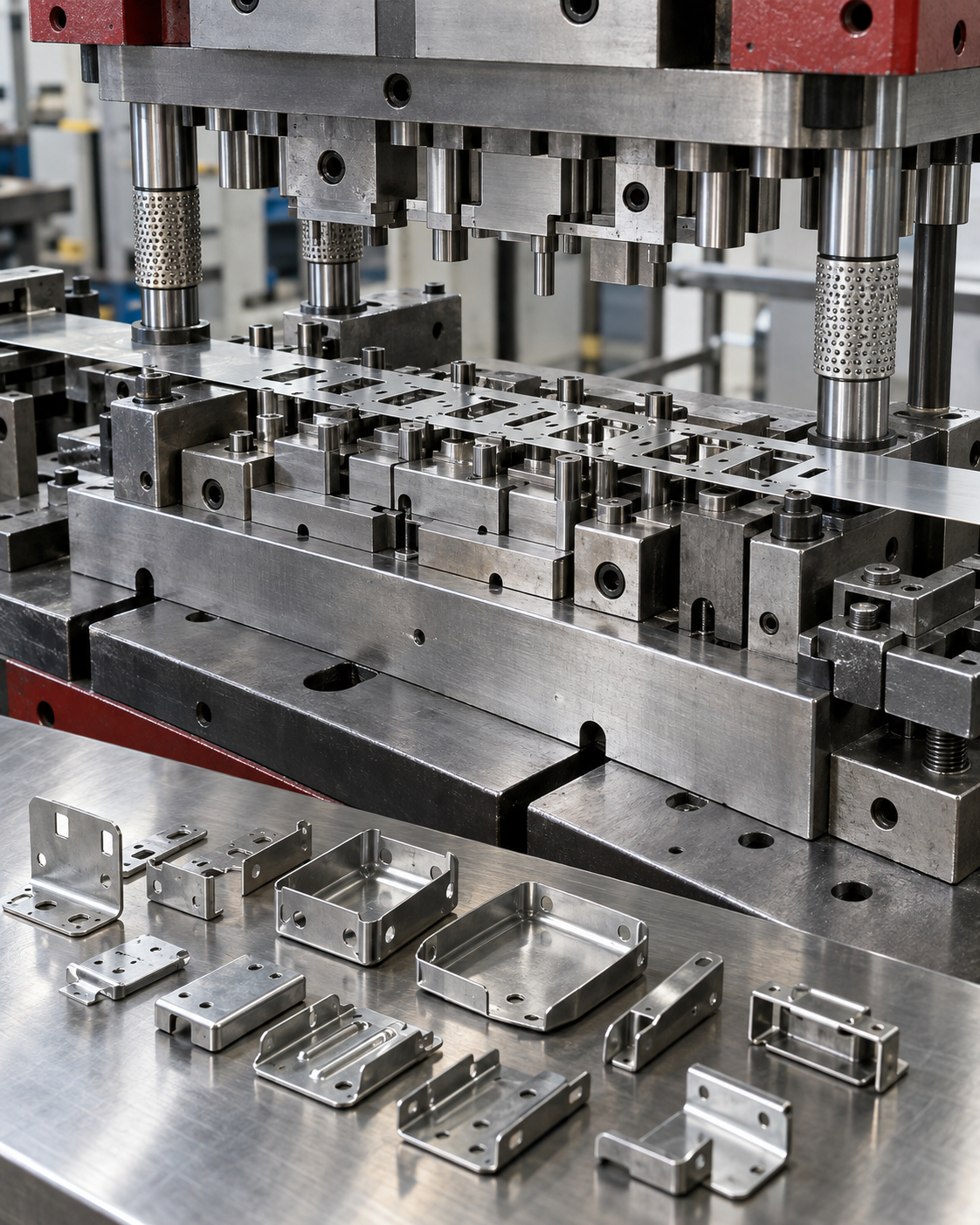
Metal stamping tooling and precision stamped components
Integrated Support Tooling + Stamping + Secondary Operations

Blanking & Punching

Efficient cutting of external profiles, holes, slots and other features from flat sheet metal.

  • Profile blanking
  • Hole and slot punching

Bending & Forming

Controlled deformation of sheet metal to produce flanges, angles, ribs and three-dimensional features.

  • Flanges and bends
  • Embossed and formed features

Progressive Die Stamping

Multiple forming operations arranged in sequence as the metal strip advances through the die.

  • Repeatable multi-stage forming
  • Efficient volume production

Deep Drawing

Forming flat material into hollow or recessed components while controlling material flow and wall integrity.

  • Cups and recessed shapes
  • Controlled material flow

MATERIAL OPTIONS

Materials Selected for Formability and Performance

We evaluate mechanical properties, forming behavior, surface requirements and end-use conditions before recommending a material for your stamped component.

SS

Stainless Steel

Corrosion-resistant · Durable · Clean finish

Suitable for parts requiring strength, corrosion resistance, cleanliness and a refined surface appearance.

Common options 301 · 304 · 316
CS

Carbon Steel

Strong · Formable · Cost-effective

A practical option for structural components that require reliable strength and economical volume production.

Common options Low Carbon · Mild Steel
AL

Aluminum

Lightweight · Formable · Corrosion-resistant

Used for components where low weight, thermal performance and corrosion resistance are important.

Common options 1050 · 3003 · 5052
CU

Copper & Brass

Conductive · Formable · Functional

Selected for electrical contacts, terminals and components requiring conductivity or thermal transfer.

Common options Copper · Brass Alloys

BEYOND STAMPING

From Stamped Components to Production-Ready Parts

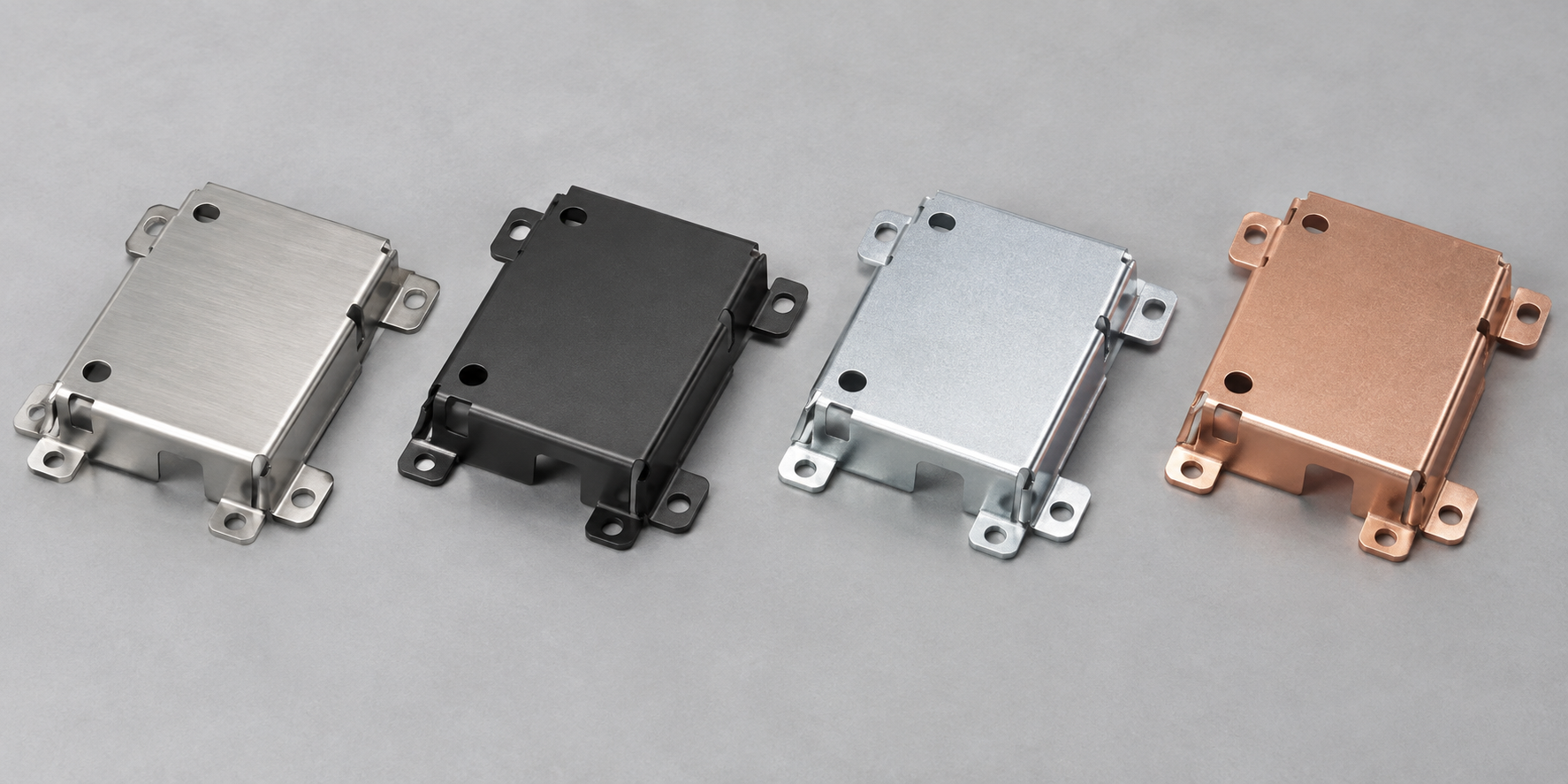
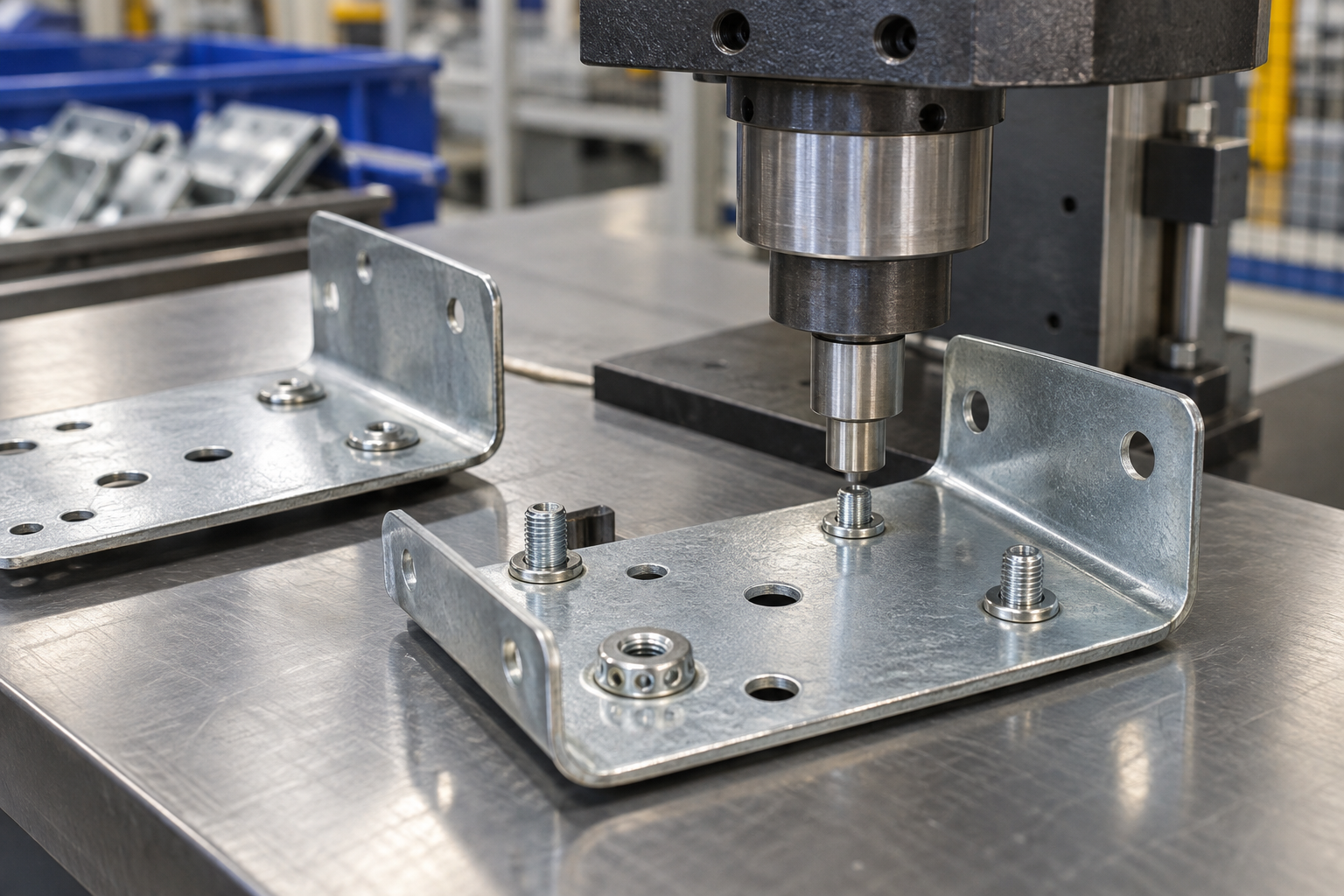
Secondary operations, surface treatments and assembly support can be integrated into the manufacturing process based on your functional, appearance and delivery requirements.
Deburring

Clean edges and improved handling

Tapping

Threads and precision hole features

Welding

Joining stamped and fabricated parts

Hardware Installation

Fasteners, inserts and riveted hardware

Powder Coating

Durable color and surface protection

Plating & Passivation

Corrosion and conductivity treatments

QUALITY CONTROL

Quality Built Into Every Production Stage

Inspection begins during tooling validation and continues throughout production to help maintain dimensional consistency, surface quality and reliable part-to-part repeatability.

Before Tooling

Drawing & Specification Review

  • Critical dimensions
  • Material requirements
  • Surface and appearance criteria

Establish clear inspection requirements before die development and sampling.

Tool Trial

First Article Inspection

  • Dimensional verification
  • Form and feature accuracy
  • Burr and edge condition

Confirm that the tooling and forming sequence produce parts that meet the approved requirements.

During Production

In-Process Inspection

  • Key dimensions and features
  • Tool wear indicators
  • Surface and forming condition

Monitor process stability and identify variation before it affects larger production quantities.

Before Shipment

Final Inspection

  • Final dimensions
  • Finish and appearance
  • Quantity and packaging

Verify that finished components are complete, protected and ready for delivery.

INDUSTRIES & APPLICATIONS

Stamped Parts for Different Applications

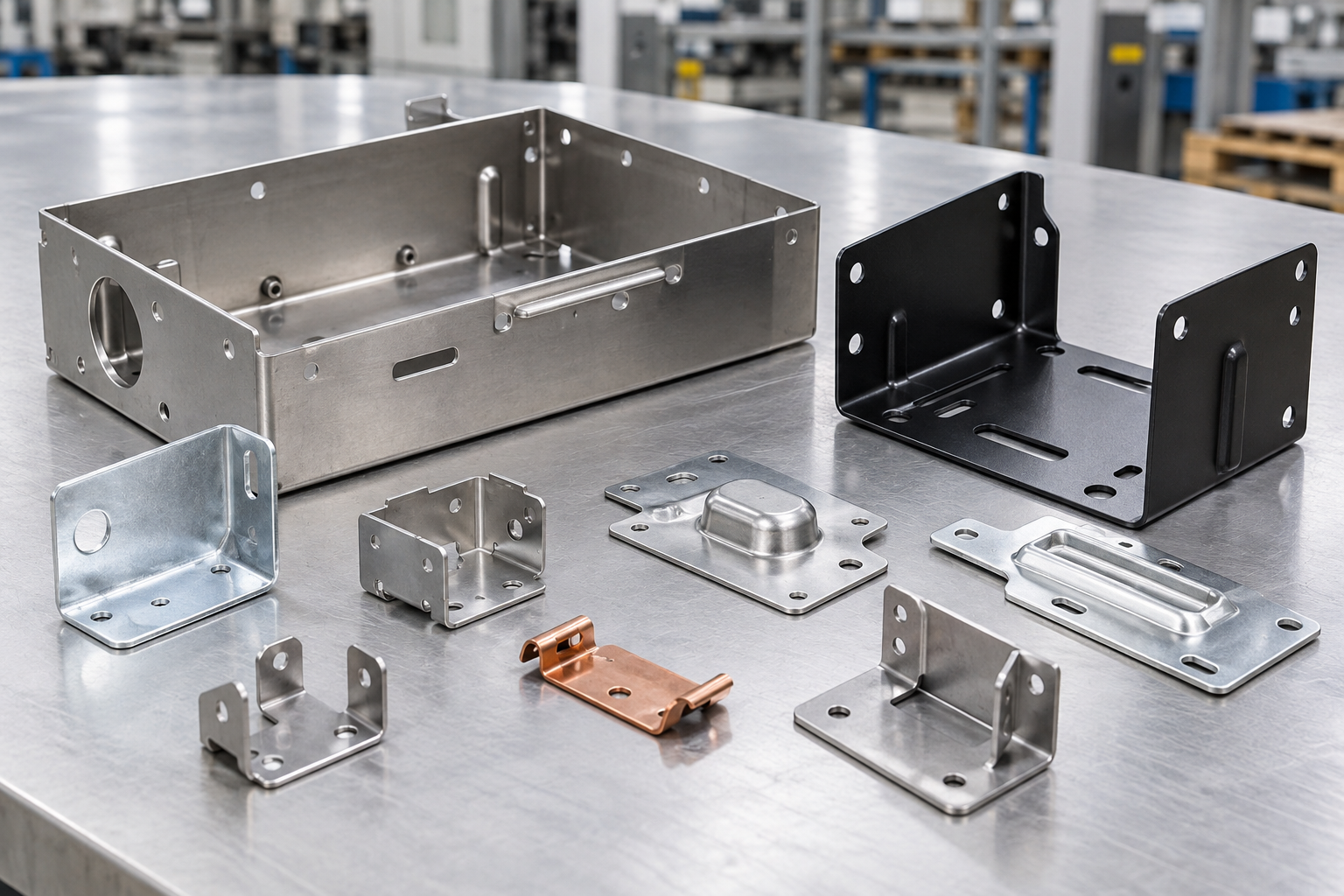
Metal stamping supports applications that require repeatable geometry, efficient production and reliable mechanical performance across multiple industries.
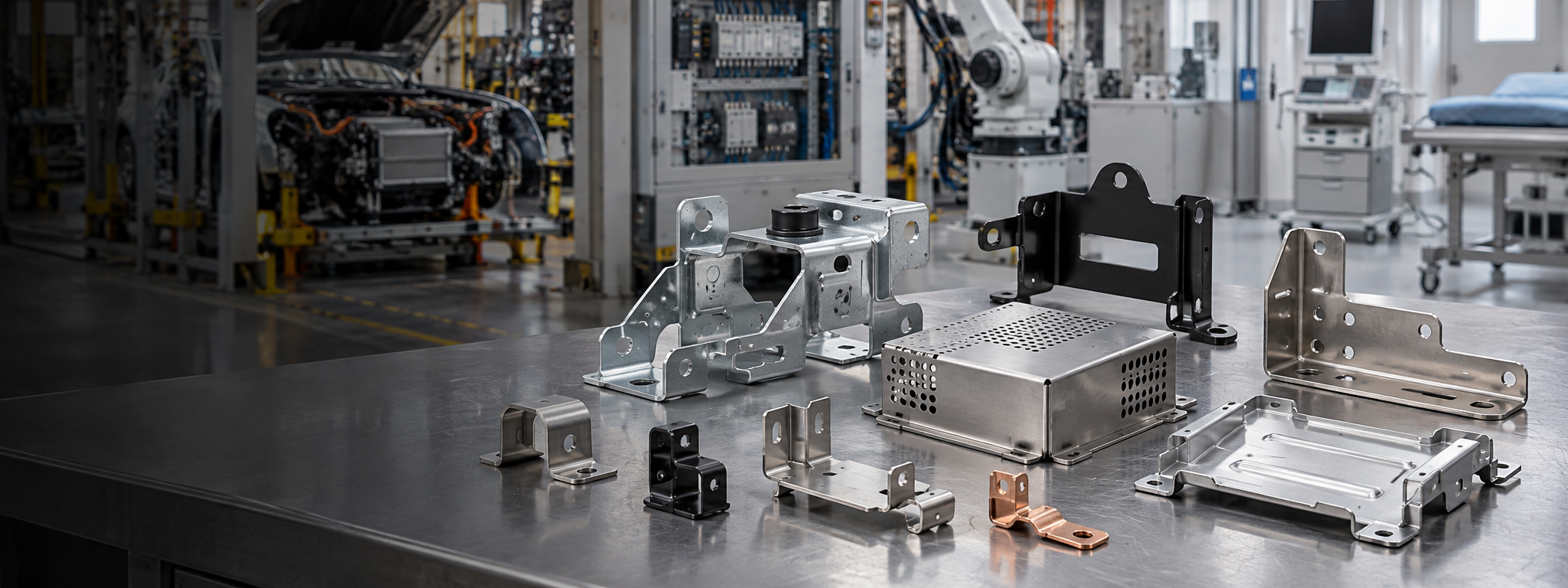
Stamped metal components for automotive electronics medical and industrial applications

APPLICATION-DRIVEN MANUFACTURING

One manufacturing process. Many functional requirements.

From structural brackets and electronic shields to clips, housings and precision formed components.

Automotive

Brackets, mounting plates, shields, clips and structural components for vehicle systems.

Electronics

EMI shields, terminals, contacts, covers and formed components for electronic assemblies.

Medical Devices

Precision brackets, covers and supporting metal components for medical equipment.

Industrial Equipment

Machine brackets, guards, mounting components and formed parts for industrial systems.

Consumer Products

Functional housings, internal supports, clips and visible metal components.

Have a stamped component for another application?

Share your drawing and performance requirements for an engineering review.

Discuss Your Application

START YOUR STAMPING PROJECT

Ready to Your Stamping Metal Parts?

Send us your drawings, material requirements and expected production volume. Our team will review the part, tooling approach and secondary operations for your project.

Part drawings
Material specification
Expected production volume

PROJECT QUESTIONS

Metal Stamping FAQs

Clear answers to the questions buyers ask before starting a metal stamping project.

01 What information do you need to quote my stamping project?

Please send your 2D drawing or 3D model, preferred material, material thickness, required quantity, annual production volume, tolerances, surface-finish requirements and any relevant inspection specifications.

02 What materials can be used for metal stamping?

Common options include stainless steel, carbon steel, aluminum, copper and brass. Material selection depends on formability, strength, corrosion resistance, conductivity, appearance and final application requirements.

03 What metal stamping processes do you support?

Our metal stamping capabilities include blanking, punching, bending, forming, embossing, drawing and progressive die stamping. The process is selected according to the component geometry, material and expected production volume.

04 Does a metal stamping project require dedicated tooling?

Most stamping projects require dedicated dies designed around the part geometry and forming sequence. Depending on project requirements, tooling may combine several operations or use a progressive layout for efficient production.

05 Is metal stamping suitable for low-volume production?

Suitability depends on part geometry, tooling complexity and total production requirements. For lower volumes, simplified tooling or another sheet metal process may be more economical. Our engineers can compare the available options.

06 What secondary operations are available after stamping?

Secondary operations may include deburring, tapping, machining, welding, riveting, hardware installation and assembly. Surface treatments such as powder coating, plating, passivation, brushing and polishing are also available according to project requirements.

07 How do you inspect stamped metal parts?

Inspection can include first article verification, in-process dimensional checks, visual inspection and final inspection. CMM, optical measurement and blue-light scanning may be used according to the geometry and critical features.

Get Quote
Get instant pricing, project lead times, and DFM feedback.
doc|docx|ppt|pptx|pdf|jpg|png|STEP|STP|STL|ZIP|RAR
IGES|IGS|SLDPRT|3DM|SAT or X_T files