-q4gvl4k29y4hq8j9rjpapvj0ft06fje63olt7p210i.png "HordRT Logo-2023(red)")

When developing a metal part, one of the earliest manufacturing decisions is whether to use sheet metal fabrication or metal stamping. While both processes begin with flat metal sheets, they serve distinctly different production goals.
Choosing the wrong manufacturing method can lead to unnecessary tooling costs, long lead times, design limitations, or higher per-part pricing. Choosing the right one, on the other hand, can significantly reduce production costs while improving product quality and delivery speed.
This guide explains the differences between sheet metal fabrication and metal stamping, including their processes, advantages, limitations, costs, and ideal applications, helping engineers and purchasing teams select the best solution for their projects.
What Is Sheet Metal Fabrication?
heet metal fabrication is a flexible manufacturing process that transforms flat metal sheets into finished components through a series of cutting, bending, forming, welding, and finishing operations.
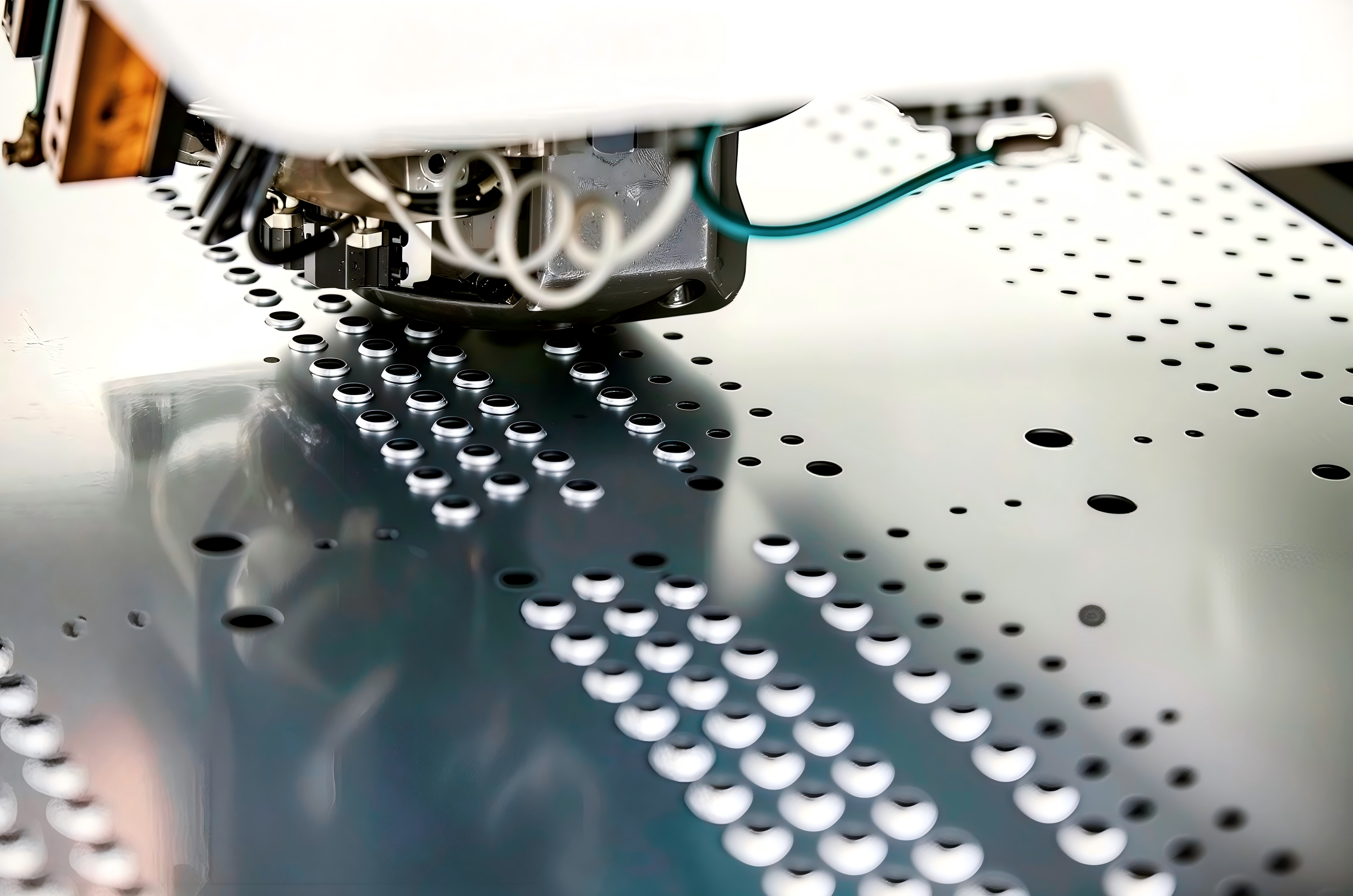
Unlike stamping, fabrication typically uses flexible equipment such as laser cutters, CNC punch presses, press brakes, welding stations, and machining centers. Each operation is performed separately based on the product design.
Common sheet metal fabrication processes include:
- Laser cutting
- Waterjet cutting
- CNC punching
- CNC bending
- Rolling
- Welding
- Riveting
- Tapping
- Surface finishing (powder coating, anodizing, plating, brushing)
Because fabrication relies primarily on programmable machinery rather than dedicated dies, design modifications can often be implemented by updating CAD files instead of manufacturing new tooling.
Advantages of Sheet Metal Fabrication
- Minimal tooling investment
- Rapid prototyping capability
- Easy engineering changes
- Suitable for complex assemblies
- Cost-effectivefor low- to medium-volume production
- Compatible with a wide range ofmaterials and thicknesses
Limitations
- Higher labor cost per part
- Longer productioncycle compared to stamping
- Dimensional consistency depends on multiple operations
- Less economical for millions of identical parts
What Is Metal Stamping?
Metal stamping is a high-speed manufacturing process that forms sheet metal into finished parts using custom-designed dies installed inside mechanical or hydraulic presses.
A stamping die can perform multiple operations in a single press stroke, including:
- Blanking
- Piercing
- Bending
- Coining
- Embossing
- Drawing
- Forming
In progressive die stamping, the material moves through multiple stations, with each station performing one operation until the finished part exits the final station.
Because the tooling performs the shaping rather than programmable machines, every part is produced almost identically.
Advantages of Metal Stamping
- Extremely high production speed
- Very low cost per part at high volumes
- Excellent repeatability
- Tight dimensional consistency
- Minimal operator intervention
- Highly automated production
Limitations
- High initial tooling investment
- Long die manufacturing lead time
- Design changes require die modification or replacement
- Not economical for prototypes or small production runs
Key Differences Between Sheet Metal Fabrication and Stamping
Although both processes shape sheet metal, they differ significantly in production philosophy.
|
Feature |
Sheet Metal Fabrication |
Metal Stamping |
|
Production volume |
Low to medium |
Medium to very high |
|
Tooling cost |
Low |
High |
|
Part cost |
Higher |
Lower at scale |
|
Lead time |
Short |
Longer due to tooling |
|
Design flexibility |
Excellent |
Limited after tooling |
|
Engineering changes |
Easy |
Expensive |
|
Production speed |
Moderate |
Extremely fast |
|
Repeatability |
Very good |
Excellent |
|
Best for |
Custom parts and prototypes |
Mass production |
Manufacturing Process Comparison
Sheet Metal Fabrication Workflow
A typical fabrication project follows these steps:
- CAD design
- Material selection
- Laser cutting or punching
- CNC bendingand forming
- Welding or assembly
- Surface finishing
- Quality inspection
Every step can be optimized independently, providing tremendous flexibility during development.
Metal Stamping Workflow
A typical stamping project includes:
- Product design
- Die engineering
- Tool manufacturing
- Die tryout
- Production stamping
- Secondary operations (if needed)
- Inspection and packaging
Although tooling development requires additional time upfront, production becomes exceptionally efficient afterward.
Tooling Cost Comparison
Tooling is one of the biggest differences between the two manufacturing methods.
Sheet Metal Fabrication
Fabrication generally requires no dedicated production tooling.
Instead, manufacturers rely on:
- Laser programs
- Press brake tooling
- Standard punches
- Welding fixtures
- Inspection fixtures
These tools are reusable across many projects, dramatically reducing startup costs.
Typical tooling investment may range from a few hundred dollars to several thousand dollars, depending on fixtures and inspection requirements.
Metal Stamping
Stamping requires dedicated tooling for every part.
Depending on complexity, dies may include:
- Single-hit dies
- Compound dies
- Progressive dies
- Transfer dies
Complex progressive dies can cost tens of thousands to hundreds of thousands of dollars and may require weeks or months to manufacture.
However, once completed, they allow extremely low production costs.
Production Volume Considerations
Production quantity is often the deciding factor.
Choose Sheet Metal Fabrication When:
- Building prototypesor one-off parts
- Producing custom products
- Manufacturing spare parts
- Launching new products
- Annual volume is relatively low
Many fabrication projects involve quantities from 1 piece to several thousand pieces.
Choose Stamping When:
- Product design is finalized
- Demand is predictable
- Annual volume reaches tens or hundreds of thousands
- Lowest unit cost is the priority
Automotive brackets, appliance components, and electronic shielding are classic examples.
Design Flexibility
Design flexibility strongly favors sheet metal fabrication.
If engineers decide to:
- Move a hole
- Add a bend
- Change dimensions
- Modify cutouts
- Update features
the CAD program can often be revised immediately without replacing expensive tooling.
Stamping is different.
Even small design changes may require:
- Die re-machining
- New inserts
- Additional stations
- Entire die replacement
These changes increase both cost and lead time.
Material Compatibility
Both manufacturing methods support a wide variety of metals.
Common materials include:
- Stainless steel
- Carbon steel
- Aluminum
- Galvanized steel
- Copper
- Brass
- Titanium (certain applications)
Material thickness selection depends more on product function than on the manufacturing process, although very thick or highly customized parts are often better suited to fabrication.
Precision and Repeatability
Modern CNC fabrication achieves high accuracy, with laser cutting tolerances often reaching ±0.1 mm or better, and press brake bending delivering consistent results with proper tooling and process controls.
Stamping, however, offers superior repeatability for large runs, as every stroke replicates the exact die geometry. Fpr high-volume production where consistency is critical, stamping is typically preferred.
Lead Time Comparison
Lead time is another major consideration.
Sheet Metal Fabrication
Without waiting for custom tooling, production can often begin within days after design approval.
Typical project timeline:
- CAD review
- Material preparation
- Cutting
- Forming
- Assembly
- Shipping
Rapid turnaround makes fabrication ideal for urgent projects.
Metal Stamping
Before production begins, manufacturers must:
- Design the die
- Manufacture tooling
- Assemble the die
- Test and optimize the process
This development phase may take several weeks or longer, depending on part complexity.
After approval, however, production speed becomes exceptionally fast.
Cost Comparison
The economics of the two processes change with production volume.
Low Volume
Sheet metal fabrication generally offers the lowest total cost because it avoids expensive tooling.
Even if each part costs more individually, the absence of die investment keeps the overall project affordable.
High Volume
Stamping becomes increasingly cost-effective as production volume grows.
Although tooling costs are high initially, they are spread across thousands or millions of parts, dramatically reducing the unit price.
This is why consumer electronics, automotive components, and home appliances frequently rely on stamping
Typical Applications
Sheet Metal Fabrication Applications
Sheet metal fabrication is commonly used for:
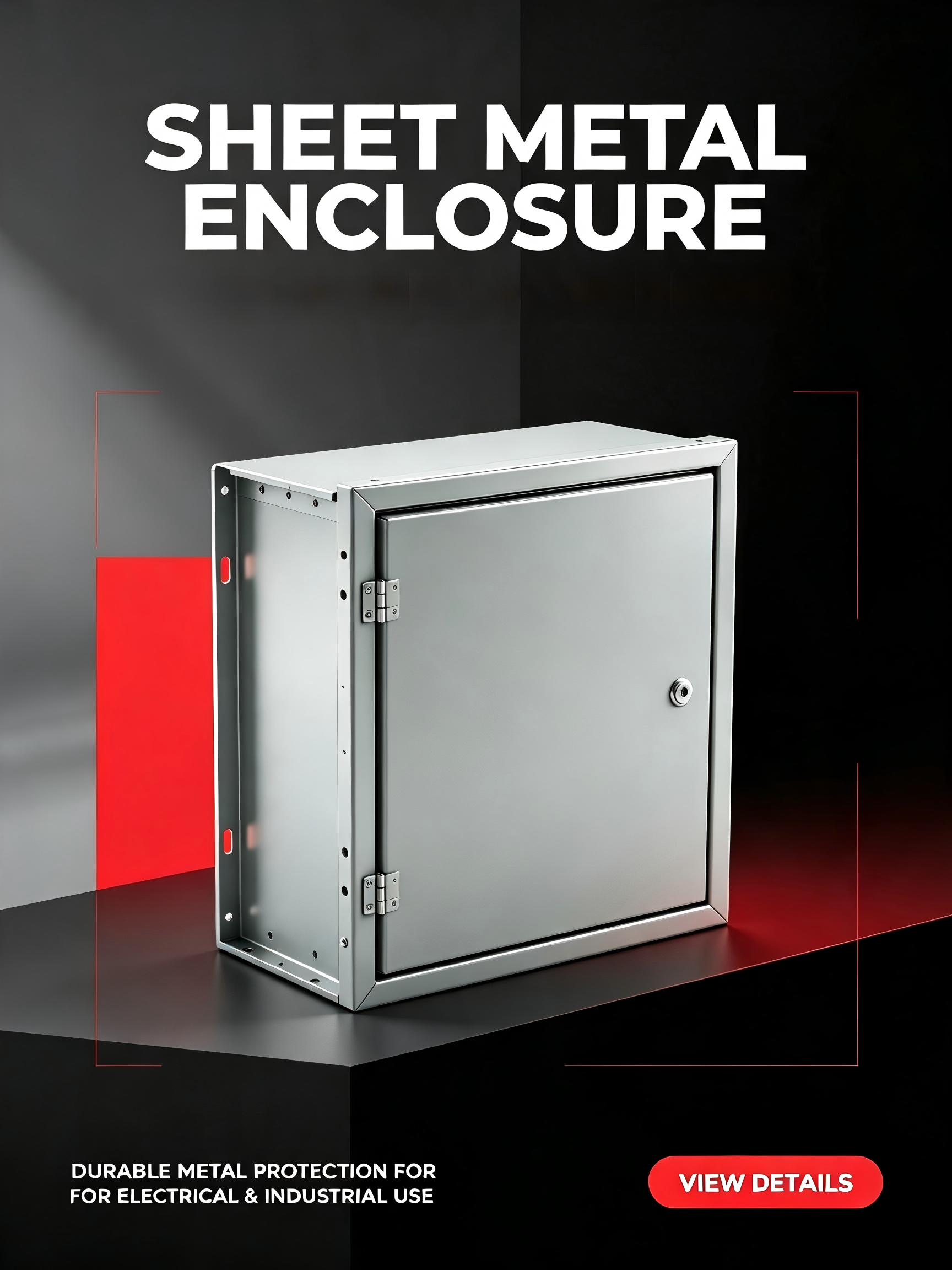
- Industrial equipment enclosures
- Electrical cabinets
- Medical equipment housings
- Robotics frames
- Aerospace brackets
- Custom machine guards
- Server racks
- HVAC ductwork
- Prototype parts
These products often require frequent design updates or moderate production quantities.
Metal Stamping Applications
Metal stamping is widely used for:
- Automotive structural components
- Electronic shielding
- Battery contacts
- Appliance brackets
- Washers
- Clips
- Springs
- Connectors
- Motor laminations
These parts are typically produced in very high volumes with consistent geometry.
Can Both Processes Be Combined?
Absolutely.
Many manufacturers use both processes within the same project.
For example:
- Prototype parts are fabricated first for testing.
- Once the design is validated, production transitions to stamping for higher-volume manufacturing.
- Secondary fabrication operations such as welding, tapping, or hardware insertion may still be performed after stamping.
This hybrid approach reduces development risk while optimizing long-term production costs.
How to Choose the Right Process
The best manufacturing method depends on your project's priorities.
Choose sheet metal fabrication if you need:
- Fast prototypesor low-volume runs
- Low tooling investment
- Frequent design changes
- Custom products
- Low- to medium-volume production
Choose metal stamping if you need:
- High-volume manufacturing
- Lowest cost per part
- Excellent repeatability
- High production efficiency
- Stable, mature product designs
If your project starts with uncertain demand, many manufacturers recommend beginning with fabrication. Once the design and market are validated, transitioning to stamping can significantly reduce long-term production costs.
Conclusion
Sheet metal fabrication and metal stamping are complementary manufacturing processes rather than competing technologies.
Sheet metal fabrication offers unmatched flexibility, shorter lead times, and lower upfront costs, making it the preferred choice for prototypes, custom parts, and low-volume production. Metal stamping, by contrast, is designed for high-volume manufacturing, delivering outstanding speed, repeatability, and the lowest cost per part once tooling is established.
Selecting the right process requires evaluating factors such as production volume, tooling investment, design complexity, lead time, material selection, and long-term manufacturing costs. Making the right decision early in the product development stage can significantly reduce costs, accelerate time to market, and improve product quality.
At HordRT, we help customers choose the most cost-effective manufacturing solution based on their project requirements. With in-house capabilities in sheet metal fabrication, metal stamping, CNC machining, rapid tooling, and injection molding, we support projects from early-stage prototypes and low-volume production to full-scale manufacturing. Our engineering team works closely with customers on design optimization, manufacturability (DFM), material selection, and production planning to ensure every project achieves the right balance of quality, speed, and cost.
Whether you need a single prototype, a pilot production run, or high-volume stamped components, HordRT provides a reliable, end-to-end manufacturing solution that helps bring your products to market faster and more efficiently.
-2.png)