-q4gvl4k29y4hq8j9rjpapvj0ft06fje63olt7p210i.png "HordRT Logo-2023(red)")

When an injection-molded part is going to live outdoors, the material choice determines whether it lasts five years or fails in one season. UV radiation, moisture cycling, thermal expansion, and chemical exposure work together to degrade plastics in ways that indoor applications never test. Selecting the right plastic for outdoor applications requires understanding how each material responds to these combined stresses.
The best plastics for outdoor injection molding include ASA, UV-stabilized polycarbonate, PMMA (acrylic), HDPE, UV-stabilized PA6/66, glass-filled PBT, PPS, PETG, UV-stabilized PP, and PC/ASA blends. Among these, ASA delivers the strongest combination of UV resistance, impact strength, and long-term weatherability for general-purpose opaque outdoor parts.
Quick Picks by Application
|
Application |
Recommended Material |
Why |
|
General outdoor durability (opaque) |
ASA |
UV-stable backbone, no coating or additives required |
|
Transparent outdoor parts |
UV-Stabilized PC |
Impact strength + 10-year UV warranty with cap layer |
|
Maximum clarity and color stability |
PMMA (Acrylic) |
Best inherent UV resistance among transparent plastics |
|
Budget non-structural parts |
HDPE (black) |
Lowest cost, excellent moisture resistance, 10+ year UV rating |
|
Structural parts under load |
GF-PBT or PA6/66 (black) |
High mechanical strength + carbon-black UV protection |
|
Outdoor electrical/electronic |
PBT (Glass-filled) |
Dielectric stability + dimensional + chemical resistance |
|
Extreme chemical + temperature |
PPS |
High continuous service temp, near-universal chemical resistance |
|
Transparent + moderate impact |
PETG |
Easier to process than PC, good clarity, moderate UV resistance |
|
Lowest-cost outdoor option |
PP (UV-stabilized) |
Lightweight, functional with stabilizers, limited mechanicals |
|
Impact + UV balance for housings |
PC/ASA Blend |
Marries PC toughness with ASA weatherability |
Top-Ranked Outdoor Plastics
1. ASA (Acrylonitrile-Styrene-Acrylate)
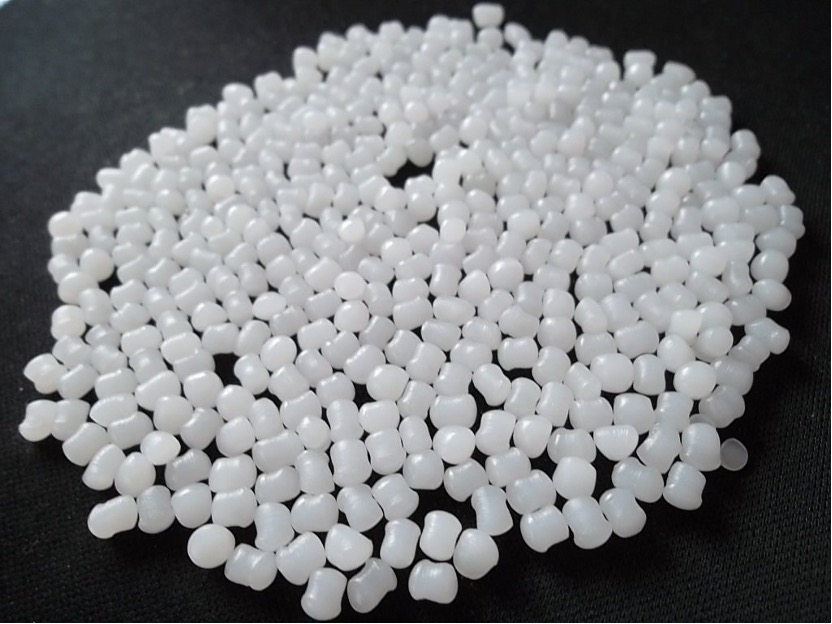
ASA was purpose-built for outdoor use. Its acrylate rubber backbone absorbs UV energy without degrading, unlike the butadiene rubber in ABS which breaks down under sunlight. ASA retains near-original color and impact strength after years of outdoor exposure without requiring a protective coating or specialized UV additive package.
Key features: Excellent UV resistance without coatings. High impact strength comparable to ABS. Good chemical resistance. Wide processing window for injection molding.
Best for: Outdoor housings, marine components, automotive exterior trim, lawn and garden equipment, sporting goods.
2. UV-Stabilized Polycarbonate (PC)
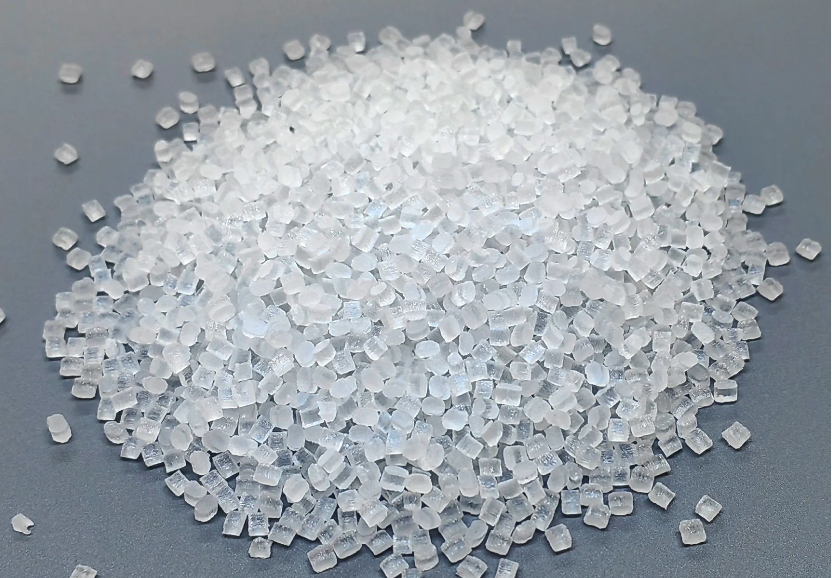
Standard polycarbonate absorbs UV radiation in the 300-360 nm range, which breaks polymer chains and causes yellowing, surface crazing, and loss of impact strength. UV-stabilized grades solve this with a coextruded cap layer (50-150 μm) containing benzotriazole or triazine UV absorbers at 5-10 wt.% that blocks 99.9% of incident UV radiation. With this protection, polycarbonate achieves 10-year outdoor warranties against yellowing (ΔE <5.0) and retains 95% of impact strength over the same period.
Key features: Highest impact strength among transparent plastics. Withstands -40°C to 120°C without cracking. UV coating blocks 99.9% of UV. Retains 89% tensile strength after 15 MW/m² UV exposure, equivalent to 12 years in Phoenix, Arizona.
Best for: Skylights, protective shields, greenhouse panels, outdoor signage, light covers, automotive lighting components.
3. PMMA (Acrylic)
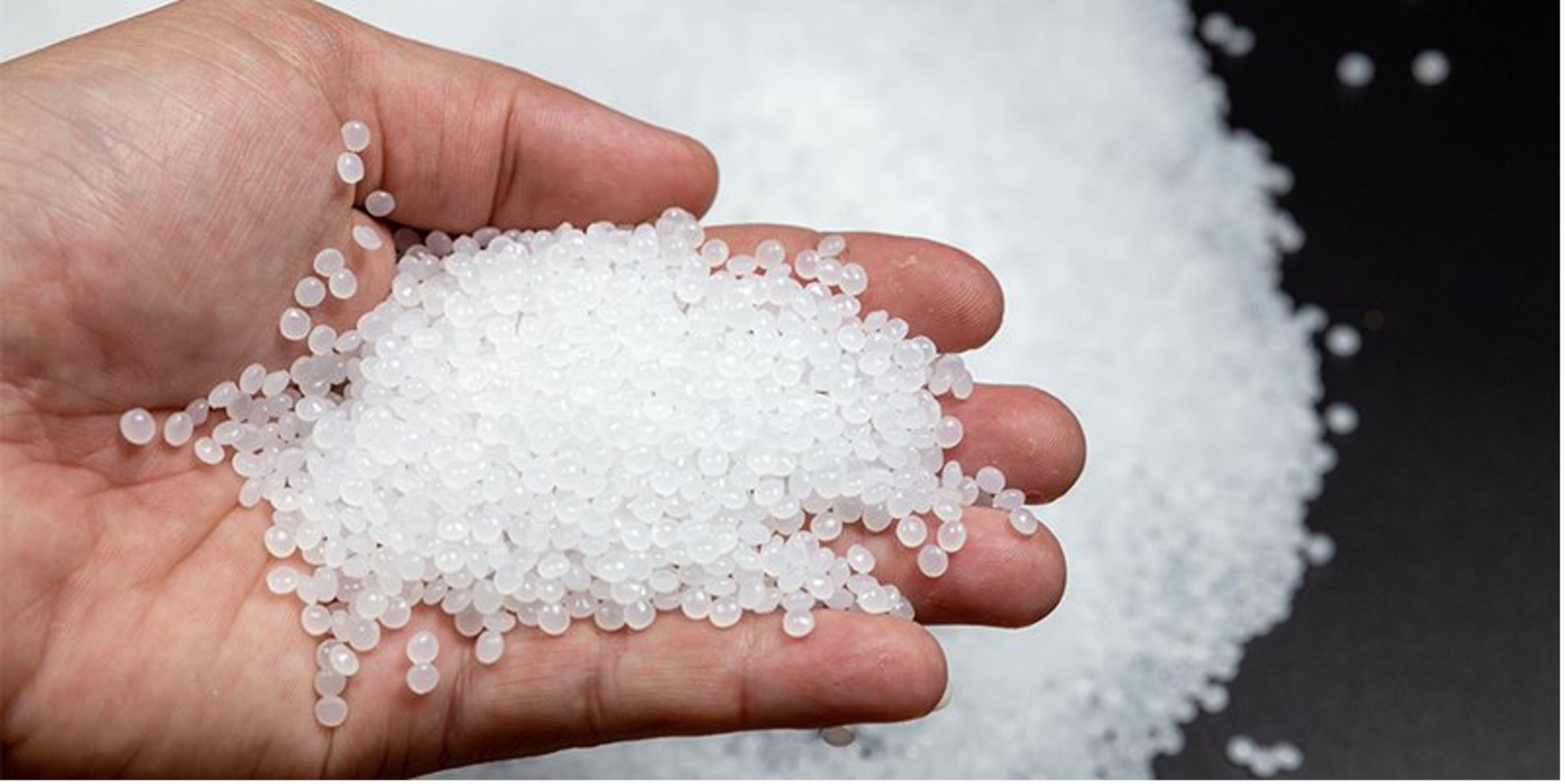
PMMA is the only transparent plastic that resists UV degradation entirely without additives. Its molecular structure does not absorb strongly in the UV range near 290-400 nm, giving it natural weatherability. After 10 years of outdoor weathering in Arizona and Florida, PMMA shows a yellowness index of approximately 1.0, nearly imperceptible to the eye. It transmits 92% of visible light and requires no UV-stabilizer package. The tradeoff is impact strength: PMMA is notch-sensitive and brittle under mechanical load.
Key features: 92% visible light transmittance. Density 1.17-1.20 g/cm³. Surface hardness Rockwell M 97-100. Meets SAE J576 for 3-year outdoor weathering. 10+ year outdoor service life without yellowing.
Best for: Signage, architectural glazing, display cases, light diffusers, automotive signal lighting lenses, outdoor instrumentation covers.
4. HDPE (High-Density Polyethylene)
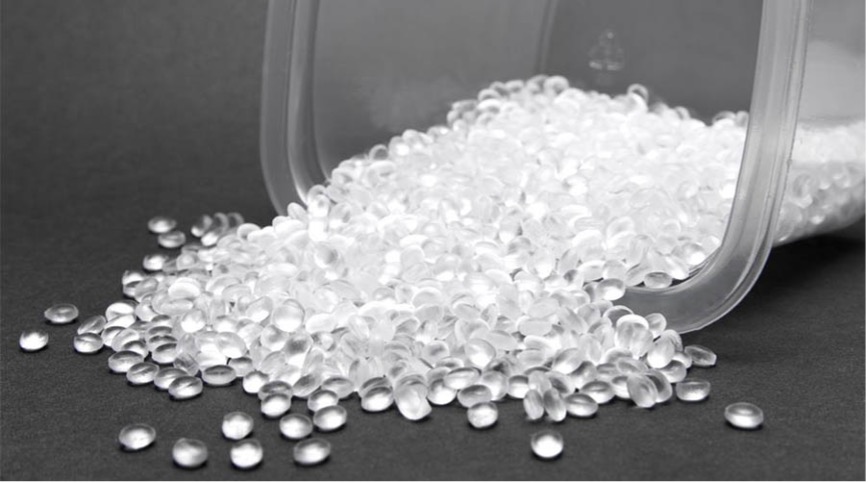
HDPE combined with carbon black is the most cost-effective outdoor plastic for non-structural applications. Carbon black absorbs UV radiation across the full solar spectrum and converts it to heat, giving black HDPE a rated outdoor life exceeding 10 years per Plastics Pipe Institute standards. HDPE does not absorb water, resists mold and mildew, and maintains impact toughness across a wide temperature range without becoming brittle.
Key features: UV activation peaks at 300-310 nm and 340 nm. Carbon black stabilization rated for 10+ years outdoor. Zero water absorption. Excellent chemical resistance. Fully recyclable.
Best for: Marine docks, outdoor furniture, playground equipment, agricultural containers, water storage tanks, plastic lumber.
5. UV-Stabilized PA6/66 (Nylon)
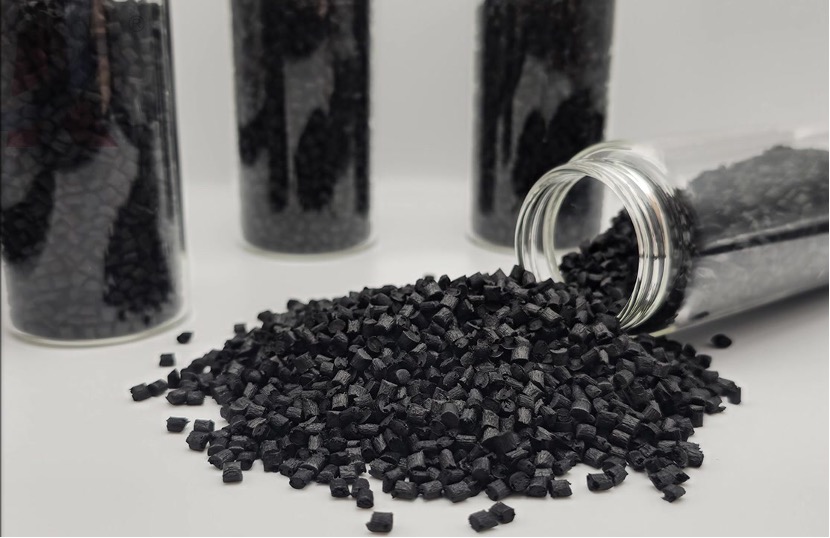
Nylon offers high tensile strength, wear resistance, and heat deflection temperatures that make it attractive for outdoor structural parts. The challenge is moisture absorption, which causes dimensional changes and can accelerate UV degradation. Black grades using carbon black UV stabilization are the standard choice for outdoor applications. Light-colored or natural nylon requires protective coatings or alternative UV stabilizers for direct sun exposure.
Key features: High mechanical strength and stiffness. Good wear resistance. Black grades achieve practical outdoor durability. Sensitive to moisture and must be dried before molding. Not recommended in natural or light colors for outdoor use without additional UV protection.
Best for: Structural brackets, fasteners, automotive under-hood components, outdoor power equipment housings, industrial rollers.
Engineering-Grade and Specialty Outdoor Plastics
6. PBT (Glass-Filled)
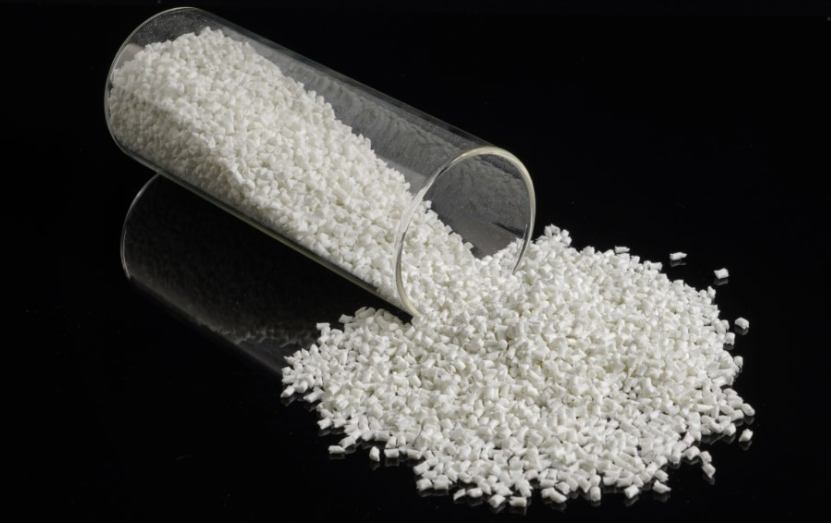
Glass-reinforced PBT combines dimensional stability, chemical resistance, and excellent dielectric properties. It maintains stiffness and creep resistance across outdoor temperature ranges and resists automotive fluids and cleaning agents. These characteristics make glass-filled PBT the material of choice for outdoor electrical connectors and sensor housings.
Key features: Good UV resistance relative to other engineering thermoplastics. Excellent dimensional stability. High creep resistance. Outstanding dielectric properties. Resists common solvents and cleaning agents.
Best for: Outdoor electrical connectors, sensor housings, automotive ignition components, lighting sockets, relay bases.
7. PPS (Polyphenylene Sulfide)
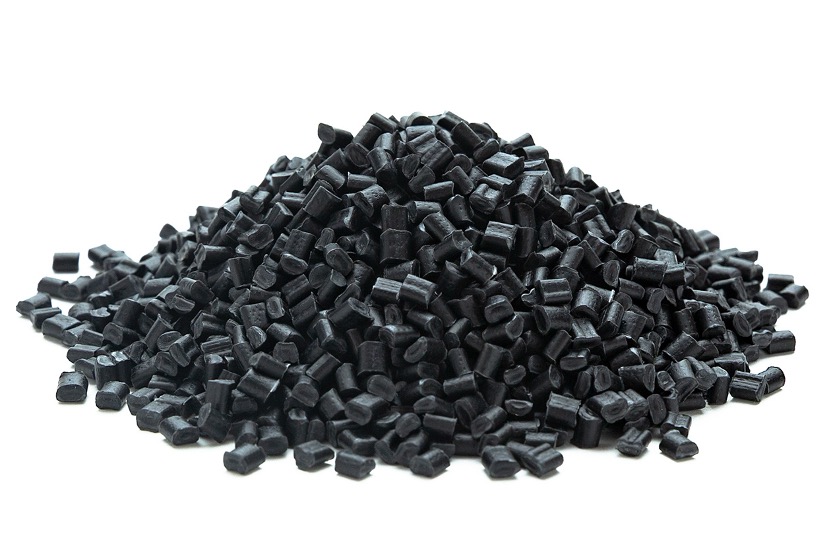
PPS is the premium choice for outdoor parts facing both UV exposure and aggressive chemical environments. With a high continuous service temperature and near-universal resistance to organic solvents, acids, and bases, PPS serves applications where other outdoor plastics degrade. The tradeoff is higher material cost and a narrow processing window that requires experienced molders.
Key features: High continuous service temperature. Excellent UV resistance. Near-universal chemical resistance. High dimensional stability. Requires higher mold temperatures than most engineering plastics.
Best for: Pump impellers, valve components, chemical processing equipment, automotive under-hood parts in aggressive fluid environments.
8. PETG (Glycol-Modified PET)
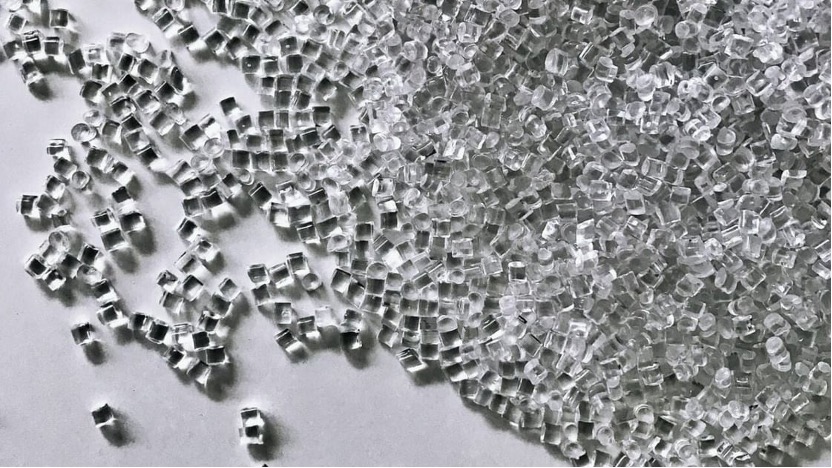
PETG offers an intermediate option between PMMA clarity and PC impact resistance. It processes at lower temperatures than PC and maintains good transparency. Its UV resistance is moderate and better than ABS but not equivalent to UV-stabilized PC or PMMA. PETG is best suited for outdoor applications with moderate UV exposure where impact resistance above PMMA levels is required.
Key features: Higher impact strength than PMMA. Processes at lower temperatures than PC. Good transparency. Moderate UV resistance. Good chemical resistance against most aqueous solutions.
Best for: Outdoor displays, protective covers, point-of-purchase displays, medical device housings with limited outdoor exposure.
9. PP (UV-Stabilized Polypropylene)
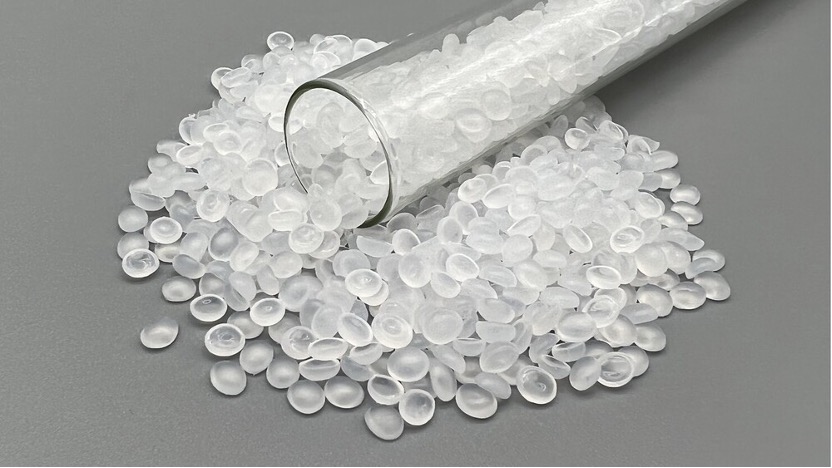
Polypropylene is the lowest-cost outdoor-capable plastic, but it requires UV stabilization to survive sunlight. PP has UV activation peaks at 290-300 nm, 330 nm, and 370 nm. Without stabilizers, PP embrittles rapidly outdoors. With hindered amine light stabilizers (HALS) and UV absorbers, it performs adequately for non-structural outdoor parts where mechanical loads are low.
Key features: Lowest material cost among outdoor-capable plastics. Excellent moisture resistance. Low density (0.90-0.91 g/cm³). Requires UV stabilizers for outdoor use. Embrittles rapidly without stabilization.
Best for: Garden equipment, decorative trim, low-load outdoor enclosures, agricultural containers, bottle crates.
10. PC/ASA Blends
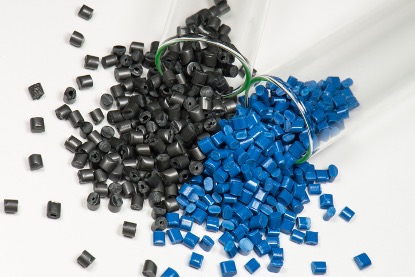
PC/ASA blends marry the impact resistance of polycarbonate with the UV stability of ASA. These alloys process similarly to standard PC but deliver significantly better outdoor color retention and surface appearance. They are widely specified for large outdoor housings, automotive exterior trim panels, and power tool bodies where both toughness and weatherability are required.
Key features: High impact resistance from PC phase. Improved UV stability from ASA phase. Good paint adhesion for decorative finishes. Processes similarly to standard PC. Balanced cost-performance profile.
Best for: Large outdoor housings, automotive exterior panels, power tool bodies, lawn and garden equipment, recreational vehicle components.
Outdoor Plastics Comparison Table
|
Material |
UV Resistance |
Moisture Resistance |
Impact Strength |
Relative Cost |
Transparency |
|
ASA |
Excellent |
Good |
High |
$$ |
Opaque |
|
UV-Stabilized PC |
Very Good |
Moderate |
Very High |
$$$ |
Clear |
|
PMMA (Acrylic) |
Excellent |
Moderate |
Low |
$$ |
Clear |
|
HDPE (black) |
Very Good |
Excellent |
Medium |
$ |
Opaque |
|
PA6/66 (black) |
Good |
Low (absorbs) |
High |
$$ |
Opaque |
|
PBT (Glass-filled) |
Good |
Good |
Medium-High |
$$$ |
Opaque |
|
PPS |
Very Good |
Excellent |
Medium |
$$$$ |
Opaque |
|
PETG |
Moderate |
Moderate |
Medium-High |
$$ |
Clear |
|
PP (UV-stabilized) |
Moderate |
Excellent |
Low-Medium |
$ |
Translucent |
|
PC/ASA Blend |
Very Good |
Good |
Very High |
$$$ |
Opaque |
How to Choose the Right Outdoor Plastic
Selecting among these materials requires matching your part's exposure conditions against each plastic's strengths.
Sun exposure hours per year: A part deployed in Arizona receives roughly double the annual UV radiation of one in Seattle. High-solar regions demand materials with excellent inherent UV resistance (ASA, PMMA, UV-stabilized PC with cap layer) or robust carbon-black stabilization. In milder UV climates, materials with moderate UV packages (UV-stabilized PA6/66, PETG, UV-stabilized PP) may perform adequately.
Transparency required: If the part must transmit light, the options narrow to UV-stabilized PC (best impact), PMMA (best clarity retention), or PETG (moderate UV, easier processing). PMMA stays clearer longer; PC survives physical abuse better.
Mechanical load: Structural parts such as load-bearing brackets, snap-fit housings, and exterior frames benefit from ASA, glass-filled PBT, or UV-stabilized PA6/66. Non-structural parts like covers, trim pieces, and decorative components can use HDPE or UV-stabilized PP at significantly lower material cost.
Chemical exposure: Parts exposed to solvents, acids, or aggressive cleaning agents require HDPE or PPS. PPS handles high-temperature chemical environments where HDPE's typical service ceiling becomes insufficient.
Color matters more than most designers assume: Carbon black is the cheapest and most effective UV stabilizer known. Black grades of HDPE, PA6/66, and PP dramatically outperform their natural or light-colored counterparts. If the part must be a specific light color or white, the designer should specify materials with inherent UV resistance (ASA, PMMA) or robust UV additive packages (UV-stabilized PC with cap layer). Expect shorter service life for light-colored parts in high-UV environments compared to the same material in black.
Operating temperature range: Dark colors absorb more solar heat. A black part sitting in full sun can reach significantly higher surface temperatures than ambient air. For dark-colored outdoor parts, verify that the material's heat deflection temperature leaves adequate margin above the expected surface temperature.
Frequently Asked Questions
What is the difference between ASA and ABS for outdoor use?
ASA is ABS's outdoor-compatible replacement. Both materials share similar mechanical properties including tensile strength, impact resistance, and stiffness. The difference is the rubber phase. ABS uses butadiene rubber, which is highly sensitive to UV radiation and degrades rapidly under sunlight. ASA uses acrylate rubber, which is inherently UV stable. ASA retains its color and mechanical properties outdoors without coatings or paint. ABS requires paint, plating, or another protective layer for outdoor survival.
Why does standard polycarbonate fail outdoors?
Standard PC absorbs UV radiation in the 300-360 nm range. This absorption breaks polymer chains, causing yellowing, surface crazing, and progressive loss of impact strength. Without a UV-protective cap layer or stabilizer package, standard PC can lose over half its impact strength within 2-5 years of outdoor exposure. UV-stabilized grades with coextruded cap layers solve this problem, extending service life to 10-15 years.
What is the cheapest plastic that can be used outdoors?
UV-stabilized HDPE and UV-stabilized PP are the lowest-cost options. HDPE offers better toughness, zero moisture absorption, and 10+ year UV ratings when compounded with carbon black. PP offers slightly lower density and easier processing. Both require explicit UV stabilization. Natural or unstabilized versions will degrade within months outdoors.
Does color affect outdoor durability?
Yes, significantly. Carbon black is the most effective UV stabilizer available. Black grades of any plastic will outlast lighter colors of the same material, often by a substantial margin. For parts that must be light-colored or white, specify materials with inherent UV resistance (ASA for opaque parts, PMMA or UV-stabilized PC for transparent parts) rather than relying on colorant-based protection.
Do I need special equipment to mold UV-stabilized plastics?
UV-stabilized grades generally process on standard injection molding machines, but the additive packages can affect processing parameters. UV absorbers and HALS stabilizers may shift the material's melt flow index and recommended temperature window. An experienced molder like HordRT adjusts barrel temperatures, injection speeds, and cooling times to account for these differences, ensuring consistent part quality across production runs.
HordRT Custom Injection Molding Services for Outdoor Parts
Choosing the right outdoor plastic is only half the equation. UV-stabilized grades process differently than their standard counterparts. The additive packages affect melt flow, cooling rates, and shrinkage behavior. Getting consistent part quality requires an injection molding partner with material-specific experience.
HordRT has over 11 years of experience in custom injection molding, processing materials including ASA, PC, PMMA, HDPE, PA66, PBT, PPS, PP, and PC/ASA blends. The company holds ISO and IATF certifications and serves the automotive, aerospace, medical device, consumer products, agriculture, and robotics industries. Molds are built in-house to SPI Class 101-105 standards, supporting production runs from prototypes (Class 105, up to 500 cycles) to high-volume production (Class 101, 1,000,000+ cycles).
Material procurement is handled through HordRT's vetted supply chain. The engineering team sources the specific UV-stabilized grade your project requires and provides full technical datasheets for sign-off before production begins. There is no minimum order quantity.
Final Verdict
ASA is the best general-purpose outdoor injection molding plastic for opaque parts. It requires no coating, no specialized additive package, and delivers consistent UV resistance over years of exposure. When transparency is needed, UV-stabilized PC offers the best balance of impact strength and weatherability, while PMMA provides superior clarity retention for non-impact applications. For cost-sensitive non-structural parts, black HDPE delivers reliable outdoor performance at the lowest material cost.
One rule applies across every material on this list: specify "UV-stabilized" grade explicitly in your project documentation. Standard grades of any polymer, even those with good inherent UV resistance, are not guaranteed to survive outdoors unless the specific grade was formulated for it. Partner with an experienced injection molding manufacturer to verify that the selected grade and its stabilizer package are compatible with your part geometry and field conditions.
For custom outdoor plastic parts, contact HordRT to discuss material selection, DFM analysis, and production planning for your next project. Explore HordRT's injection molding capabilities for more details on materials, finishes, and lead times.
-2.png)