-q4gvl4k29y4hq8j9rjpapvj0ft06fje63olt7p210i.png "HordRT Logo-2023(red)")

Johnny Xiong
Rapid Tooling Expert
Contents
In today’s fast-moving manufacturing landscape, speed, cost efficiency, and design flexibility have become decisive competitive advantages. Product development cycles are shrinking, market demands are growing more personalized, and businesses across industries are seeking smarter ways to prototype, validate, and produce parts without heavy upfront investments or long lead times. This is where Rapid Tooling comes in—a transformative solution that bridges the gap between rapid prototyping and full-scale mass production.
This blog offers a complete breakdown of what Rapid Tooling is, its core definition and value, the step-by-step workflow, key types, and a clear comparison with Traditional Tooling. By the end, you will understand when and why to choose Rapid Tooling for your next project.
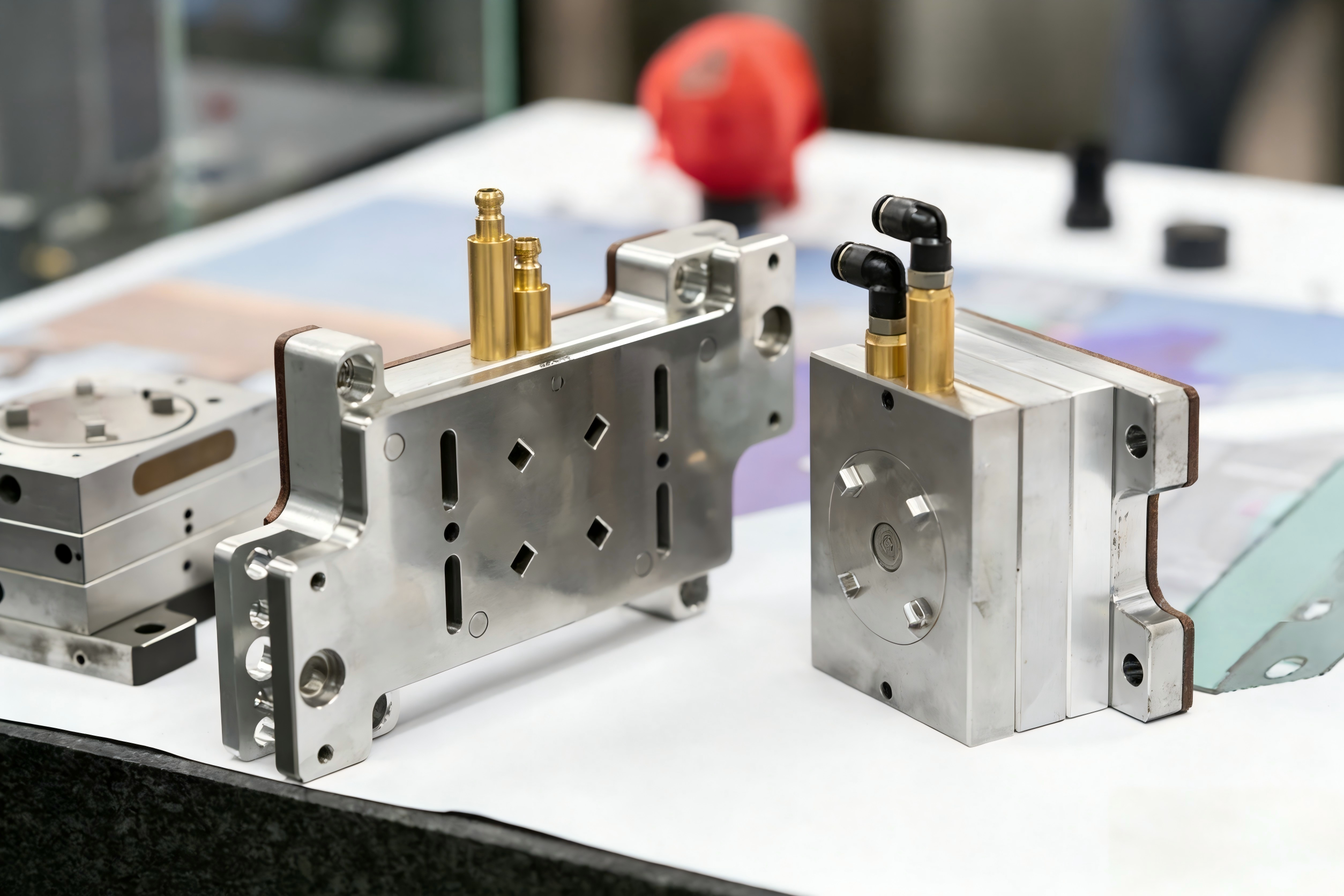
What Is Rapid Tooling? Core Definition
Rapid Tooling (RT) refers to a suite of advanced manufacturing technologies that quickly produce cost-effective molds, dies, inserts, and tooling components for short-run production, functional prototyping, bridge manufacturing, and design validation.
Unlike conventional tooling built for high-volume, long-term durability, Rapid Tooling prioritizes speed, affordability, and iterative flexibility. It leverages digital manufacturing—including CNC machining, additive manufacturing (3D printing), aluminum/soft metal molding, and simplified mold base systems—to create usable molds in days or weeks rather than months.
At its heart, Rapid Tooling is designed to:
- Shorten the path from CAD design to physical parts
- Enable real-world testing with production-grade materials
- Reduce upfront tooling costs and project risk
- Support small-batch production and market validation
- Accelerate time-to-market for new products
In short, Rapid Tooling is not just “fast mold making”—it is a strategic workflow that empowers businesses to innovate faster, iterate smarter, and scale with confidence.
Core Value of Rapid Tooling
The growing popularity of Rapid Tooling stems from four irreplaceable values that solve real pain points in modern product development.
- Exceptional Speed & Shorter Lead Times
Traditional tooling often takes 8–16 weeks or longer for design, fabrication, heat treatment, polishing, and debugging. Rapid Tooling compresses this timeline to 3–15 days for most standard projects. This speed is game-changing for startups, product teams, and manufacturers targeting seasonal or time-sensitive markets.
- Dramatic Cost Reduction
Traditional steel molds involve expensive materials, extensive machining, heat treatment, and skilled labor, making them costly for low volumes. Rapid Tooling uses aluminum alloys, prefabricated mold bases, and simplified processing, lowering total tooling cost by 50%–80% compared to hard steel tooling.
- Design Iteration & Risk Reduction
One of the greatest benefits is the ability to validate designs before mass production. With Rapid Tooling, you can produce functional parts using the actual production resin, test assembly, performance, and user experience, identify flaws early, and adjust the mold quickly. This avoids costly and time-consuming modifications to mass-production molds later.
- Flexible Production Scenarios
Rapid Tooling supports 10–100,000+ shots depending on mold material and structure, making it ideal for:
- Prototype validation
- Small-batch production
- Bridge manufacturing before hard tooling
- Custom and on-demand parts
- R&D and testing for new materials
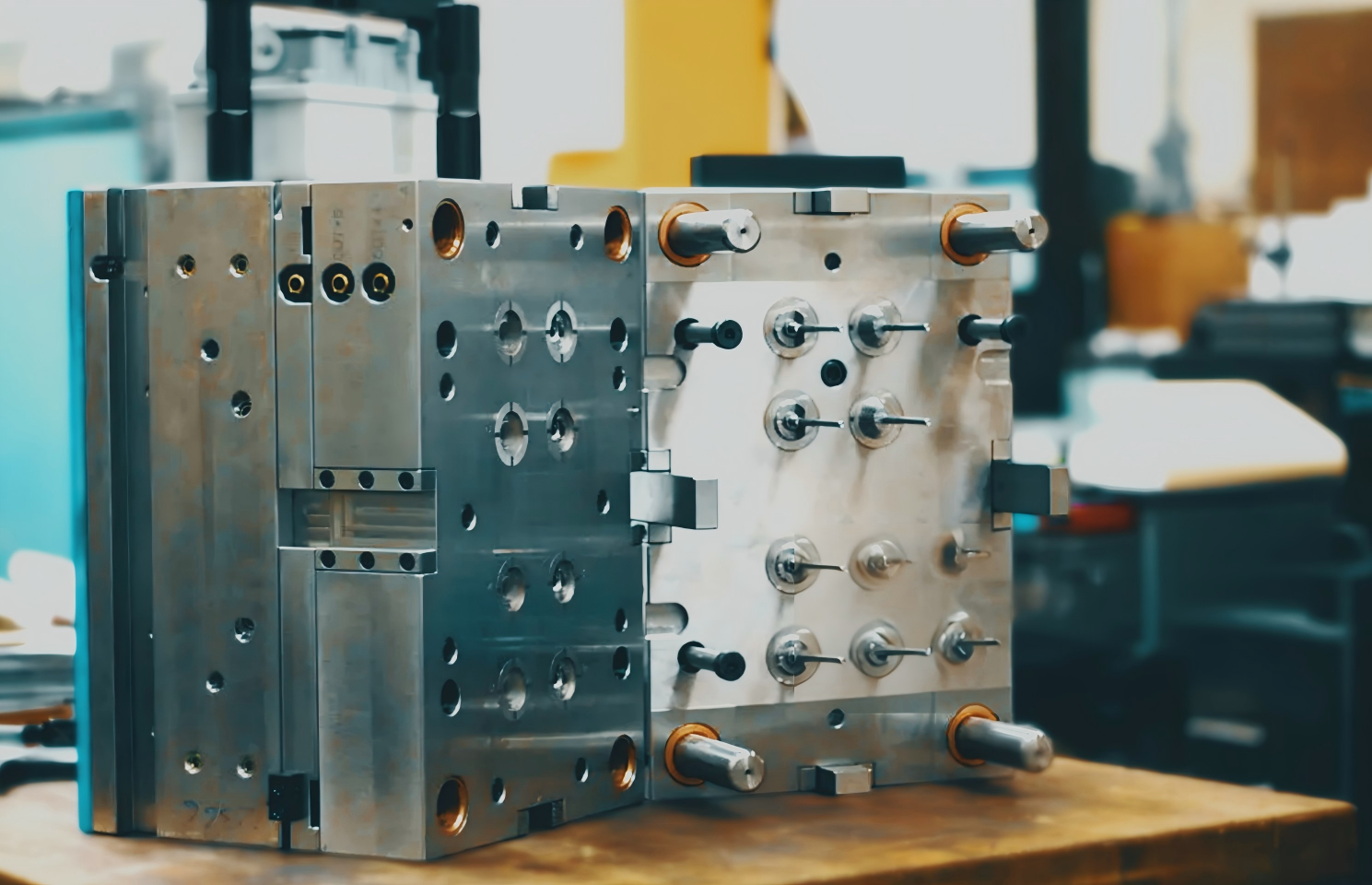
The Core Rapid Tooling Process: 4 Key Stages
Rapid Tooling follows a streamlined, repeatable workflow: Rapid Design → Rapid Prototyping → Simplified Machining → Mold Trial & Validation.
- Rapid Design
The process begins with digital 3D modeling. Engineers analyze part structure, draft angles, gate placement, ejection system, and cooling layout using CAD/CAM software. Since Rapid Tooling supports quick revisions, designers can optimize for manufacturability without over-engineering for extreme longevity.
- Rapid Prototyping
Depending on the method, mold inserts can be 3D printed, CNC machined from aluminum or pre-hardened steel, or produced via laminated tooling. This stage skips many time-consuming steps of conventional mold making, such as full heat treatment and deep polishing.
- Simplified Machining & Assembly
Rapid Tooling uses standardized mold bases and simplified processing to reduce cutting, fitting, and polishing time. Skilled technicians assemble cores, cavities, cooling lines, and ejection systems efficiently, focusing on functionality and speed rather than ultra-long lifespan.
- Mold Trial & Validation
The mold is mounted on an injection molding machine for sampling. Tens to hundreds of parts are produced immediately for dimensional inspection, functional testing, and assembly verification. If adjustments are needed, modifications are fast and low-cost, allowing multiple iterations in a short period.
This four-stage framework ensures a highly efficient loop from design to validated parts—something Traditional Tooling cannot match economically or quickly.
|
Aspect |
Rapid Tooling |
Traditional Tooling |
|
Primary Goal |
Speed, iteration, low-volume production |
Durability, high-volume mass production |
|
Typical Materials |
Aluminum, pre-hardened steel, 3D-printed tooling |
High-hardness alloy steel, stainless steel |
|
Lead Time |
Days to weeks |
Weeks to months |
|
Upfront Cost |
Low to medium |
High |
|
Production Volume |
Low to mid-range |
High-volume, millions of cycles |
|
Design Flexibility |
High; easy to modify |
Low; changes are expensive |
|
Surface Finish |
Good to high |
Excellent, mirror polishing available |
|
Best For |
Prototyping, testing, small batches, bridge production |
Mass production, long-term projects |

When to Choose Rapid Tooling
- You need functional prototypes in production materials
- You want to test market feedback with real parts
- Your order quantity is low or medium
- You need parts before mass-production molds are ready
- You want to reduce upfront investment and project risk
When to Choose Traditional Tooling
- You require millions of parts over years
- Extreme durability and wear resistance are critical
- Very high precision and surface finish are mandatory
- Long-term production stability is a priority
Types of Rapid Tooling
Rapid Tooling includes several mature technologies to match different needs:
Aluminum Rapid Tooling: Best balance of speed, cost, and lifespan; widely used for plastic injection molding.
3D-Printed Rapid Tooling: Extremely fast for very low volumes and complex structures.
Soft Tooling / Prototype Tooling: Low-cost for initial design validation.
Bridge Tooling: Supplies parts while mass-production molds are being built.
CNC Machined Rapid Tooling: High accuracy with shorter lead times than standard steel molds.
These categories make Rapid Tooling adaptable to nearly every industry, including automotive, electronics, medical devices, consumer goods, robotics, and home appliances.
Rapid Tooling Processes
Modern Rapid Tooling relies on mature digital manufacturing processes:
CNC Machining: High-precision subtractive manufacturing for aluminum and pre-hardened steel inserts.
Additive Manufacturing (3D Printing): Directly prints mold inserts for complex geometries.
Prefabricated Mold Bases: Standardized bases eliminate time-consuming custom frame manufacturing.
Simplified Cooling & Ejection: Optimized for speed without sacrificing basic functionality.
Quick-Change Inserts: Supports multi-part projects and fast revisions.
Together, these processes deliver consistent, repeatable results at unprecedented speed.
Conclusion
Rapid Tooling is more than a manufacturing method—it is a strategic enabler for innovation. By compressing time, cutting costs, supporting iteration, and reducing risk, it empowers businesses of all sizes to turn ideas into physical products faster than ever before.
Whether you are a product designer validating a new concept, an engineer testing functional parts, a startup entering a market, or a manufacturer launching a new line, Rapid Tooling provides the agility you need to stay competitive.
In an era where speed to market defines success, Rapid Tooling is no longer optional—it is essential.
About HordRT
HordRT is a professional provider of high-quality Rapid Tooling, low-volume injection molding, prototype manufacturing, and product development solutions. With advanced equipment, experienced engineering teams, and a customer-centric workflow, we help global clients accelerate innovation, reduce costs, and bring better products to market faster.
We specialize in Rapid Tooling, Traditional Tooling optimization, and customized rapid molding processes for industries worldwide. From prototype validation to small-batch production, HordRT delivers reliable, cost-effective tooling solutions tailored to your project needs.
Learn more about our capabilities and how we can support your next project.
-2.png)