-q4gvl4k29y4hq8j9rjpapvj0ft06fje63olt7p210i.png "HordRT Logo-2023(red)")

Johnny Xiong
Rapid Tooling Expert
Contents
In the world of precision manufacturing, few machines are as reliable or as ubiquitous as the vertical mill. At HordRT, we consider the vertical mill the "workhorse" of our machine shop. Whether we are running a single complex prototype or a production run of 100,000 units, vertical milling is often the first process we turn to for high-precision, versatile, and cost-effective machining.
But is it the right choice for your specific project?
As experts in CNC manufacturing, we believe in transparency. Understanding the capabilities—and the limitations—of CNC vertical milling helps our clients design better parts and save on production costs. In this guide, I will walk you through exactly what this technology is, the specific parts it excels at creating, and where you might need to look at other machining strategies.
What Is Vertical Milling?
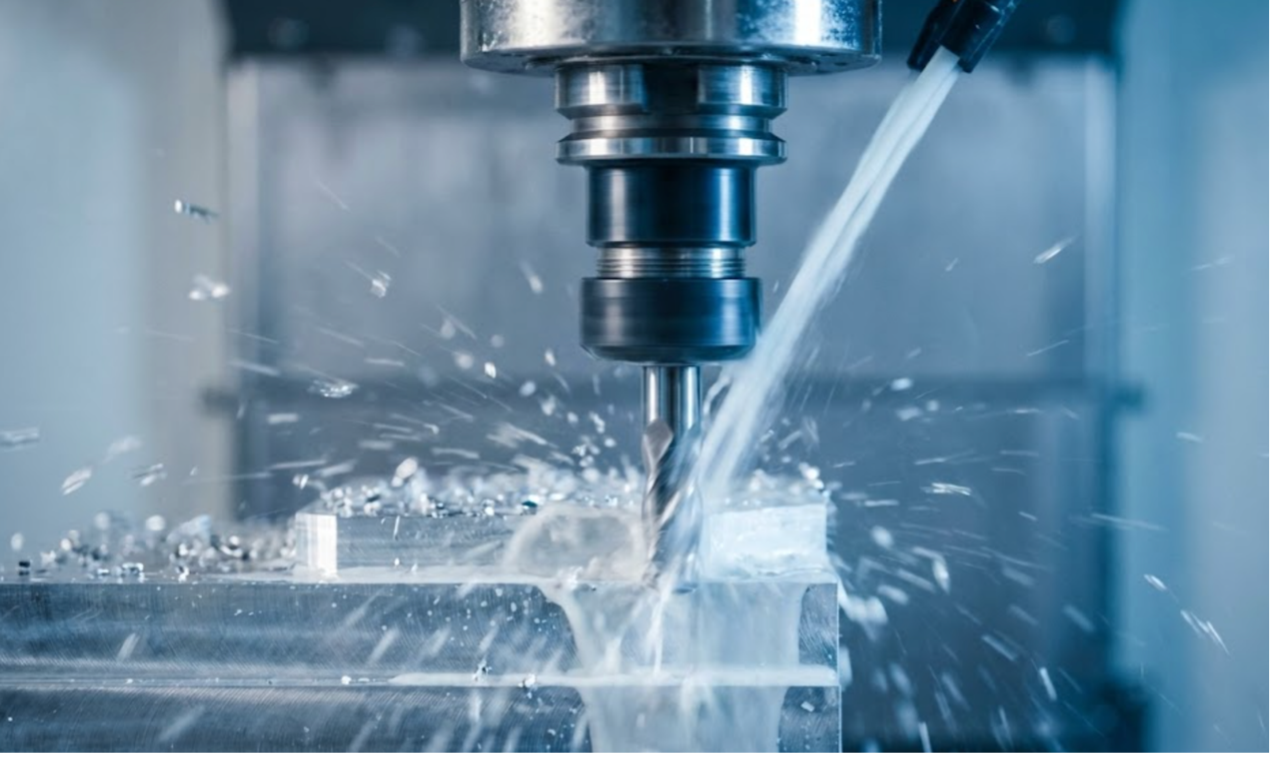
At its core, vertical milling is a subtractive manufacturing process. A milling machine uses a rotating cylindrical cutter to remove material from a workpiece to achieve a specific shape or dimension.
The defining characteristic of CNC vertical milling is the orientation of the spindle. The cutting tool is mounted vertically (on the Z-axis) and moves up and down, while the table typically moves the workpiece along the X and Y axes. This setup allows for gravity to work with the operator during setup, though it presents challenges for chip evacuation during deep cuts.
Why It Is Industry Standard
Why do we utilize vertical mills so heavily at HordRT?
- Visibility and Control: The vertical setup gives our operators a clear line of sight to the workpiece. This visibility is crucial for aligning tight-tolerance parts and monitoring the cutting process.
- Precision: These machines are capable of holding extremely tight tolerances, making them perfect for detailed features.
- Versatility: With the ability to use end mills, face mills, and dovetail cutters, a single machine can perform facing, slotting, drilling, and tapping in one setup.
- Cost-Effectiveness: Compared to complex horizontal setups, vertical mills have a lower startup cost and smaller footprint, allowing us to offer more competitive pricing on vertical milling services.
Material Compatibility
One of the massive advantages here is material freedom. We regularly machine a vast spectrum of materials, including:
- Metals: Aluminum, Steel, Titanium, Brass, Copper, Magnesium, and Stainless Steel.
- Plastics & Composites: ABS, Delrin (Acetal), PVC, Polycarbonate, PTFE, and various composites.
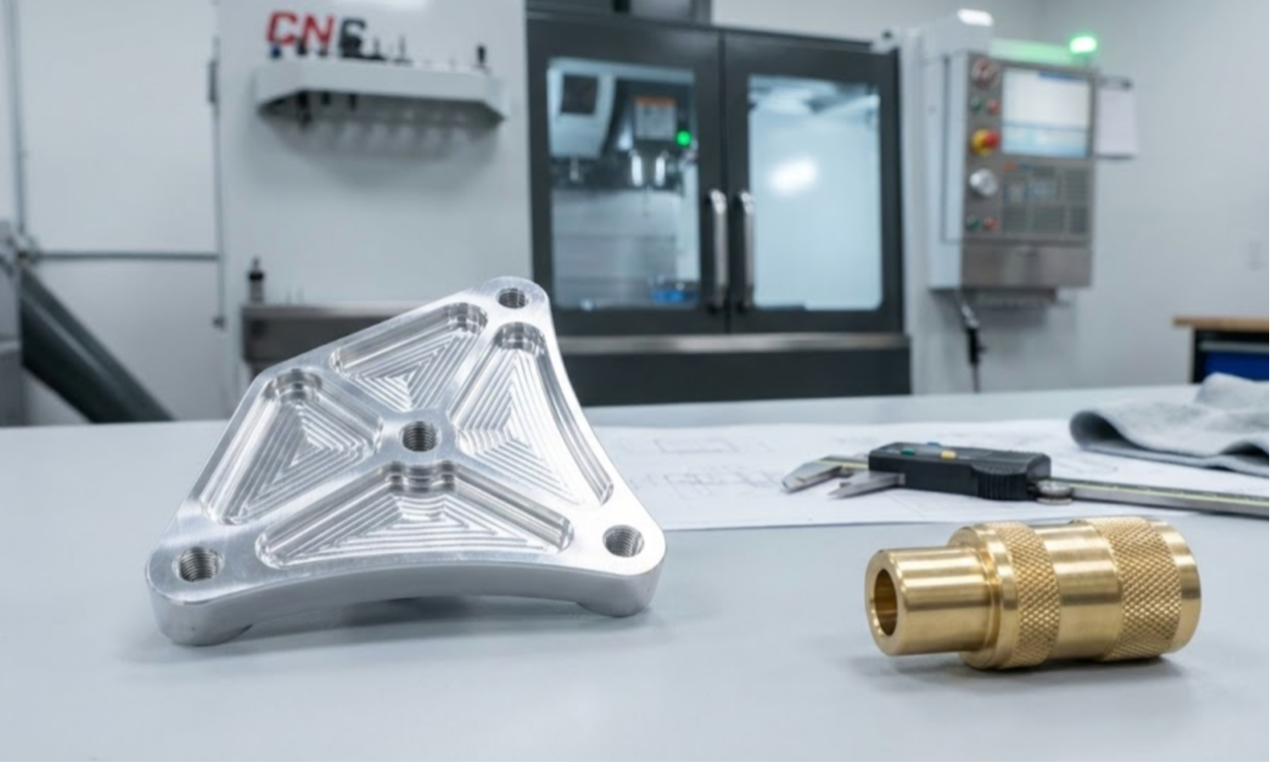
Typical Part Types Suitable for Vertical Milling
If your project involves detailed, medium-sized parts requiring high precision, vertical milling is likely your best option. Here are the specific categories where this technology shines.
1. Flat and Surface-Critical Components
Vertical mills are exceptionally good at face milling—machining a surface flat and perpendicular to the spindle.
- Examples: Engine components, mounting brackets, mold bases, plates, and housings.
- The Advantage: Using a large face mill, we can quickly flatten the top surface of a workpiece to achieve excellent surface finishes. Because the workpiece is clamped flat on the table, we can maintain superior flatness and parallelism.
2. Parts with Pockets, Cavities, and Slots
When a part requires internal features, the Z-axis movement of the vertical mill becomes essential.
- Applications: Keyways, electronic enclosures with internal standoffs, and mechanical assemblies requiring specific bore sizes.
- Machining Strengths: We use vertical mills to plunge into the material to create pockets, drill precise holes, and tap threads. It is also ideal for cutting spirals or splines.
3. Contoured and Profiled Parts
Many clients assume complex 3D shapes require 5-axis machining, and while that’s true for the most intricate geometries, a skilled operator can achieve impressive contours on a standard 3-axis or 4-axis vertical mill for parts with moderate complexity.
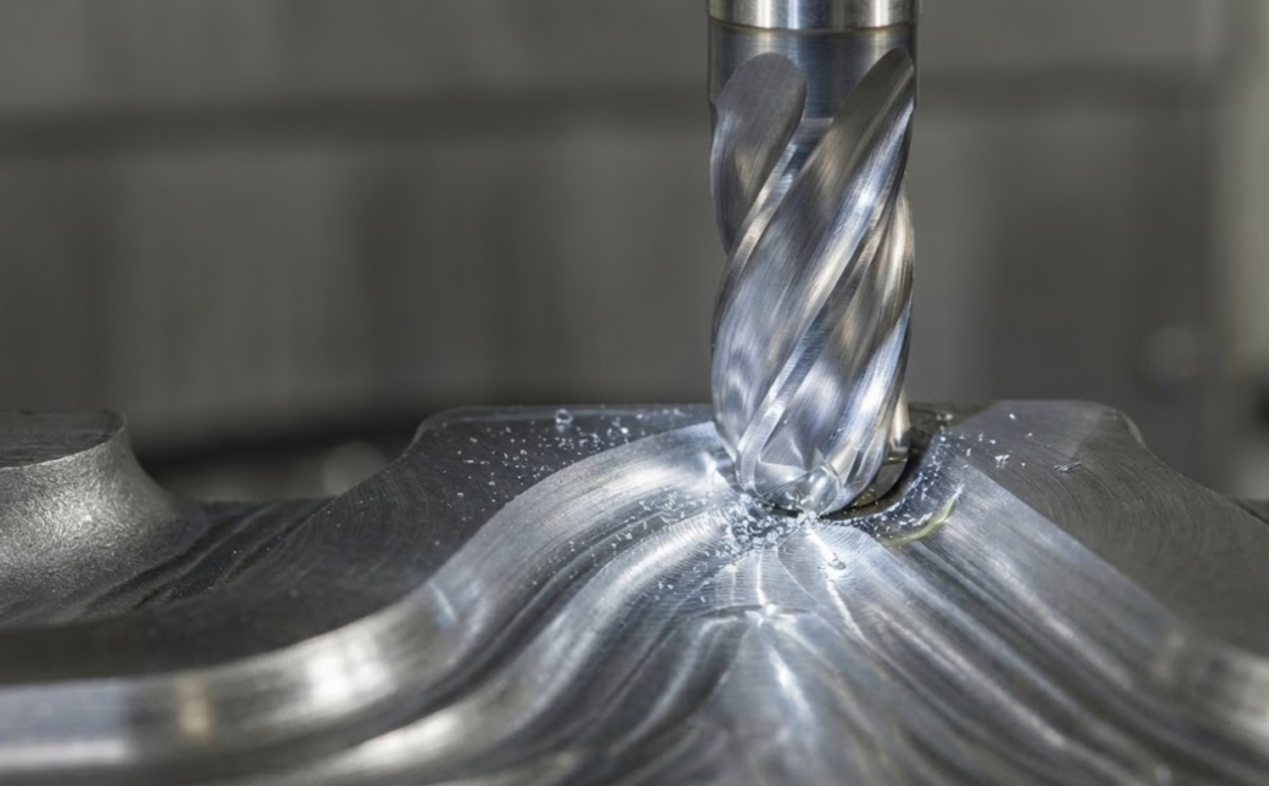
- How We Do It: By using ball nose cutters (which have a hemispherical end), we can machine a range of 3D curvatures. This is a common and cost-effective practice for creating many mold and die cavities, profile features, and curved surfaces that do not require undercutting or extreme angles.
- Precision: In our shop, we routinely hold tight dimensional tolerances between +/- 0.001" to 0.005". When superior surface finish is critical, our process optimization—including tool selection, speeds & feeds, and machine stability—enables us to produce finishes down to 1 micron Ra or better on suitable materials like aluminum.
4. Prototypes and Small-Batch Structural Parts
Because vertical mills are easier to set up than horizontal mills or lathes, they are the "go-to" for rapid iteration.
- Flexibility: If you need a design change, we can adjust the tool path on a vertical mill very quickly.
- Speed: At HordRT, our vertical milling services are optimized for speed. We can produce rapid prototypes in as little as 1 day because we don't need to create complex, custom fixtures for every single part.
Parts That Are Not Ideal for Vertical Milling
To ensure you get the best quality and price, it is important to know when not to use a vertical mill. Here is where we might suggest an alternative method (like Horizontal Milling or Turning).
1. Parts with Deep Cavities
In vertical milling, the cutter enters from the top. As it cuts deep into a pocket, chips (waste material) tend to accumulate at the bottom because gravity keeps them there. Re-cutting chips can damage the tool and ruin the surface finish. For deep pockets, a Horizontal Machining Center (HMC) is better because gravity allows chips to fall away naturally.
2. Long or Slender Components
While we can machine tough materials like Titanium or hardened steel, long and thin parts are prone to vibration (chatter) in a vertical setup. This can lead to poor finishes and reduced tool life.
3. Oversized Heavy Parts
Standard vertical mills have table weight limits. While there are specific "Gantry Mills" or "Vertical Column Mills" that can handle heavy parts (up to 10,000 lbs), general vertical mills are better suited for small-to-medium parts.
4. Multi-Face Complex Geometries
If your part has features on 5 or 6 different sides:
- The Issue: On a standard vertical mill, we would have to manually unclamp, flip, and re-clamp the part for every side. This adds time and increases the risk of alignment errors.
- The Solution: For these parts, we recommend our 5-axis CNC machining services, or CNC Turning if the part is cylindrical/tubular.
Conclusion
Vertical milling remains a cornerstone of modern manufacturing due to its adaptability, precision, and efficiency. It is the ideal method for creating brackets, plates, prototypes, and mold tooling across a wide range of materials.
At HordRT, we don't just own machines; we possess the expertise to push them to their limits. Whether you need a single prototype or high-volume production, we are ready to support your project.
HordRT Capabilities at a Glance:
- Advanced Equipment: We operate advanced 3-axis, 4-axis, and 5-axis CNC machining centers.
- High Precision: We routinely hold tolerances of +/- 0.001” to 0.005”.
- Scalability: From NO MOQ (Minimum Order Quantity) prototypes delivered in 1 day, to production runs of 100,000+ pieces.
- Certified Quality: We are ISO 9001 & IATF 16949 certified, ensuring your parts meet the strictest industry standards.
Ready to start your next project?
Contact HordRT today for a quote and let our experts help you determine the best manufacturing strategy for your design.
-2.png)