-q4gvl4k29y4hq8j9rjpapvj0ft06fje63olt7p210i.png "HordRT Logo-2023(red)")

Johnny Xiong
Rapid Tooling Expert
Contents
Injection molding is one of the most widely used manufacturing processes for producing plastic parts, from tiny components in medical devices to large automotive panels. At its core, it’s a cyclic process that transforms raw plastic material into a finished product through a series of precisely controlled stages. Understanding the complete injection molding cycle — from clamping to ejection — is key to appreciating its efficiency, versatility, and importance in modern industry. This article will walk you through each phase of the cycle, explaining the science, machinery, and artistry behind this remarkable process.
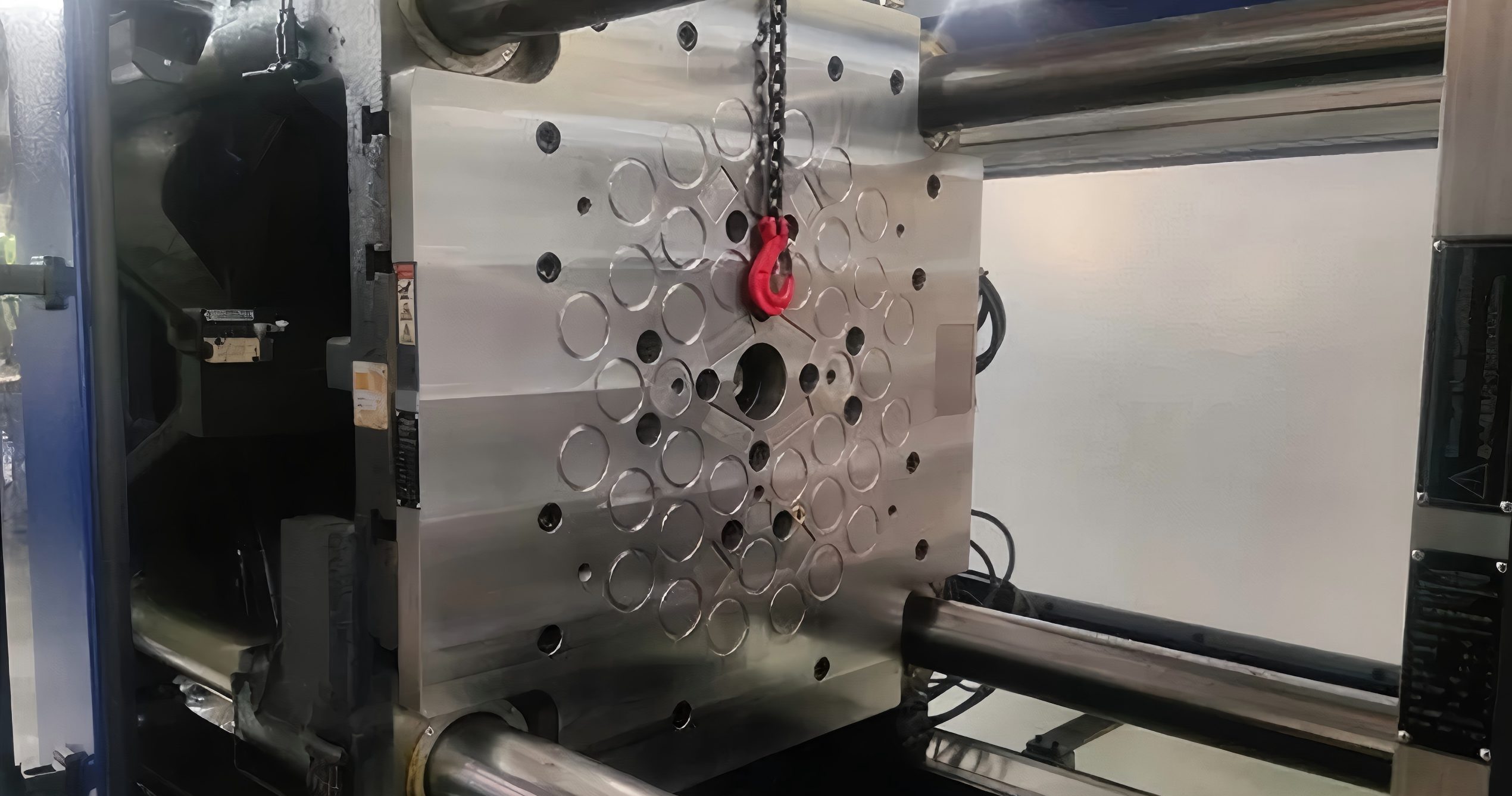
Introduction to Injection Molding
Before diving into the cycle, let’s set the stage. Injection molding involves injecting molten plastic into a mold cavity, where it cools and solidifies into the desired shape. The mold itself is typically made from steel or aluminum and consists of two halves: the fixed half (attached to the injection unit) and the moving half (attached to the clamping unit). The process is highly automated, capable of producing thousands of identical parts with exceptional accuracy and repeatability. The complete cycle can last from a few seconds to several minutes, depending on the part size, material, and complexity.
Stage 1: Clamping
The injection molding cycle begins with the clamping phase. Before any plastic is injected, the two halves of the mold must be securely closed and held together under high pressure.
How it works:
-
The moving half of the mold is propelled forward by a clamping unit, which can be hydraulic, mechanical (toggle), or electric.
-
The mold halves meet and form a sealed cavity. The clamping force—measured in tons—must be sufficient to withstand the immense pressure of the injected plastic without allowing the mold to open (a defect known as “flashing”).
-
Typical clamping forces range from a few tons for small parts to thousands of tons for large components like car bumpers.
Why it matters: Proper clamping ensures dimensional accuracy and prevents defects. The mold must be perfectly aligned, and the force must be optimized: too little causes flashing, while too much can damage the mold or machine.
Stage 2: Injection
Once the mold is clamped, the injection phase begins. This is where the plastic material is introduced into the mold cavity.
The process:
-
Plastic material, usually in pellet form, is fed from a hopper into a heated barrel.
-
A reciprocating screw (which also acts as a plunger) rotates, conveying the pellets forward. The combination of mechanical shear and external heaters melts the plastic into a homogeneous, viscous fluid.
-
The screw then moves forward as a piston, injecting a precise amount of molten plastic—called a “shot”—through a nozzle and into the mold’s sprue, runners, and gates, finally filling the cavity.
-
Injection is performed under high pressure (typically 500–2,000 bar) to ensure complete filling before the material starts to solidify.
Key parameters: Injection speed, pressure, and temperature are critical. They must be tailored to the material’s viscosity and the part’s geometry to avoid defects like short shots (incomplete filling), burns, or weld lines.
Stage 3: Packing (Holding)
After the cavity is filled, the packing or holding phase immediately follows. While it might seem like a continuation of injection, it serves a distinct purpose.
What happens:
-
Additional plastic is forced into the mold under sustained pressure to compensate for material shrinkage as the plastic begins to cool and solidify.
-
This phase ensures the part remains fully packed and dense, preventing sinks, voids, or dimensional inaccuracies.
-
The holding pressure is usually lower than injection pressure but is maintained for a set time until the gate (the entrance to the cavity) solidifies.
The science: As plastics cool, their volume decreases. Without packing, the part would pull away from the mold surfaces, causing shrinkage defects. The holding phase manages this natural behavior.

Stage 4: Cooling
Cooling is the longest part of the cycle and dictates the overall productivity of the process. During the cooling phase, the molten plastic inside the mold solidifies into its final shape.
The mechanism:
-
The mold is equipped with cooling channels through which a coolant (usually water or oil) circulates.
-
Heat from the plastic is transferred to the mold steel and carried away by the coolant.
-
The part must cool sufficiently to become rigid enough for ejection without distorting.
-
Cooling time depends on part thickness, material thermal properties, and cooling system efficiency. It can account for up to 80% of the total cycle time.
Design consideration: Efficient cooling requires careful design of cooling channels to ensure uniform heat removal. Non-uniform cooling can lead to warpage, residual stresses, or differential shrinkage.
Stage 5 : Mold Opening
Once the part has cooled, the mold opens in preparation for part removal.
The action:
-
The clamping unit retracts, moving the movable half of the mold away from the fixed half.
-
The opening speed and force are controlled to avoid damaging the part or the mold.
-
Sometimes, a brief pause is included after opening to allow any remaining gases to vent or to prepare for ejection.
Precision required: The mold must open smoothly and align accurately for the next cycle. Modern machines use sensors to ensure proper positioning.
Stage 6: Ejection
The final stage of the cycle is ejection, where the finished part is removed from the mold.
How it’s done:
-
An ejection system—typically consisting of pins, plates, or sleeves—is activated to push the part out of the mold cavity.
-
The ejection mechanism is built into the moving half of the mold and is driven mechanically, hydraulically, or by air.
-
The part falls into a collection bin or onto a conveyor. In automated systems, robots may be used for gentle handling.
-
After ejection, the mold closes, and the cycle repeats.
Challenges: Ejection must be carefully timed and applied with adequate force to avoid marks or distortion. Draft angles in the mold design help parts release easily.
The Role of Materials and Machine Settings
The injection molding cycle doesn’t exist in a vacuum; it’s profoundly influenced by material choice and machine parameters.
Material considerations: Different plastics (e.g., polyethylene, ABS, polycarbonate) have unique melting temperatures, flow behaviors, and cooling rates. Engineering materials filled with glass or minerals may require higher injection pressures or adjusted cooling.
Machine settings: Modern injection molding machines are computer-controlled, allowing precise adjustment of temperature profiles, injection speeds, pressures, and timing for each phase. Process optimization is key to quality and efficiency.
Advanced Techniques and Innovations
Today’s injection molding goes beyond the basic cycle. Innovations include:
-
Multi-material or overmolding: Injecting two or more materials in one cycle.
-
Micro-injection molding: Producing extremely small, high-precision parts.
-
Gas-assisted injection: Using inert gas to create hollow sections and reduce sinks.
-
Industry 4.0 integration: Real-time monitoring with IoT sensors for predictive maintenance and quality control.
Conclusion
The injection molding cycle—clamping, injection, packing, cooling, opening, and ejection—is a beautifully orchestrated sequence that turns raw plastic into functional parts. Each stage is interdependent, requiring precise control and deep understanding of materials and mechanics. From the powerful clamp that holds the mold shut to the gentle push that releases the final product, this cycle exemplifies the marriage of force and finesse that defines advanced manufacturing.
As materials evolve and technology advances, the injection molding cycle continues to become faster, more efficient, and more capable. Whether you're a seasoned engineer or simply curious about how everyday plastic items are made, appreciating this process reveals the incredible precision behind the products that shape our world. So the next time you hold a plastic component, remember the journey it took—from a pellet to a molded part, all in a matter of seconds, in a cycle perfected over decades of innovation.
Partner with the Experts at HordRT
At HordRT, we live and breathe injection molding. This intricate cycle is not just theory for us—it’s the daily rhythm of our production floors. We specialize in transforming complex designs into high-quality, mass-produced plastic components with precision, speed, and reliability.
Our expertise encompasses every stage detailed in this article:
-
Advanced Clamping & Tooling: We utilize state-of-the-art machines with high clamping forces and maintain our molds to exacting standards for flawless part formation.
-
Precision Injection & Process Control: Our engineering team optimizes every parameter—temperature, pressure, speed—for your specific material and part geometry.
-
Efficient Cooling & Cycle Time Optimization: We design efficient cooling systems to minimize cycle times without compromising part integrity, delivering your projects faster.
-
Automated Ejection & Quality Assurance: From automated robotic ejection to rigorous in-process inspections, we ensure every part that leaves our facility meets the highest standards.
Whether you need rapid prototyping, low-volume precision parts, or full-scale production, HordRT provides end-to-end solutions. Let us be the partner that brings your vision to life, seamlessly and efficiently.
Ready to start your next project?
Contact HordRT today for a consultation and see how our mastery of the complete injection molding cycle can work for you.
-2.png)