-q4gvl4k29y4hq8j9rjpapvj0ft06fje63olt7p210i.png "HordRT Logo-2023(red)")

Johnny Xiong
Rapid Tooling Expert
Contents
In the world of product development, designing a single, complex plastic part is often impossible or prohibitively expensive. The solution? Breaking the design into multiple components and joining them later. While adhesives and mechanical fasteners have their place, they often lack the permanence, seal quality, and cycle speed required for modern manufacturing. This is where plastic welding shines.
At HordRT, we’ve supported thousands of projects—from rapid prototypes to low-volume production—where the assembly method was just as critical as the molding process itself. Whether you are developing medical devices or consumer electronics, understanding plastic joining processes is essential to your product's success.
What Is Plastic Welding?
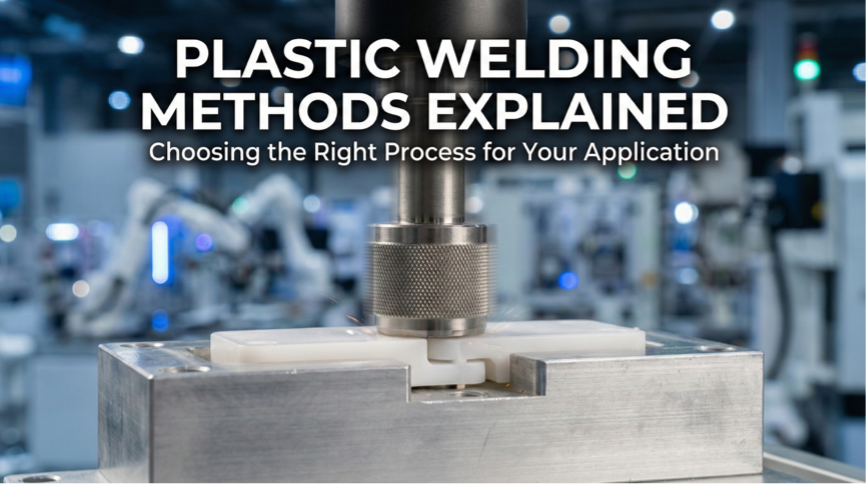
Plastic welding is a process of uniting softened thermoplastic surfaces, generally with the aid of heat and pressure, to create a permanent, molecular-level bond. Unlike gluing, which introduces a foreign substance (the adhesive), welding fuses the parent materials together.
The result is a joint that often equals or exceeds the strength of the base material. In our experience at HordRT, plastic welding services are most typically sought after for applications requiring:
- Hermetic seals: Preventing air or liquid leakage (common in medical reservoirs).
- High structural strength: Replacing weak snap-fits or heavy screws.
- Aesthetics: creating seamless finishes without visible fasteners.
Common Plastic Welding Methods
There is no "one-size-fits-all" solution. The industry relies on several distinct plastic welding methods, each with its own mechanical, thermal, and economic profile.
1. Ultrasonic Welding
This is perhaps the most versatile and widely used technique. Ultrasonic welding uses high-frequency mechanical vibrations (typically 15 kHz to 40 kHz) to generate friction heat at the interface of two parts. The energy is focused through a triangular ridge on the part called an "energy director."
- Pros: Extremely fast (cycle times often under a second), clean, and economical for mass production.
- Cons: Limited by part size and material rigidity; soft plastics like TPE are harder to weld.
2. Vibration Welding
For larger parts where ultrasonic horns cannot reach, vibration welding is the go-to. It involves rubbing two parts together under pressure at a lower frequency but higher amplitude. The friction melts the interface before the parts are aligned and cooled.
- Pros: Ideal for large, irregular parts like automotive intake manifolds or tanks.
- Cons: The process can generate flash (excess material) and particulates, requiring post-process cleaning.
3. Hot Plate Welding
One of the oldest and simplest methods, hot plate welding involves pressing plastic parts against a heated metal platen until the surfaces melt, removing the platen, and pressing the parts together.
- Pros: Excellent for high-strength, hermetic seals in pipes and containers; very forgiving of part tolerances.
- Cons: Slow cycle times (10–20 seconds or more) and potential for smoke or residue.
4. Laser Welding
A growing trend in high-tech industries, laser welding passes a laser beam through a "transmissive" (clear or laser-transparent) top part to be absorbed by a bottom part. The heat generated at the interface fuses them without vibration.
- Pros: Zero particulate generation (perfect for medical/electronics), no mechanical stress on delicate components, and superior aesthetics.
- Cons: Higher equipment cost and strict requirements for material transparency/absorbency.
How to Choose the Right Plastic Welding Method
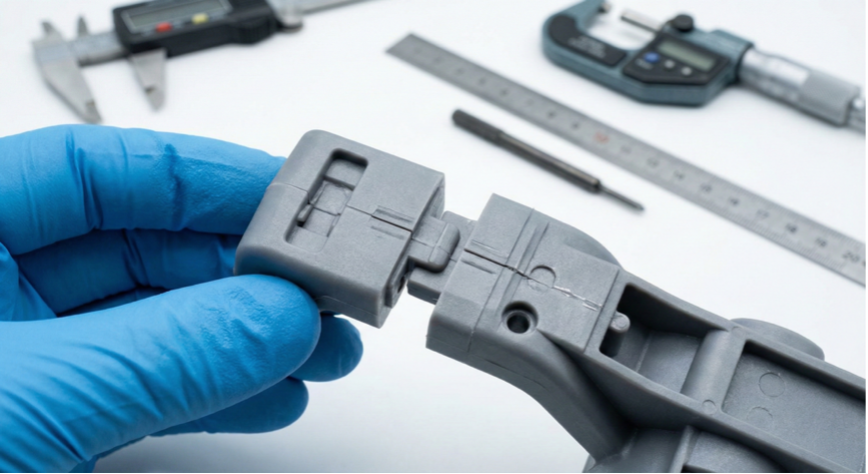
Selecting the right plastic joining processes often happens too late in the design cycle. At HordRT, we encourage our clients to consider assembly during the DFM (Design for Manufacturing) phase. Here are the three factors that usually dictate the choice:
-
Material Compatibility
Not all plastics can be welded to each other. Compatibility is determined by the polymer’s melting temperature and molecular structure.
- Rule of Thumb: You typically need to weld "like to like" (e.g., ABS to ABS).
- Chemical Affinity: Some dissimilar plastics can be welded if they are chemically compatible (e.g., ABS to Acrylic), but welding Polypropylene (PP) to Nylon (PA) is virtually impossible due to different melting points and crystalline structures.
-
Joint Design
Different methods require different mold designs.
- Ultrasonic: Requires an energy director or shear joint molded into the interface.
- Laser: Requires a precise "zero gap" fit between parts to ensure heat transfer. If your injection molding partner doesn't hold tight tolerances, your weld will fail. This is why HordRT’s precision tooling is critical—we ensure the mating surfaces are molded exactly to the welding specification.
-
Production Volume
- High Volume (>50,000 units): Ultrasonic welding is usually preferred due to its speed.
- Low to Mid Volume: If you are using HordRT’s low-volume manufacturing services, manual or semi-automated solvent bonding or heat staking might be more cost-effective than investing in complex vibration welding tooling.
Ultrasonic Welding for Precision Plastic Parts
Since ultrasonic welding is the most frequently requested method for the precision parts we mold, let’s dive deeper.
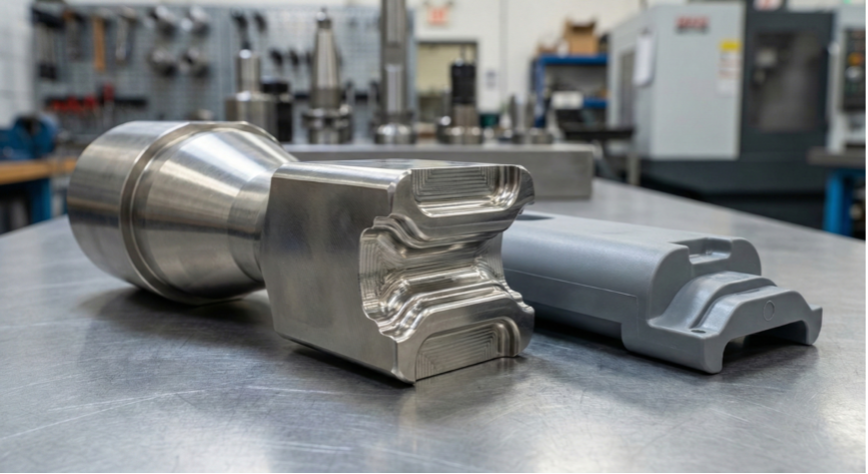
The process involves a "stack" consisting of a transducer, booster, and a custom-made tool called a sonotrode (or horn). The sonotrode vibrates vertically, transmitting energy through the plastic part to the joint interface. The friction generates localized heat, melting the energy director and fusing the parts instantly.
Typical Applications
- Consumer Electronics: Earbud housings, chargers, and casings.
- Medical: Fluid containers, surgical instruments, and filters.
- Automotive: Instrument panels, tail lights, and ducts.
The key to successful ultrasonic welding isn't just the machine—it's the quality of the molded part. Variations in wall thickness, sink marks, or warped parts from poor molding can absorb the ultrasonic energy, leading to weak or inconsistent welds.
Plastic Welding Capabilities at HordRT
At HordRT, we don't just supply parts; we provide comprehensive manufacturing solutions. While welding happens after molding, the success of the weld is determined during the mold design.
Why choose HordRT for your assembly-ready components?
- DFM for Assembly: Our engineering team reviews your CAD files not just for moldability, but for assemblability. We can advise if your energy directors are properly sized or if your material choice supports your desired plastic welding methods.
- Precision Injection Molding: Whether you need ultrasonic welding or laser welding, the gap tolerance between parts is critical. Our high-precision CNC machining and rigorous quality control in injection molding ensure that every part fits perfectly, minimizing scrap rates during assembly.
- Rapid Tooling & Low-Volume Flexibility: We specialize in rapid tooling that allows you to test your welded assemblies in the real material (not just 3D printed simulants) within days. This allows you to validate joint strength before committing to mass production steel molds.
Ready to start your next project? Whether you are exploring plastic welding services or need high-precision parts ready for assembly, HordRT is your trusted partner in China. From prototype to production, we ensure your parts are made to the highest standard.
-2.png)