-q4gvl4k29y4hq8j9rjpapvj0ft06fje63olt7p210i.png "HordRT Logo-2023(red)")

Johnny Xiong
Rapid Tooling Expert
Contents
Step onto the production floor here at HordRT, and you will see raw materials being transformed into high-precision components every single day. Whether we are dealing with plastic injection molding, rapid tooling, or complex CNC machining, clients often focus heavily on the final tolerances or the aesthetic finish. However, as a manufacturing expert, I always emphasize that the true foundation of a flawless component lies in a crucial, yet frequently overlooked preliminary step: metal surface preparation.
This is not just about wiping away dust; it is a highly technical phase that dictates the mechanical, chemical, and dimensional fate of the final part. Let’s dive into why this process is essential and how proper metal surface treatment sets the stage for manufacturing success.
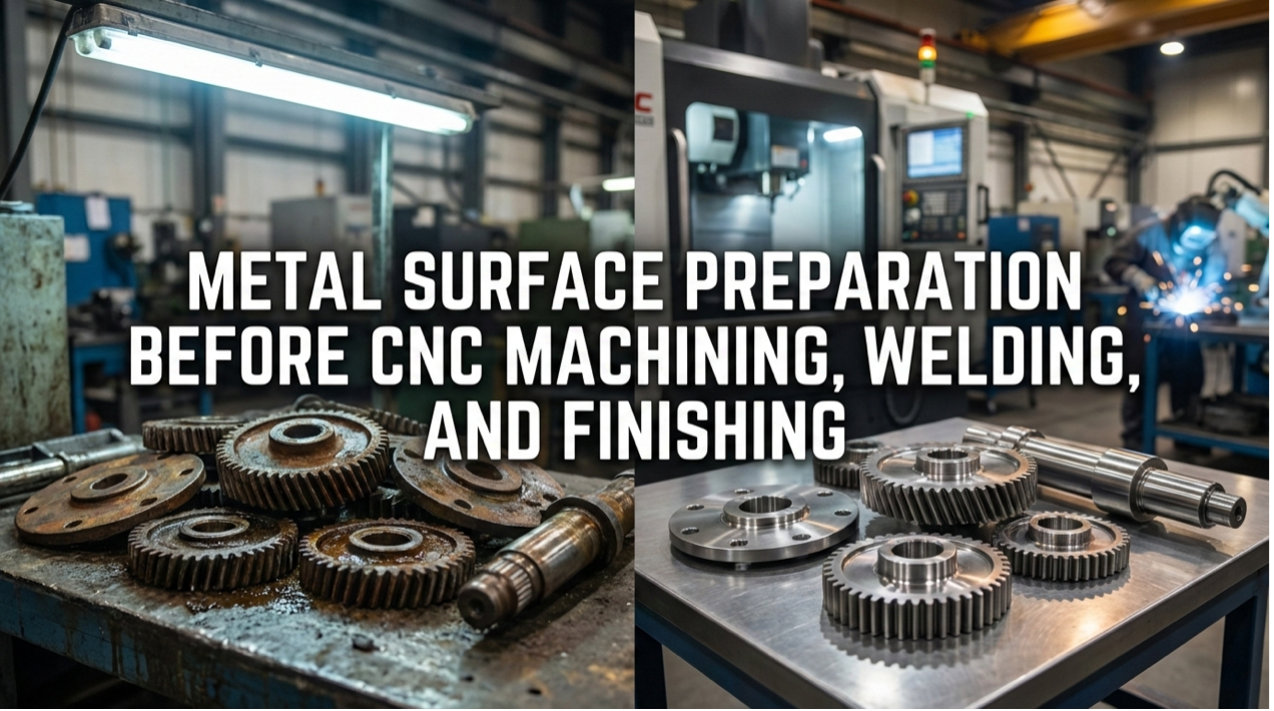
Why Metal Surface Preparation Matters
In modern manufacturing, the necessity of rigorous surface preparation is generally divided into two essential domains:
- Accuracy
Precision is not simply cut into a metal; it is stabilized into it. During initial forming processes like casting, rolling, or forging, internal residual stresses are inevitably trapped within the material. When we remove material during CNC machining, these stresses are suddenly released, which can cause the part to warp or distort unpredictably. By implementing proper metal pre-processing such as thermal stress relief, we can reduce post-machining deformation rates by 60% to 80%. Furthermore, controlling the surface roughness ensures that metrology sensors and probes do not misread a rough profile as the actual geometric dimension, guaranteeing absolute dimensional accuracy.
- Surface integrity
The condition of the surface interface directly determines the success of downstream bonding and the overall fatigue life of the part. If surface preparation is neglected, residual mill scale and hydrocarbons (like cutting fluids and oils) remain on the substrate. These molecular layers act as a hydrophobic barrier, severely hindering the chemical bonding of subsequent coatings or plating. More dangerously, these microscopic impurities can become initiation sites for future corrosion and mechanical fracturing.
Common Metal Surface Preparation Methods
To achieve the optimal substrate condition, our engineering team relies on several core techniques on the HordRT shop floor:
- Annealing
Metal annealing is our go-to solution for combating trapped internal stresses. By heating the metal to a specific temperature and allowing it to cool at a controlled rate, annealing softens the material and refines its microstructure. This not only significantly improves the metal's machinability but also neutralizes residual stresses, ensuring the component remains dimensionally stable during aggressive precision machining.
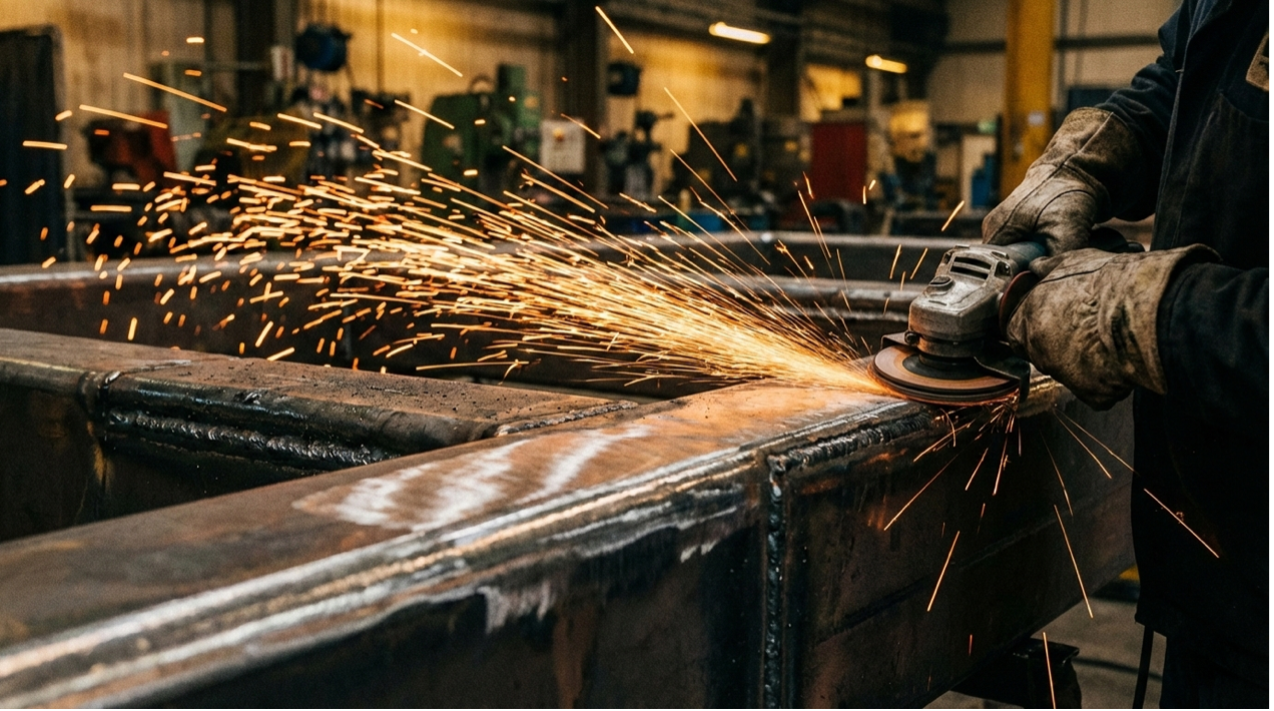
- Grinding and deburring
Mechanical cutting inherently leaves behind microscopic burrs and sharp, jagged edges. Through meticulous grinding and deburring, we create a uniform, consistent surface texture. This eliminates dangerous stress concentration points that could lead to premature fatigue failure and provides a safe, clean edge for operators during the final assembly.
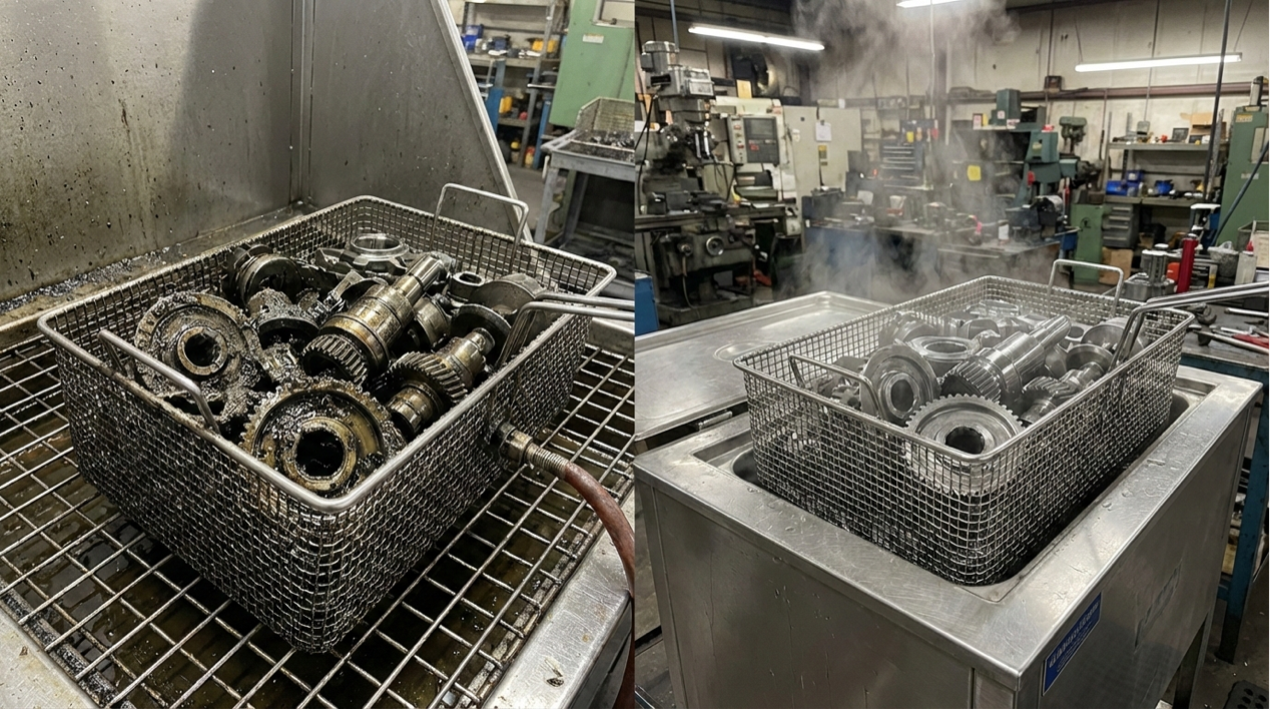
- Cleaning and degreasing
This is the absolute bedrock of surface engineering. We utilize industrial-grade solvents, ultrasonic cleaning baths, and aqueous degreasers to aggressively strip away cutting fluids, environmental dust, and handling oils. The goal is to expose 100% pure, bare metal, leaving no microscopic contaminants behind.
Surface Preparation for Different Manufacturing Processes
Different downstream processes demand entirely different surface profiles. Customizing the preparation approach is the hallmark of expert manufacturing.
- Before CNC machining
Before a raw billet even touches our CNC milling centers, we must ensure its cleanliness and dimensional stability. Removing hard, abrasive mill scale from the surface drastically extends the lifespan of our CNC cutting tools. Additionally, pre-machining stress relief guarantees that as we remove large volumes of material, the remaining structure holds its strict geometric tolerances without bowing.
- Before welding
Welding operations have a zero-tolerance policy for surface impurities. Any moisture, rust, or oil left in the weld joint will vaporize under the intense heat of the arc, breaking down into hydrogen and other gases. This directly causes structural defects like weld porosity, slag inclusion, and lack of inter-run fusion. At HordRT, we employ rigorous mechanical grinding and chemical cleaning of the weld bevels to ensure a pristine metallic luster before striking an arc.
- Before coating or plating
A successful industrial coating relies on more than just chemical adhesion; it requires a perfect physical "anchor pattern." For heavy-duty industrial coatings, we typically utilize abrasive grit blasting to achieve a near-white metal finish (Sa 2.5 standard). If the blasted profile is too deep, the microscopic metal peaks can protrude through the coating, leading to pinpoint rusting. If the profile is too shallow, the coating lacks the necessary mechanical bite and will eventually peel. Furthermore, our machinists always calculate and leave precise dimensional allowances for the final coating thickness.
Common Problems Caused by Improper Surface Preparation
Throughout my career, I have seen too many projects suffer expensive rework simply because a manufacturer tried to cut corners during the preparation phase.
- Warping
If residual stresses are not adequately relieved prior to machining, the component will inevitably experience dimensional drift when exposed to operational thermal cycles or even just over time in storage. For example, an unannealed steel engine block might warp slightly months after production, distorting critical bore holes and resulting in catastrophic oil leaks or assembly misalignment.
- Poor adhesion
It is a well-documented industry fact that nearly 80% of all premature coating failures can be traced directly back to inadequate surface preparation. If water-soluble salts are not thoroughly washed away, they trigger an osmotic reaction that causes the paint to blister. If the surface is scratched, poor initial bonding allows moisture to penetrate, leading to "corrosion creep"—where rust rapidly spreads laterally beneath the coating interface, eventually causing massive delamination.
Metal Pre-Processing Support at HordRT
Here at HordRT, we believe that world-class manufacturing begins long before the first chip is cut or the first weld is laid. We are not just a machine shop; we are a comprehensive manufacturing partner dedicated to end-to-end quality.
We integrate advanced materials science with state-of-the-art metrology, treating metal surface preparation as a strategic pillar of the production lifecycle. Equipped with in-house facilities for thermal stress relief, precision grinding, abrasive blasting, and rigorous cleanliness testing, our engineering team ensures that every component is fundamentally sound from the inside out.
Whether your next project involves complex multi-axis CNC machining, custom sheet metal fabrication, or rapid tooling, HordRT has the expertise to execute flawless pre-processing. By eliminating the hidden risks of warping, poor adhesion, and weld defects, we deliver parts that not only meet your exact specifications but stand the test of time in the field. Contact the HordRT team today, and let us build your next successful project on a perfect foundation.
-2.png)